Price: 7€
PostScriptUM #56
M. Beatrice Fazi
Cave Machines:
On the Platonic Representation Hypothesis
In 2024, four MIT researchers named a hypothesis after Plato’s cave: neural networks, trained on different data and tasks, converge on one representation of reality. In Cave Machines, M. Beatrice Fazi takes the conjecture at its word, following it back to Plato, where it comes apart. The models never turn from the wall; the reality behind their agreement falls away. What remains is stranger than realism: representation as construction, structure built, not found, and a cave that is all there is.
M. Beatrice Fazi is a philosopher working on the philosophies of computation, technology and media. She has published extensively on the limits and potentialities of the computational method, on digital aesthetics and on the automation of thought. She is Associate Professor at the University of Sussex (United Kingdom), author of Contingent Computation: Abstraction, Experience, and Indeterminacy in Computational Aesthetics (2018) and co-author of Digital Theory (2025).
EN | 10.5 x 16.7 cm | 36 pp | soft cover | 2026
ISBN 978-961-7173-70-3 (Printed)
Colophon
M. Beatrice Fazi
Cave Machines:
On the Platonic Representation Hypothesis
PostScriptUM #56
Series edited by Janez Fakin Janša
Print on demand
Publisher: Aksioma – Institute for Contemporary Art, Ljubljana
www.aksioma.org | aksioma@aksioma.org
Represented by: Marcela Okretič
Co-publisher: University of Applied Arts Vienna
www.dieangewandte.at/en | info@uni-ak.ac.at
Issue edited by Marko Bauer
Proofreading: Miha Šuštar
Design: Federico Antonini
Layout: Oskar Kandare
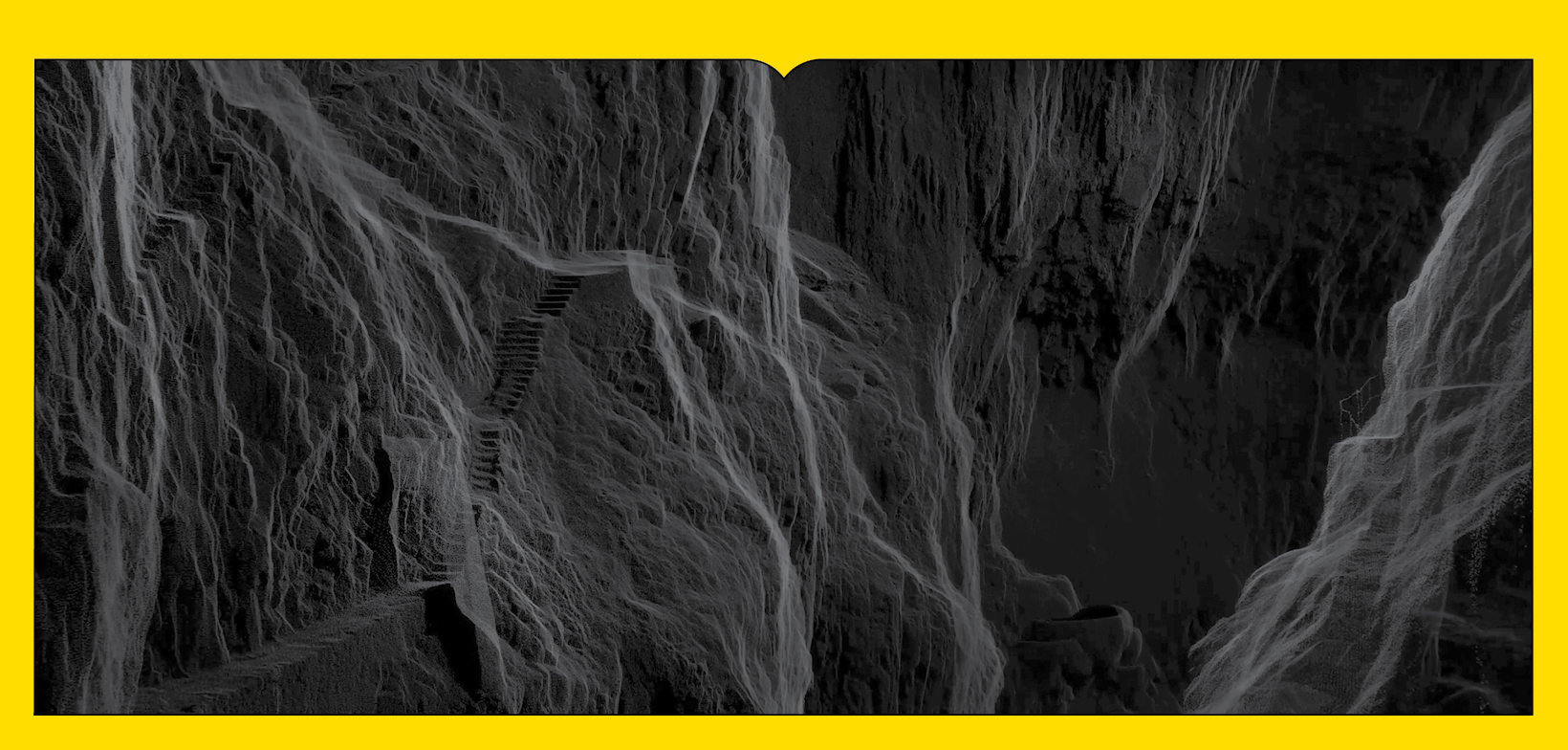
Cover image: Swamp_Matter (Eva Garibaldi, Ana Laura Richter), still from the video The Stones Only Appear To Be Non-Living, 2024
© Aksioma | All text and image rights reserved by the author
Ljubljana, October 2026
Supported by the Ministry of Culture of the Republic of Slovenia, the Municipality of Ljubljana and the Weibel Institute for Digital Cultures