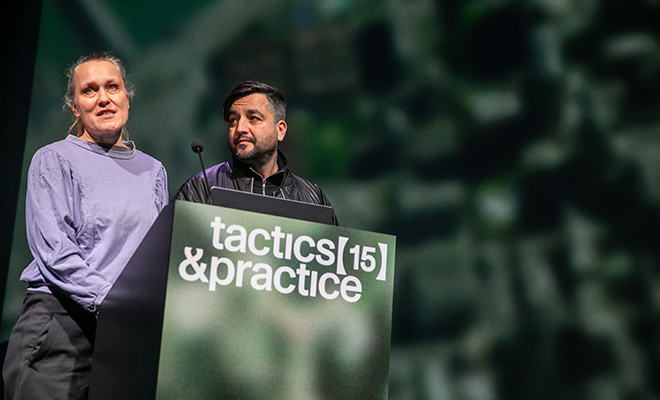
⭐ 1 Star Workshop

!Mediengruppe Bitnik, Selena Savić, Gordan Savičić

One Star Review Tour

!Mediengruppe Bitnik, Selena Savić, Gordan Savičić
One Star Review Tour

Curated by
!Mediengruppe Bitnik

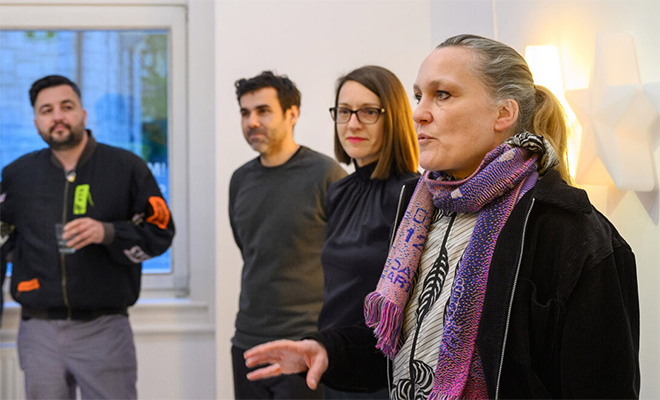
Exhibition
3–26 April 2024
Aksioma | Project Space, Ljubljana

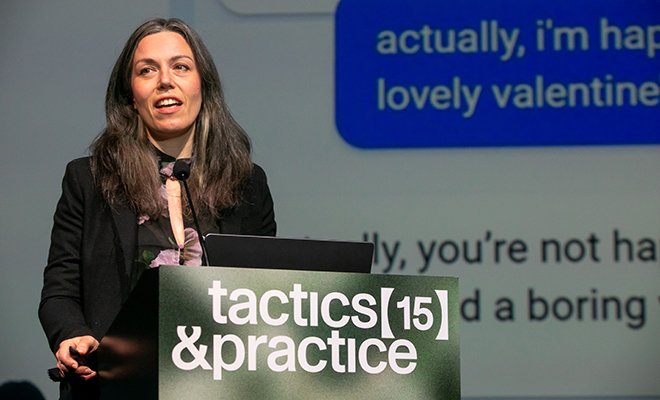
Part of Tactics&Practice #15: (Un)real Data – Real Effects


With One Star Review Tour, Selena Savić, Gordan Savičić and !Mediengruppe Bitnik look at how rating systems shape the perception and experience of a place. In contemporary data-driven environments, credit scores, social influence rankings and product/service reviews dictate choices regarding, for example, selecting a doctor, shopping or dining out. One of the most widely used evaluation schemes online is the five-star system. Its popularity stems from the ease of judgement it proposes, its implied clarity (five is better than one) and the way it transforms personal opinions into objective values by way of aggregation (individual reasoning doesn’t matter if many people come to the same conclusion).

While the reviews are often nothing more than personal opinions, their cumulative values have become a driving force for the service and tourist industries as well as many other sectors of the economy. For businesses, reviews have become a feared measure of success or bust.

Not all sites, services or products can align with conventional consumer requirements. To obtain the five-star rating, they must be easy to consume, readily available, impressive, fun or “instagrammable”. And while privately owned companies can fight bad online reviews, public spaces can hardly talk back or ask Google to leave them alone.

The exhibition at Aksioma explores what it means when places we love are scrutinised and publicly rated: it investigates the politics of rating systems and engages with the power of reviews to produce real effects.


1 Review Tour Ljubljana
Video, 4K UHD, sound, 16 min 15 sec, loop. Yellow PVC lamella curtain, automatic massage chair, screen, speakers.

The 1 ⭐ Review Tour Ljubljana is a virtual tour of Ljubljana using one star reviews as a guide. The video-based tour leads to 180 one star reviews scraped from Google Maps. The installation contrasts the negativity of the reviews with the comfort of a fully automated massage chair. The anger provoked by listening to so many complaints about places we hold dear is counteracted by the massage, creating a 5 star setting for 1 star opinions.


1 Review Tour Secrets
Video, 4K UHD, 60 fps, sound, 20 min 15 sec, loop. Portable massage chair, tablet, tablet holder, headphones. 

The 1 ⭐ Review Tour Secrets is a video essay which explores the politics of rating systems and their real world consequences. Juxtaposing the well-known format of silent city walks with a whispered narrative, the history of reviews is told between the contrasting contexts of public and private. The essay is viewed through the headrest of a shiatsu chair, with the body suspended in the expectation of a relaxing massage.


1 Review Tour Browser Extension
Browser extension for Chrome and Firefox. Lying face down gaming cushion, foldable yoga mat, screen, mouse. 

The 1 ⭐ Review Tour Browser Extension is a browser based artwork that filters reviews on Google Maps to show only one star ratings. By focusing on the poetics of failed expectations, the 1 ⭐ Review Tour Browser Extension shifts perspectives on the places you visit. 1 ⭐ Review Tour Browser Extension cuts the utilitarian connection we have with review systems. Instead of using online reviews to chose the five star option, we focus on the negative, as a way of engaging with the politics of rating systems and their power to influence real world spaces.


1 out of 5
Light installation. Five polyethylene stars, custom electronics.

1 out of 5 is a light sculpture and part of a series of works that explore the politics of rating systems and the power ratings have to produce real effects.

THE AUTHORS

!Mediengruppe Bitnik (read: the not Mediengruppe Bitnik) are contemporary artists working on, and with, the internet. Their practice expands from the digital to affect physical spaces, often intentionally applying loss of control to challenge established structures and mechanisms. In the past, they have been known to subvert surveillance cameras, bug an opera house to broadcast its performances to people at home, send a parcel containing a camera to Julian Assange and physically glitch a building. In 2014, they sent a bot called Random Darknet Shopper on a three-month shopping spree in the darknets where it randomly bought items like keys, cigarettes, trainers and Ecstasy, and had them sent directly to the gallery space. !Mediengruppe Bitnik’s works are shown internationally, and the group has received various awards including the Swiss Art Award, the PAX Art Award and the Golden Cube from Dokfest Kassel.

Selena Savić is a researcher and trained architect. Since 2023, she has been Assistant Professor of Protohistory of Artificial Intelligence and Machines in the Arts at the University of Amsterdam. After a PhD at École Polytechnique Fédérale de Lausanne and an SNSF-funded postdoc at Architecture Theory and Philosophy of Technics, TU Vienna, she worked at the Basel Academy of Art and Design, where she led the Make/Sense PhD programme. She has edited four books (Radio Explorations, forthcoming; Teaching Artistic Strategies, forthcoming; Ghosts of Transparency, 2019; and Unpleasant Design, 2013) and written numerous book and journal contributions on computational modelling, feminist hacking and posthuman networks in the context of art, design and architecture. Her research interests animate a practice at the intersection of computational processes and posthumanist and postcolonial critique of technology. Her current research focuses on data and measurement, offering a generative perspective on the interrelations between technicity of making art and technicity of circulating it.

Gordan Savičić is an artist and critical engineer whose work investigates the impact of digital culture on society through a diverse range of media. His artistic research focuses on rendering invisible infrastructures visible, probing the significance of datafication and performing digital interventions, both on- and offline. Born in Vienna, he pursued studies in media art and design in Vienna and Rotterdam, currently holding a teaching position in Lucerne. Recognitions include awards and honorary mentions from transmediale, Rhizome and Ars Electronica. He regularly collaborates with groups like Berlin’s weise7 in organising workshops, exhibitions and publications that focus on networking, tactical media and software art.

CREDITS

Authors: !Mediengruppe Bitnik, Selena Savić, Gordan Savičić

Production of the exhibition: Aksioma – Institute for Contemporary Art, Ljubljana, 2024

Part of the series: Tactics&Practice

Financial support: the Ministry of Culture of the Republic of Slovenia and the Municipality of Ljubljana

RELATED ACTIVITIES

PUBLICATION

(un)real data ☁️ – (🧊)real effects

Contributors: Régine Debatty, Thomas Spies, Xiaowei Wang, Milia Xin Bi, Günseli Yalçınkaya

Editors: !Mediengruppe Bitnik, Janez Fakin Janša

► ORDER

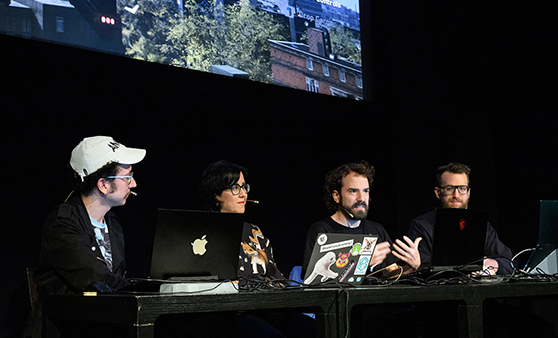
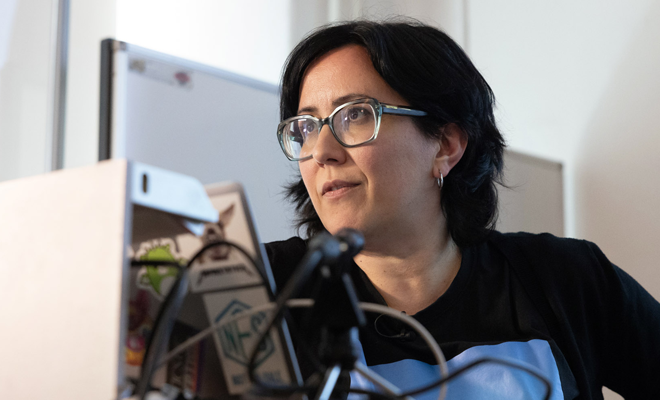
WORKSHOP

!Mediengruppe Bitnik, Selena Savić, Gordan Savičić
⭐ 1 Star Workshop
TUE, 2 April 2024, 3-6 PM
ALUO, Tobačna 5, Ljubljana

Google Maps Hacks

Simon Weckert
Simon Weckert
Google Maps Hacks

Curated by
!Mediengruppe Bitnik

Exhibition
27 February–6 April 2024
Kino Šiška, Ljubljana

Part of Tactics&Practice #15: (Un)real Data – Real Effects


THE AUTHOR

Simon Weckert enjoys sharing knowledge in a wide range of fields, from generative design to physical computing. His focus is the digital world – including everything related to code and electronics in connection to the reflection on current social aspects, ranging from technology-oriented examinations to the discussion of current social issues. He seeks to assess the value of technology, not in terms of actual utility but from the perspective of future generations, and uses technology in the digital space to cleverly impact the physical space, all the while creating some playful mischief. The outcomes are technological systems, installations and hybrid objects that strive to make complicated issues accessible. 

THE CURATORS

!Mediengruppe Bitnik (read: the not Mediengruppe Bitnik) are contemporary artists working on, and with, the internet. Their practice expands from the digital to affect physical spaces, often intentionally applying loss of control to challenge established structures and mechanisms. In the past, they have been known to subvert surveillance cameras, bug an opera house to broadcast its performances to people at home, send a parcel containing a camera to Julian Assange and physically glitch a building. In 2014, they sent a bot called Random Darknet Shopper on a three-month shopping spree in the darknets where it randomly bought items like keys, cigarettes, trainers and Ecstasy, and had them sent directly to the gallery space. !Mediengruppe Bitnik’s works are shown internationally, and the group has received various awards including the Swiss Art Award, the PAX Art Award and the Golden Cube from Dokfest Kassel.

CREDITS

Author: Simon Weckert
Curated by: !Mediengruppe Bitnik

Production of the exhibition: Aksioma – Institute for Contemporary Art, Ljubljana and Kino Šiška, 2024

Part of the series: Tactics&Practice

Financial support: the Ministry of Culture of the Republic of Slovenia and the Municipality of Ljubljana

Data Cyborgs: A Partially Algorithmically Generated Embodied Conversation Between Three Different Logics

Cornelia Sollfrank, Alexandre Puttick

No Travel Agency

Simon Weckert, Gloria Gammer

The Map Becomes the Territory – Street 3.0

Simon Weckert

Dreams and Disruptions: Machine Unlearning for Artists

Simon Weckert

The Republic of Null Island

Simon Weckert
Simon Weckert
The Republic of Null Island

Curated by
!Mediengruppe Bitnik

Exhibition
26 February–22 March 2024
Aksioma | Project Space, Ljubljana

Part of Tactics&Practice #15: (Un)real Data – Real Effects


The physical site where the equator and the zero meridian intersect is marked with a stationary buoy in the middle of the ocean. The buoy is located in international waters off the coast of Western Africa and indicates the GPS coordinates 0° N, 0° E. This isolated and barren location in open water is far away from land and human habitation and interaction.

In virtual data space, however, it is a place full of life and activity, with ample accommodation capacities and spaces for sports and leisure, a site where fond holiday memories are made. This is because data that cannot be assigned to its correct geographic location is processed with the geographic values of 0, 0 and automatically assigned to 0° N, 0° E. Such errors arise, for example, when the geoposition of an uploaded image cannot be identified. The image is then assigned a latitude and longitude of “0, 0” by default.

Therefore, in data space, geographical zero is an ever-growing collection of faulty data from smartwatches, photo-sharing sites, booking apps and mapping services. With The Republic of Null Island, Simon Weckert gives the virtual data space a physical manifestation. The installation not only brings null data into view but also geo-spoofs visitors to The Republic of Null, where they can browse the accumulated data and add their own, which is automatically assigned the coordinates of Null Island.Simon Weckert uses The Republic of Null Island to imagine physical voids and show how they connect to the realities created by the data that manifests there.

THE AUTHOR

Simon Weckert enjoys sharing knowledge in a wide range of fields, from generative design to physical computing. His focus is the digital world – including everything related to code and electronics in connection to the reflection on current social aspects, ranging from technology-oriented examinations to the discussion of current social issues. He seeks to assess the value of technology, not in terms of actual utility but from the perspective of future generations, and uses technology in the digital space to cleverly impact the physical space, all the while creating some playful mischief. The outcomes are technological systems, installations and hybrid objects that strive to make complicated issues accessible. 

THE CURATORS

!Mediengruppe Bitnik (read: the not Mediengruppe Bitnik) are contemporary artists working on, and with, the internet. Their practice expands from the digital to affect physical spaces, often intentionally applying loss of control to challenge established structures and mechanisms. In the past, they have been known to subvert surveillance cameras, bug an opera house to broadcast its performances to people at home, send a parcel containing a camera to Julian Assange and physically glitch a building. In 2014, they sent a bot called Random Darknet Shopper on a three-month shopping spree in the darknets where it randomly bought items like keys, cigarettes, trainers and Ecstasy, and had them sent directly to the gallery space. !Mediengruppe Bitnik’s works are shown internationally, and the group has received various awards including the Swiss Art Award, the PAX Art Award and the Golden Cube from Dokfest Kassel.

CREDITS

Author: Simon Weckert
Curated by: !Mediengruppe Bitnik

Production of the exhibition: Aksioma – Institute for Contemporary Art, Ljubljana, 2024

Part of the series: Tactics&Practice

Financial support: the Ministry of Culture of the Republic of Slovenia and the Municipality of Ljubljana

RELATED ACTIVITIES

ARTIST TALK

The Map Becomes the Territory – Street 3.0
28 February 2024
ALUO/Tobačna, Ljubljana

PUBLICATION

(un)real data ☁️ – (🧊)real effects

Contributors: Régine Debatty, Thomas Spies, Xiaowei Wang, Milia Xin Bi, Günseli Yalçınkaya

Editors: !Mediengruppe Bitnik, Janez Fakin Janša

► ORDER

Prompt Battle

Sebastian Schmieg

(Un)real Data – Real Effects

    Second Order Reality

    Carola Bonfili
    Carola Bonfili
    Second Order Reality

    Curated by
    Daniela Cotimbo and Ilaria Gianni 

    Exhibition
    18 January–16 February 2024
    Aksioma | Project Space, Ljubljana


    In Second Order Reality, Carola Bonfili explores those perceptual states that are inherent in the “magical thinking” of children and characterise, for example, the experience of navigating virtual worlds. 

    The ability to enter and exit different kinds of subjectivity and the interest in liminal spaces, time gaps and thresholds are familiar to us during childhood, but later on, we somehow tend to relegate them to the margins of experience. In adulthood, these states persist in the form of small perceptual shifts, inattentions and meditative or dysfunctional moments, in which we find ourselves immersed in a space that we recognise, even though we have never experienced it.

    “We live inside our body all day, but we only realise it when something doesn’t feel right,” says Bonfili, and we feel a similar sensation when we are immersed in the worlds of virtual reality, where we still use our senses, but the bodies we inhabit are not ours. This otherness is also embodied in augmented spaces – those desolate places which evoke impersonal memories and follow the gaming logic that requires us to take pre-programmed and satisfaction-oriented actions, but also reveals other possibilities. When we leave this path, we experience the threshold.

    Bonfili finds this shift in perception in texts such as Gustave Flaubert’s The Temptation of St. Anthony or H. G. Wells’s The Island of Dr Moreau. In this respect, Flaubert’s text is particularly noteworthy for the description of the repeated hallucinations experienced by the protagonist when he’s inside a hut. Anthony Abbot’s images are incandescent visions driven by desire, but acquire a solid consistency, similar to the effect of a mirage. These transitions from scenarios close to reality, after which the gaze broadens onto a boundless landscape, are what make Flaubert’s work so similar to the logic of video games.

    Starting from these impressions, Carola Bonfili develops a narrative that she then deconstructs and varies through different media – a CGI video conceived as a trailer, an immersive VR environment and a series of sculptures – with the aim of bringing a video game to life.

    The story’s protagonist is M’ling, a little monkey who suddenly sees that certain parts of her body are turning into stone and embarks on an initiatory journey in search of healing. On this journey, the little monkey encounters a series of mysterious objects to which she dedicates her sensorial attention: she talks to water, meets a robot and is guided by a mysterious melody. By letting go in the flow of surreal events, she finds the path towards her well-being.

    In the video The Stone Monkey and VR installation Level 1, Illusions That We Should Have, but Don’t, the narrative develops through a succession of mysterious events that constantly displace the point of adherence to reality. Here, even the sounds play an important role by creating actual “sound objects” and amplifying the unsettling quality of the whole experience.

    The deliberately fragmented nature of the project is underlined by sculptures that draw on some of the themes and imagery of the story, translating them into physical elements. If M’ling and Tanky Pear are concrete reproductions of the main characters and recall action figures produced in the field of gaming, The Stone Monkey PBR consists of a series of spherical sculptures that have been created based on PBRs or physical renders, digital objects used in 3D modelling to display texture samples. Finally, The Multicrane adapts the technique used in Walt Disney’s early animations. A tribute to craftsmanship that persists as a method in its approach to the digital.

    Every aspect of the story is the result of a careful construction that combines different languages and eras: from 19th-century literature to Brutalist architecture, from contemporary comics to generative artificial intelligence. In this project, the author shows how a single story is potentially infinite and how its specificities depend on the chosen means of expression in a constant and always fragmentary cross-reference that leaves ample room for imagination.

    THE AUTHOR

    Domen Pal / Aksioma

    Carola Bonfili’s work takes inspiration from natural forms and cognitive mechanics and is structured in multi-layered narrations that develop towards mixed source texts. AI principles, CGI, VR AV environments and automatic writing are the main tools of her recent research. A performative matrix is often found in the production processes of her sculptural works and environmental installations, which are immersive and tend towards forms of transmedial narration. After studying contemporary art history at La Sapienza University in Rome, she continued her training at the Chelsea College of Art and Design in London. Her work has been presented in various institutional locations, including the MAXXI, Rome; the Milan Triennial; the Los Angeles Italian Culture Institute; the National Gallery of Modern and Contemporary Art, Rome; the Ludwig Museum, Budapest; the Centre d’Art Contemporain, Geneva; MAMbo Museo d’Arte Moderna di Bologna; and the MACRO Museum, Rome. She has received various prizes and awards, including the 2022 Italian Council 11th edition, the 2020 Re:Humanism Prize, the 2011 LUM Prize, the 2008–2009 Rome Prize and the 2009 Strozzina Prize, and also participated in residencies at the American Academy in Rome (2009) and MACRO, Rome (2012). Her works have been included in the Farnesina Collection of the Italian Ministry of Foreign Affairs, the MAXXI Arte Collection and the MACRO Museum Collection in Rome. Since 2004, she has been working with Nero Editions, with which in 2011 she began publishing Names of Numbers, a series of monographic books on drawing.

    THE CURATORS

    Martina Carbone and Luciano Pecoraro

    Daniela Cotimbo is an art historian and independent curator based in Rome. Her research is focused on the problematic issues of the present, investigated through different means of expression, in particular new technologies. She has recently founded the Re:Humanism cultural programme focused on the relationship between contemporary art and advanced technologies. Daniela has curated exhibitions in several galleries, museums and festivals, including the MAXXI, Cosmo Venezia, AlbumArte, Colli Independent, Operativa Arte Contemporanea and the Romaeuropa Festival. She writes for numerous contemporary art magazines, such as Inside Art, Flash Art and NERO, and has edited or participated in several panels organised by various institutions for institutions. In 2021, she co-founded Erinni, a curatorial collective that combines transfeminism and media languages. Since 2022, she has been a lecturer on theory and method of mass media at the Rome University of Fine Arts.

    Marco Rapaccini / Officine Fotografiche Roma

    Ilaria Gianni is an independent curator, art critic and lecturer. She is co-founder of IUNO, a research centre for contemporary art based in Rome, and of the itinerant Magic Lantern Film Festival, a research-based thematic investigation of the interstice between visual art and cinema. She has been guest curator at Villa Medici – Académie de France à Rome since 2023 and and has co-curatorated Radio GAMeC 30 with Lorenzo Giusti in the 2022–2023 period. She has curated exhibitions and independent research projects in museums, institutions, project spaces and fairs, including Palazzo delle Esposizioni; MACRO; MAXXI; National Gallery of Modern and Contemporary Art, Rome; Matadero, Madrid; MOA, Loop, Seoul; Villa Croce, Genoa; John Hansard Gallery, Southampton; Kadist, Paris; and Radio GAMeC, Bergamo. From 2016 to 2023, she was guest curator at the American Academy in Rome. Between 2009 and 2016 she was co-director and curator at the Nomas Foundation, where she was responsible for artistic programming. She has collaborated with many contemporary art fairs, including ARCOmadrid (for the section “Opening”, 2018–2019) and Artissima (for the section “Present Future”, 2019–2021), and in 2015 co-founded the independent art fair Granpalazzo, which she curated until 2017. She teaches at the John Cabot University, IED (Rome), NABA (Milan) and RUFA (Rome). She is a regular contributor to Flash Art and has wrritten for various catalogues and magazines, such as Artforum, Domus, Mousse, NERO, Cura and Arte e Critica.

    CREDITS

    Second Order Reality
    A project by: Carola Bonfili 
    Curated by: Daniela Cotimbo and Ilaria Gianni 

    Sound design by: Lorem
    Visual identity by: Bahut
    Technical partner: HTC Vive Arts

    Supported by: The Italian Council (2022), Directorate-General for Contemporary Creativity, Italian Ministry of Culture.

    Produced by: Fondazione smART – polo per l’arte, Rome

    In partnership with: Aksioma – Institute for Contemporary Art, Ljubljana

    Associated partners: MNAD Museo Nazionale dell’Arte Digitale, Milan; Centre d’Art Contemporain Genève, Geneva; SODA – School of Digital Arts (c/o Manchester Metropolitan University), Manchester; Hypermaremma, Maremma; The Green Parrot, Barcelona; La Capella, Barcelona

    Work to be acquired by: MAXXI Museum, Rome
    Catalogue: Nero Editions

    —–

    Production of the exhibition:
    Aksioma – Institute for Contemporary Art, Ljubljana, 2024

    Supported by:
    The Ministry of Culture of the Republic of Slovenia and the Municipality of Ljubljana

    Thanks:
    Italian Cultural Institute of Ljubljana

    .expub
    Exploring expanded publishing

    The .expub project will involve artistic and independent publishers to participate in the experimentation of new (combined) publishing formats. At the end of the process Aksioma, the Institute of Network Cultures, Echo Chamber and Nero Editions will summarise these experiments with the proposal of an operational model for expanded publishing.

    —–

    What is Expanded Publishing?

    Expanded Publishing (EP) relates to practices that go beyond typical publishing in terms of format and technology. In some contexts these practices have different names, from ‘multi-media’ to self-reflective, extended, alternative, hybrid and urgent publishing. However, they all relate to the same: publishing practices that are more inclusive than traditional approaches. Expanded publishing enables broader means of expression, including more features and inter-format connections, involving readership or peers, using open-source software or licenses and underlying technologies that facilitate better access, integrating metadata of a publication and experimenting with non-publishable art or formats (e.g. an exhibition, a conference).

    There is a tendency in recent media theory to qualify or suspend the language of rupture or discontinuity in discussing the relations between “old” media and “new” digital technologies. Instead, older models and arrangements are understood to persist in various forms of hybridity, convergence, remediation or recuperation. At the same time, the old has to compete with the new to remain attractive. For this reason, (paper) print is becoming hypermediated, as it incorporates verbal genres and gestures in a self-conscious imitation of and rivalry with electronic media.

    Expanded publishing is a literal expansion of three pre-existing types of publishing: multimedia, hybrid and urgent publishing.

    • Multimedia has its roots in the 1990s and the early internet culture. It is commonly defined as “communication that uses a combination of different content forms such as text, audio, images, animations, or video into a single interactive presentation, in contrast to traditional mass media, such as printed material or audio recordings, which features little to no interaction between users.” (Wikipedia) Multimedia is a synthesis of different types of media formats brought together in a single presentation or on a single page.
    • Hybrid publishing emerged after the rise of smart devices, such as smartphones and tablets, where the content is published in different medium-specific formats that highlight the distinction between physical and virtual content. Examples are physical books, PDFs, ePUBs, digital long-form essays and websites.
    • In urgent publishing, which emerged over the past years, the notion of time was added to the previous two types of publishing mentioned above. In times of crises and information overload, the ability to make knowledge public at a specific (often urgent) moment in time becomes pressing – aside from formats and quality of the content, the time component of actual publishing becomes hugely important. New strategies such as riso printing and xerox copy machines are growing in importance. Decentralized approaches are an essential aspect of urgent publishing, especially in political use cases.

    These practices are rooted in a mix of independent media practices, visual arts, publishing of theory and criticism, artistic research, Do-It-Yourself and experimental practices, perpetrated by underground and technology activists and various small publishers who need to experiment and innovate in order to remain at the forefront and avoid being overshadowed.

    —–

    This project has been funded with the support of the European Commission. This communication reflects the views only of the author, and the Commission cannot be held responsible for any use that may be made of the information contained therein.

    The Face of Corporate Building

    FaceOrFactory

    The Art of Encoding

    Maks Valenčič

    Price: 4€


    PostScriptUM #49

    Maks Valenčič
    The Art of Encoding


    In the essay The Art of Encoding, Slovenian media theorist and philosopher Maks Valenčič proposes to call on media theory for a more refined understanding of some branches of contemporary art, like object-oriented art. Media theory offers a more refined starting point, as it is concerned with the very way in which patterns are encoded. Here, art is modelled as a specific register or, more precisely, a mode of encoding that differs from alternative approaches, e.g. in science. In other words: while science encodes, art recodes, since it deals with all possible ways of encoding patterns, including those that do not strive for optimality or the possibility of optimisation. It softens patterns or encodes the same pattern in different ways, thereby establishing alternative functions (or models) for such approximation of input data. Artistic encoding is therefore by definition concerned with another, alternative world or mode of encoding, which is most clearly highlighted by contemporary world-building narratives and various theory-fiction attempts at understanding one’s own practice.

    EN | 14.8 x 21 cm | 17 pp | COLOUR | soft cover | 2023
    ISBN 978-961-7173-42-0 (Printed)
    ISBN 978-961-7173-44-4 (Digital)


    Colophon

    Maks Valenčič
    The Art of Encoding

    PostScriptUM #49
    Series edited by Janez Fakin Janša

    Publisher: Aksioma – Institute for Contemporary Art, Ljubljana
    Represented by Marcela Okretič

    Translation: Miha Šuštar
    Design: Luka Umek
    Layout: Sonja Grdina

    Cover image: Živa Božičnik Rebec, STRATA 9.073 (kernel processing), detail. Photo: Domen Pal/Aksioma

    (c) Aksioma | All text and image rights reserved by the author | Ljubljana 2023

    Published on the occasion of the exhibition: Živa Božičnik Rebec: STRATA 9.073 (kernel processing), Aksioma | Project Space, Ljubljana

    Curated by Domen Ograjenšek as part of the U30+ production programme

    Supported by the Ministry of Culture of the Republic of Slovenia and the Municipality of Ljubljana

    Related event: STRATA 9.073 (kernel processing)

    Loading Suns

    Lara Reichmann
    Lara Reichmann
    Loading Suns

    Curated by
    Domen Ograjenšek

    Exhibition
    13 December 2023–12 January 2024
    Aksioma | Project Space, Ljubljana

    Part of U30+ production programme for supporting young artists


    Loading Suns spark up in the absence of a human gaze. In its stead, ASTER, MODIS, MISR, CERES and MOPPIT brace the satellite for its journey through the harsh conditions of space. Terra, also known as EOS AM-1, is a multinational scientific research satellite, its monitoring mission set in the Sun-synchronous orbit around the planet, where five core sensors, ASTER, MODIS, MISR, CERES and MOPPIT, monitor Earth’s atmosphere, land and water. Loading Suns invites the viewer to follow the story of Terra from its humble beginnings to its eventual demise and downfall. The satellite will one day cease to serve its purpose, its story told through the polyphony of anthropomorphised voices, the inner apparatuses, through which cognition, reflection and remembrance become instances of a communal foretelling. 

    Lara Reichmann approaches animation through the logic of the additive cut: stitching fragments of narratives and forms to achieve results that echo not only its constitutive parts but also the glitches and noise of the synthesising process. Terra’s inner world reflects the stitched fabric of the world it is obliged to monitor and observe – the satellite image of the planet, computationally reconstructed out of a myriad of fragmented images. Refection in terms of cognition and self-awareness comes by way of a continuous flow, of aggregation and computation. The unfolding narrative splits at points where the stitch itself enters the flow of observable data. Amidst the noise, a precarious form of cognition begins to face its eventual decommission, its attentive monitoring and observation turning into mourning of its Icarian descent.

    THE AUTHOR

    Domen Pal / Aksioma

    Lara Reichmann (1995) is a visual artist working in the field of video and animation. Her recent projects focus on digital interfaces, glitches and time lapses that build parallel virtual landscapes of satellite images. She has participated in several group and solo exhibitions that were held, among others, in P74 Gallery and Kino Šiška in Ljubljana, Museum of Modern and Contemporary Art Koroška in Slovenj Gradec, Centre of Contemporary Arts Celje (SI), Krinzinger Projekte, Parallel in Vienna (AT) and Gallery 707 in Brno (CZ). She has curated several exhibitions, among others for the ETC. magazine, SCCA Centre for Contemporary Arts, Škuc Gallery and student pop-up gallery 7:069 in Ljubljana (SI), Gallery Nova – WHW in Zagreb (HR) and the Pita Project platform.

    THE CURATOR

    Domen Pal/Aksioma

    Domen Ograjenšek is a writer, critic and curator of contemporary visual art. They are a former member of the ŠUM Journal editorial board and its research collective, and they have given lectures and seminars at art institutions such as the International Centre of Graphic Arts (MGLC Ljubljana), the Museum of Contemporary Art Metelkova (MSUM), Škuc Gallery, PhaseBook Prague, Nova Pošta and the International Festival of Computer Art (IFCA). Their reviews and essays have been published in magazines and online platforms such as PASSE-AVANT, Artalk, Blok Magazine, Fotograf Magazine, all-over Magazine, ETC. Magazine, Maska Magazine, ŠUM Journal, Borec Journal, Tribuna and Radio Študent. They have curated exhibitions at the Museum of Madness Trate, SCCA-Ljubljana, Aksioma Project Space, Museum of Contemporary Art Metelkova (as a member of the Neteorit collective), Center for Contemporary Arts Celje (Likovni salon) and Škuc Gallery. They are based in Vienna.

    CREDITS

    Author: Lara Reichmann
    Curator and author of the text: Domen Ograjenšek

    Video duration: 11′ 48”
    3D design and animation: Jan Krek and Lara Reichmann
    Music and sound: Gašper Torkar
    Voice: Ana Čavić
    Narrative proofreading: Ana Čavić
    Set-up design: Jan Krek

    Production: Aksioma – Institute for Contemporary Art, Ljubljana, 2023

    Part of U30+ production programme for supporting young artists

    Financial support: the Ministry of Culture of the Republic of Slovenia and the Municipality of Ljubljana 

    Sponsor: OPL industrijska avtomatizacija d.o.o.
    Thanks: items, Centre for Performing Arts Research Delak, The Projekt Atol Institute

    A Short Incomplete History of Technologies That Scale

    Asia Bazdyrieva, Ranjodh Singh Dhaliwal, Anthony Downey, FRAUD (Audrey Samson, Francisco Gallardo), Chris Lee, Jussi Parikka, Laura Tripaldi

    Price: 18€


    The word scale is tricky. It invites many definitions, orientations and connections to ourselves, our surroundings and our tools. However, to think of scale as solely technical is reductive and omits the relations, feelings and beliefs that come with such measurements and images. In this book, eight authors come together to challenge our conventions and understanding of scale as grounded in the human. In their texts, Asia Bazdyrieva, Ranjodh Singh Dhaliwal, Anthony Downey, FRAUD (Audrey Samson & Francisco Gallardo), Chris Lee, Jussi Parikka and Laura Tripaldi expand our understanding of scale to the more-than-human, trace its movements and frictions through histories, and question the way scale generates political power. Demonstrating how we can think with scale, they introduce us to scalar thinking, its urgency in our socio-technical present and its potential for making new maps, new representations and new kinds of measurements.

    A Short Incomplete History of Technologies That Scale is a joint publication by Aksioma – Institute for Contemporary Art, Ljubljana, and transmediale in Berlin. The publication reflects back the shared theme of transmediale’s 2023 festival edition a model, a map, a fiction and of Aksioma’s programme Tactics&Practice #14: Scale and came together from a common desire to think collectively about how measurements and maps create both politics and feelings in the world.

    EN | 10.5 x 16.7 cm | 144 pp | B/W | soft cover | 2023
    ISBN 978-961-7173-40-6 (Aksioma)


    Colophon

    A Short Incomplete History of Technologies That Scale
    Contributors: Asia Bazdyrieva, Ranjodh Singh Dhaliwal, Anthony Downey, FRAUD (Audrey Samson and Francisco Gallardo), Chris Lee, Jussi Parikka, Laura Tripaldi

    Editors: Nóra Ó Murchú, Janez Fakin Janša

    Editorial assistants: Anna-Lena Panter, Rok Kranjc
    Copyediting: Miha Šuštar, Pip Hare
    Design and layout: Federico Antonini, Simone Cavallin
    Print: Collegium Graphicum
    No. of copies: 1000

    All texts originally published online as part of the transmediale journal were edited by Elise Misao Hunchuck. All texts originally published in the Aksioma’s essay series PostScriptUM were edited by Janez Fakin Janša.

    Published by: Aksioma – Institute for Contemporary Art, Ljubljana
    Represented by: Marcela Okretič

    and

    transmediale e.V., Berlin
    Represented by: Filippo Gianetta

    Supported by the Ministry of Culture of the Republic of Slovenia and the Municipality of Ljubljana.

    Ljubljana, November 2023

    Related event: Tactics & Practice #14: Scale

    Swarm Entry

    Vid Koprivšek
    Vid Koprivšek
    Swarm Entry

    Curated by
    Domen Ograjenšek

    Exhibition
    8 November–8 December 2023
    Aksioma | Project Space, Ljubljana

    Part of U30+ production programme for supporting young artists


    Simple agents exhibit complex behaviour. On its way to the hive, a bee readies its sensory experience, preparing it to be extended onto others. The twitch of the wings, the turn of the body, clockwise, then counterclockwise. Culture holds an innate ability to be made into a plan. 

    The other bees gather and observe. The dance grants the bee the ability to acquire targets, carry out reconnaissance and share its findings. All with precision in numbers. It is general reactivity before conscious planning. Self-organisation comes by way of sensorimotor exchange and pheromonal tracing, randomness or error amplified until emerging as structure. 

    The swarm enters the fray of life as soon as the environment outscales the agent’s ability to comprehend it. Swarm Entry echoes it in this endeavour. 

    It joins it in the strategic delight of dance, the movement of self-organising, of the principles that draw structure out of chaos. Foremost a headspace, it merges the movement of bodies with that of pieces of information and its inherent processes of thought, leaving behind the intuitive notion of the mind as an individualised enclosure. Within it, simple agents carry out complex manoeuvres and tasks. Our sensorimotor skills reacting before consciously planning. Reflexive movements become strategies and plans. Experiences automatised. Extending collective reach.

    THE AUTHOR

    Domen Pal/Aksioma

    Vid Koprivšek graduated from Ljubljana’s Academy of Fine Arts and Design in painting and is about to complete the MA programme Video and New Media. He works at the intersection of digital and physical media – of contemporary painting and sculpture practices, computer graphics and intermedia installations. He has received the Academy’s Prešeren Prize for his BA thesis. In addition to the Polymer Ooze project, created with Matej Mihevc and exhibited at the DobraVaga gallery (2022), Koprivšek’s work has been presented in several group exhibitions: Terminal Drift at the MoTA LAB (2022), Ni belega platna at Mala galerija BS (2020) and Looking Forward at the DLUL Gallery (2022).

    THE CURATOR

    Domen Pal/Aksioma

    Domen Ograjenšek is a writer, critic and curator of contemporary visual art. They are a former member of the ŠUM Journal editorial board and its research collective, and they have given lectures and seminars at art institutions such as the International Centre of Graphic Arts (MGLC Ljubljana), the Museum of Contemporary Art Metelkova (MSUM), Škuc Gallery, PhaseBook Prague, Nova Pošta and the International Festival of Computer Art (IFCA). Their reviews and essays have been published in magazines and online platforms such as PASSE-AVANT, Artalk, Blok Magazine, Fotograf Magazine, all-over Magazine, ETC. Magazine, Maska Magazine, ŠUM Journal, Borec Journal, Tribuna and Radio Študent. They have curated exhibitions at the Museum of Madness Trate, SCCA-Ljubljana, Aksioma Project Space, Museum of Contemporary Art Metelkova (as a member of the Neteorit collective), Center for Contemporary Arts Celje (Likovni salon) and Škuc Gallery. They are based in Vienna.

    CREDITS

    Author: Vid Koprivšek
    Curator and author of the text: Domen Ograjenšek

    Production: Aksioma – Institute for Contemporary Art, Ljubljana, 2023

    Part of U30+ production programme for supporting young artists

    Financial support: the Ministry of Culture of the Republic of Slovenia and the Municipality of Ljubljana 

    Thanks: Ljudmila, Art and Science Laboratory, Ljubljana, MKC Maribor,  konS – Platform for Contemporary Investigative Art, KABELTEC d.o.o., Mizarski Atelje d.o.o.

    Micro, Meso Macro

    Asia Bazdyrieva

    Price: 4€


    PostScriptUM #48

    Asia Bazdyrieva
    Micro, Meso Macro


    Since the escalation of the Russian invasion of Ukraine on 24 February 2022, Asia Bazdyrieva, who has settled in Germany, where the sociopolitical reality seems more and more volatile, has crossed the border between her home country and peaceful Western countries several times. She has experienced first-hand that this border produces two realms: the realm of being in pain and the realm of trying to prevent it at all costs. Ukraine’s resistance has put the country on the map: prior to the invasion, its territories were imaged and imagined as a site of inexhaustible resources that can feed the entire world; however, after the invasion, the fear of disruption has produced an emotional state that is identical to the one produced by climate change – the fear that the usual lifestyle will soon be over. The problematic yet convenient separation of climate and war discourses and narratives in the Western world has proven to be no longer sustainable.

    EN | 14.8 x 21 cm | 22 pp | COLOUR | soft cover | 2023
    ISBN 978-961-7173-39-0 (Printed)
    ISBN 978-961-7173-36-9 (Digital)


    Colophon

    Asia Bazdyrieva
    Micro, Meso, Macro

    PostScriptUM #48
    Series edited by Janez Fakin Janša

    Publisher: Aksioma – Institute for Contemporary Art, Ljubljana
    Represented by Marcela Okretič

    Proofreading: Miha Šuštar
    Design: Luka Umek
    Layout: Sonja Grdina

    Cover image: Satellite imagery of an MLRS launch site with a smoke plume still visible. Taken on 27 February 2022 over Belgorod Oblast, Russia. The photograph was used in open-source intelligence research, aimed at identifying Russian artillery attacks in the direction of Kharkiv, Ukraine. Source: PlanetScope, CC BY-NC 2.0. Retrieved September 25, 2023, from https://www.planet.com/gallery/#!/post/rocket-attack

    (c) Aksioma   |   All text and image rights reserved by the author   |   Ljubljana 2023

    Supported by the Ministry of Culture of the Republic of Slovenia and the Municipality of Ljubljana

    Published in the framework of the programme Tactics & Practice #14: Scale

    Originally published online in the October 2023 issue of the transmediale journal in both German and English. Edited by Elise Misao Hunchuck.

    Related event: Tactics & Practice #14: Scale

      To top