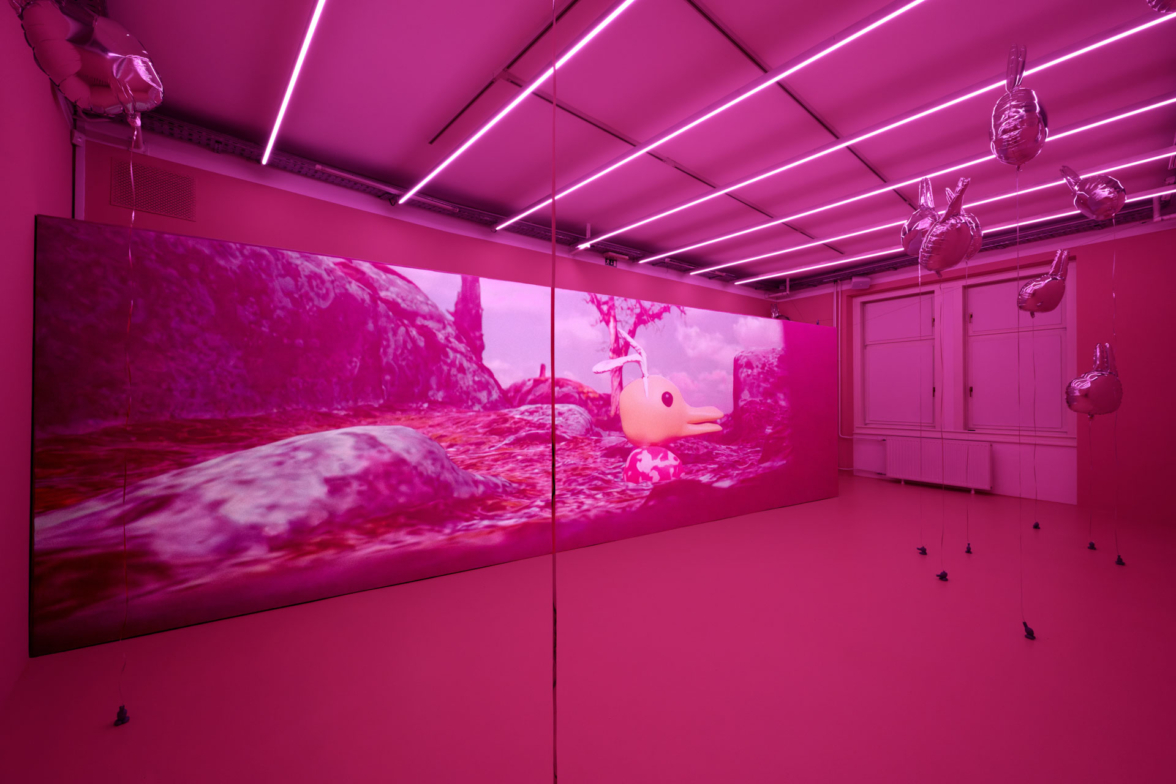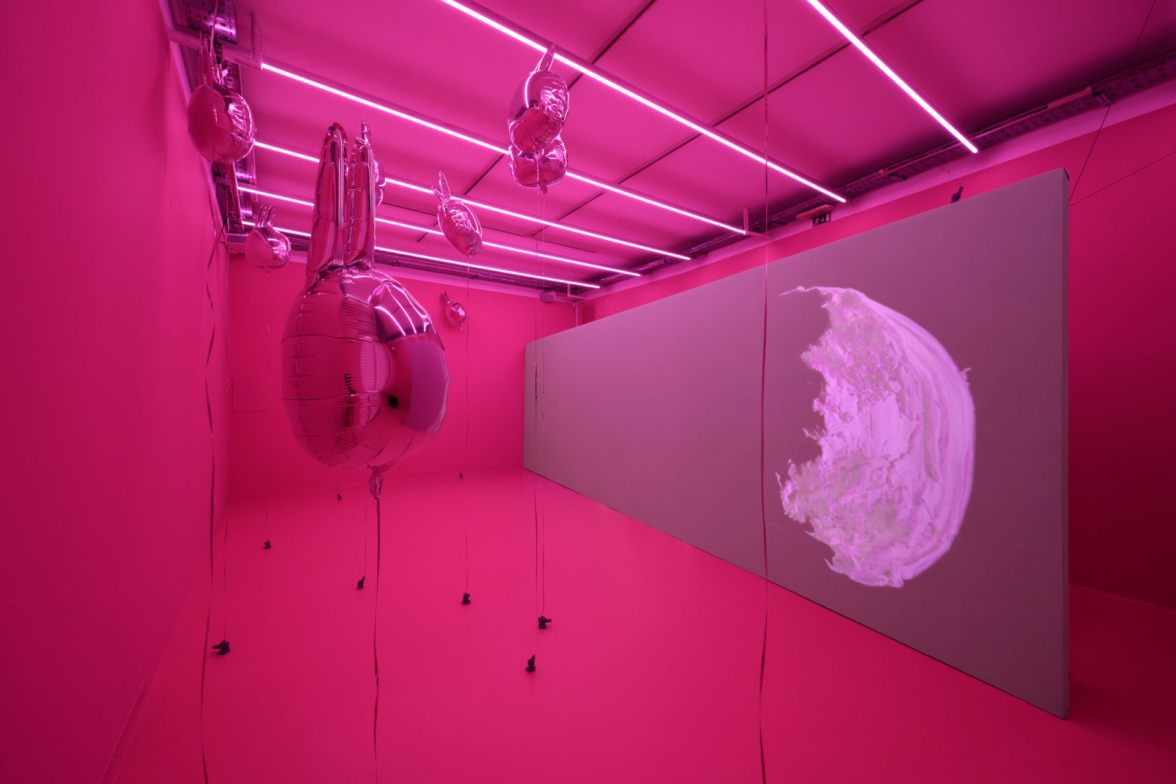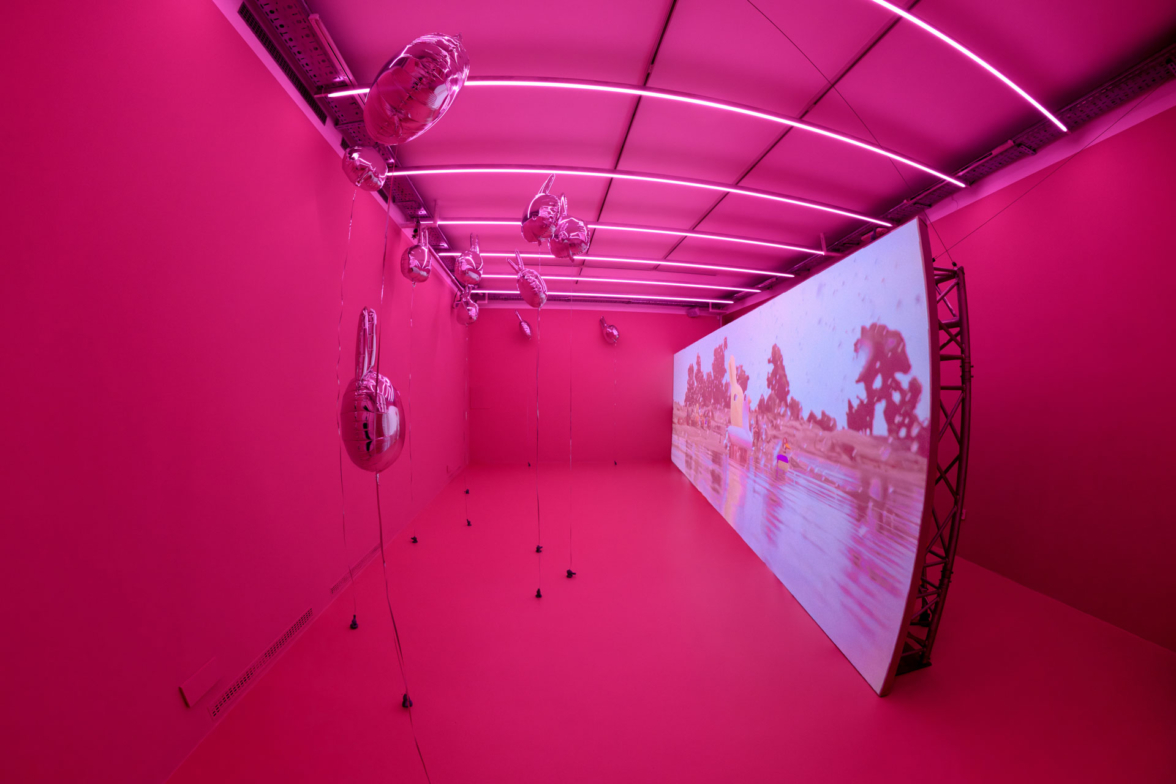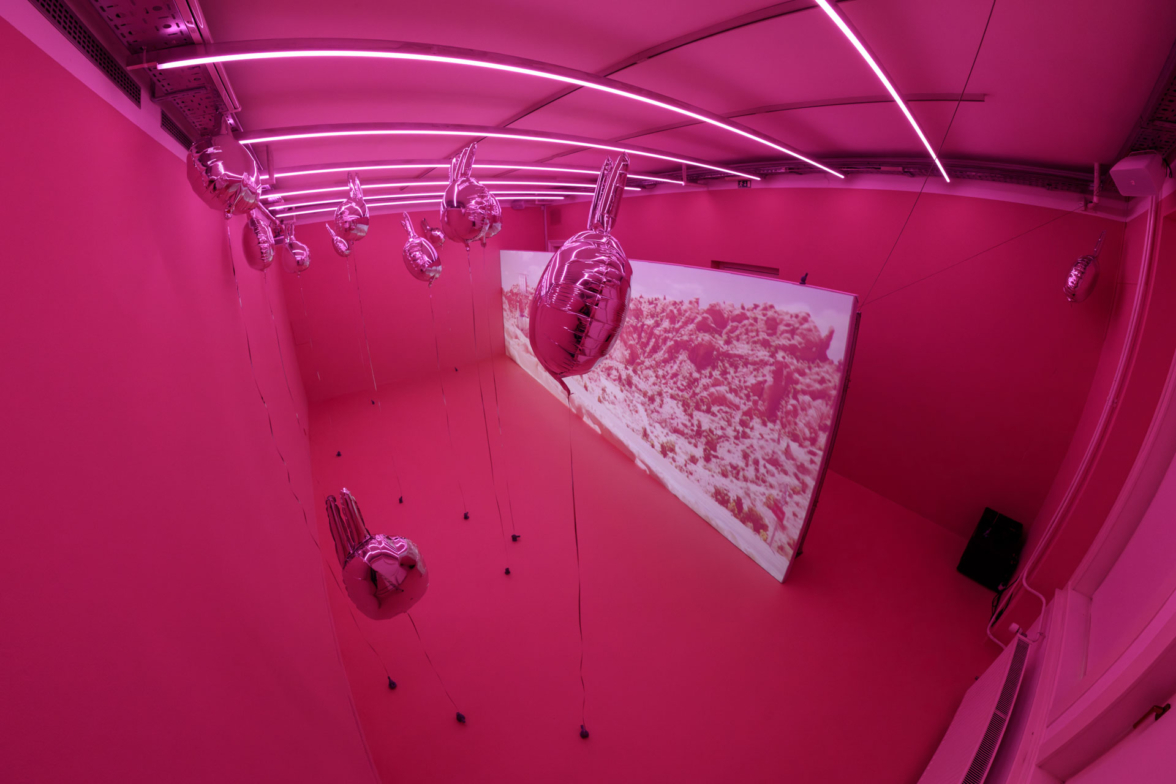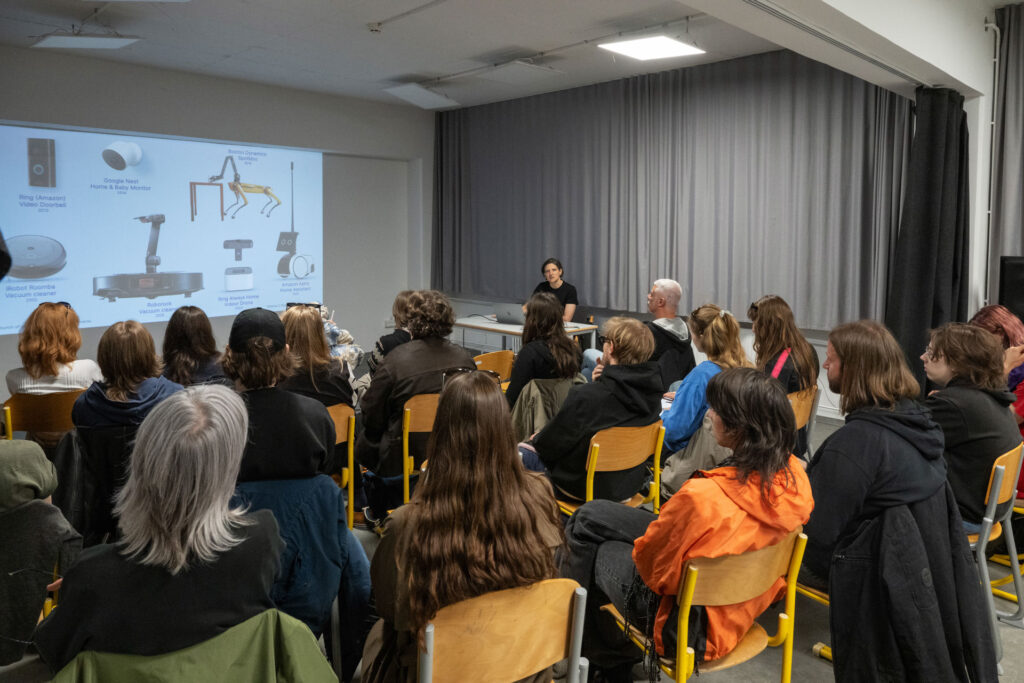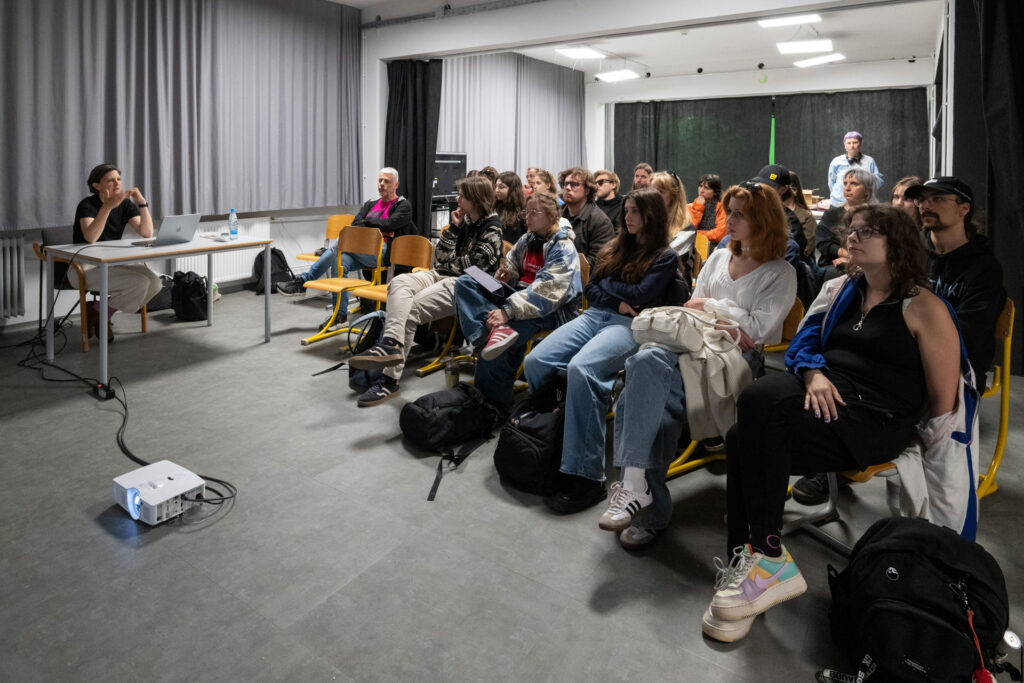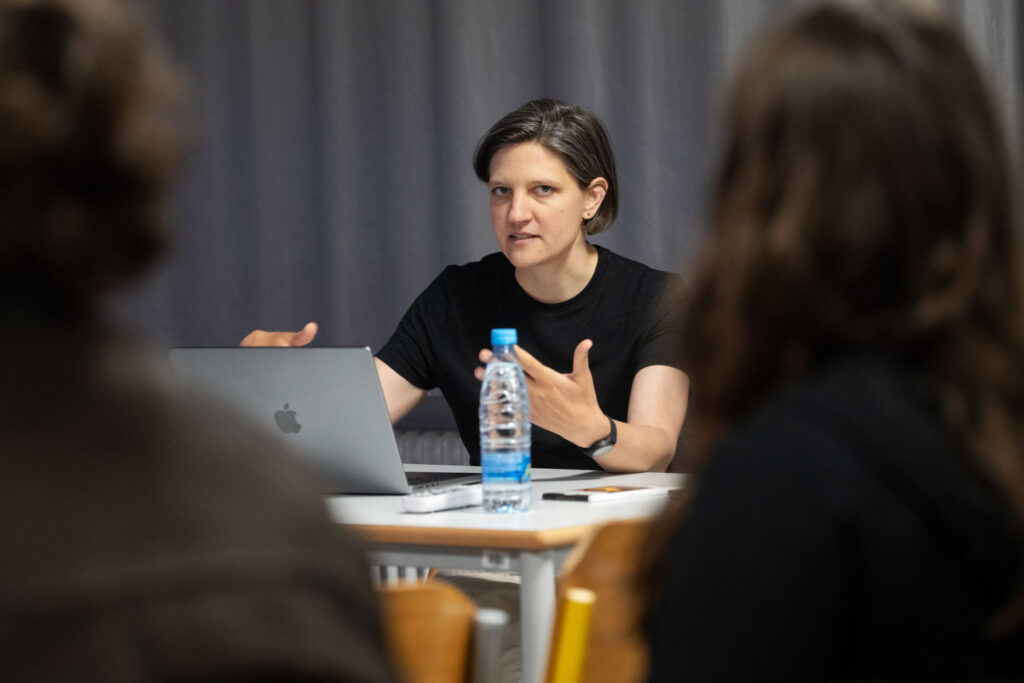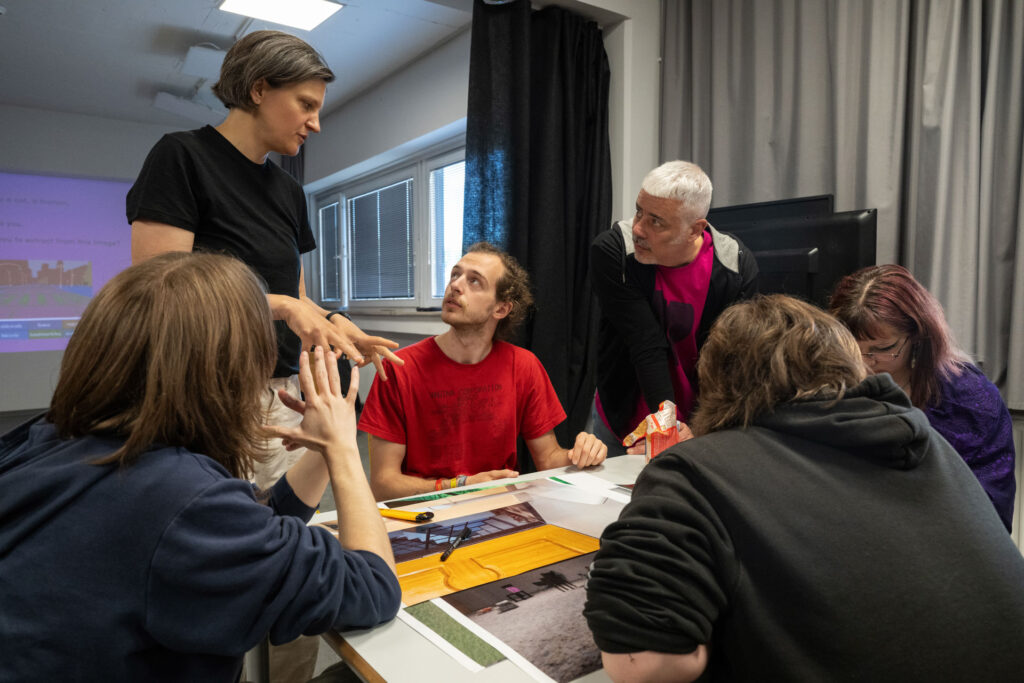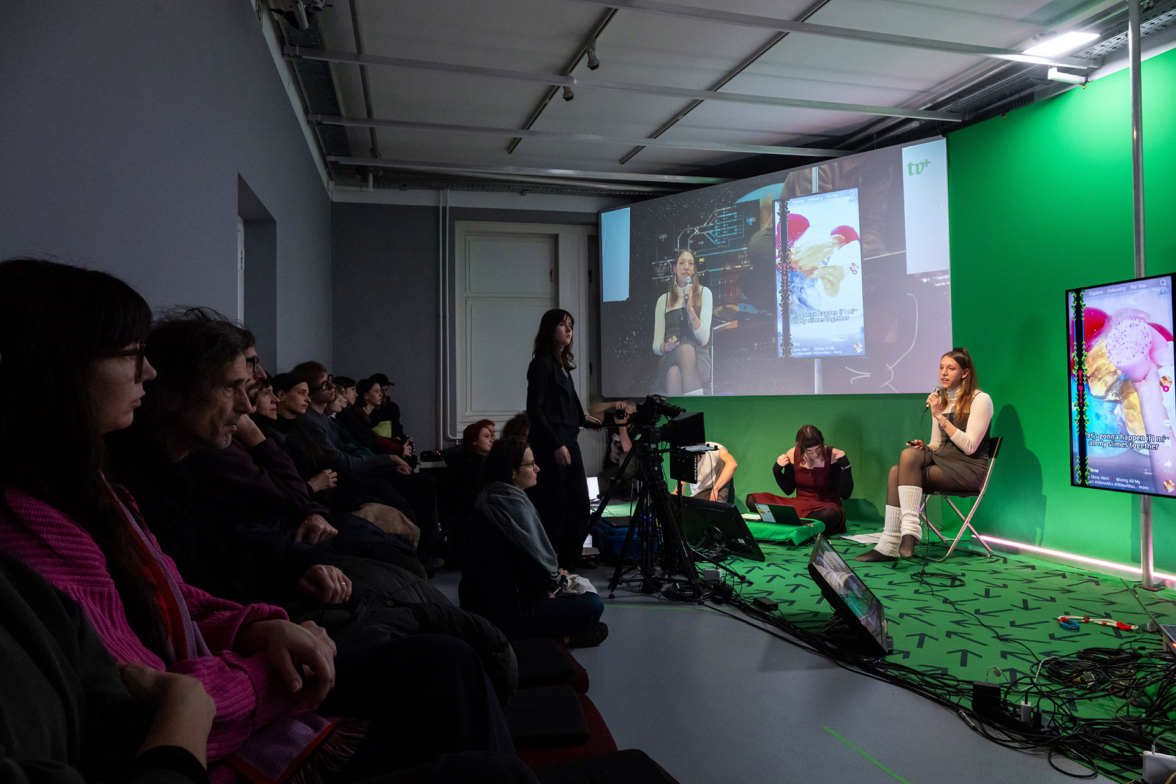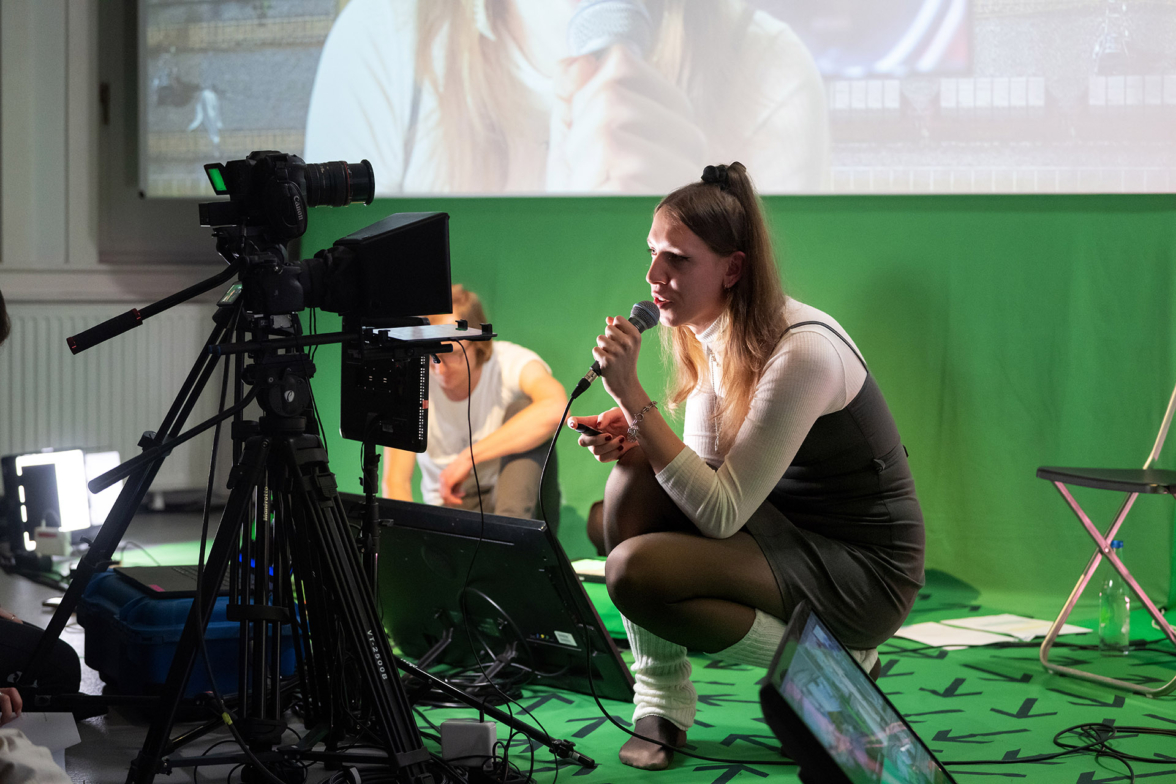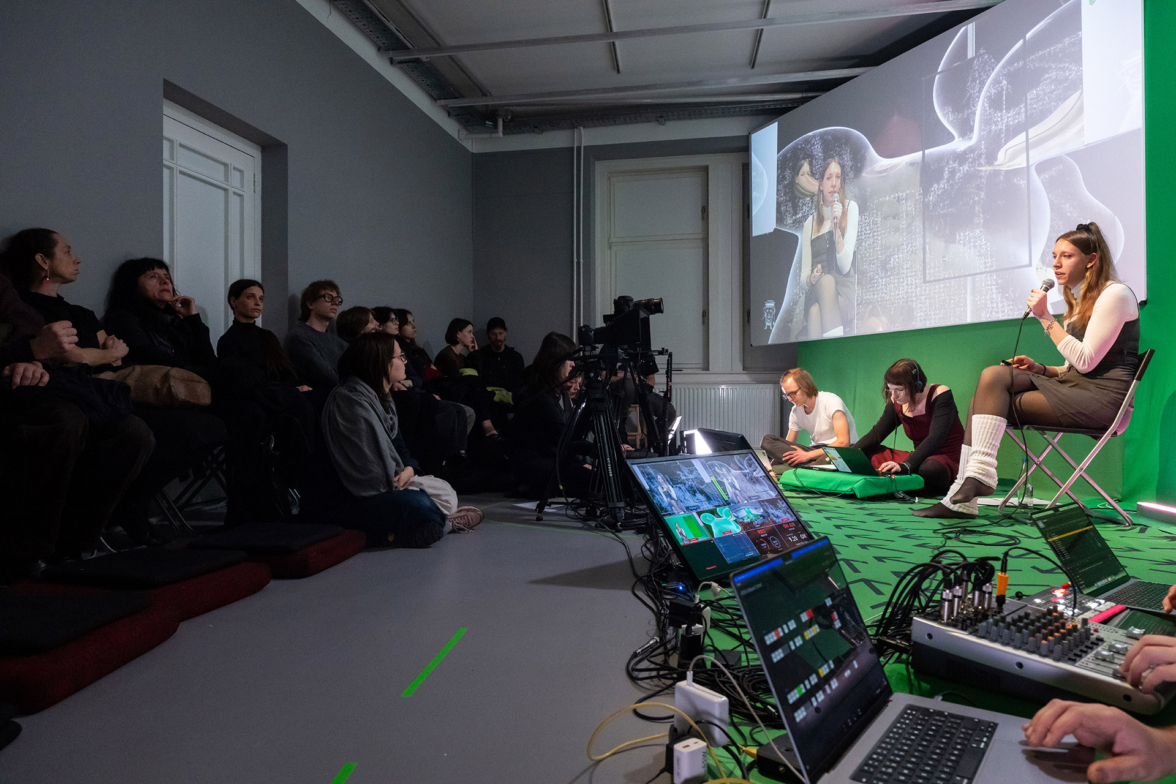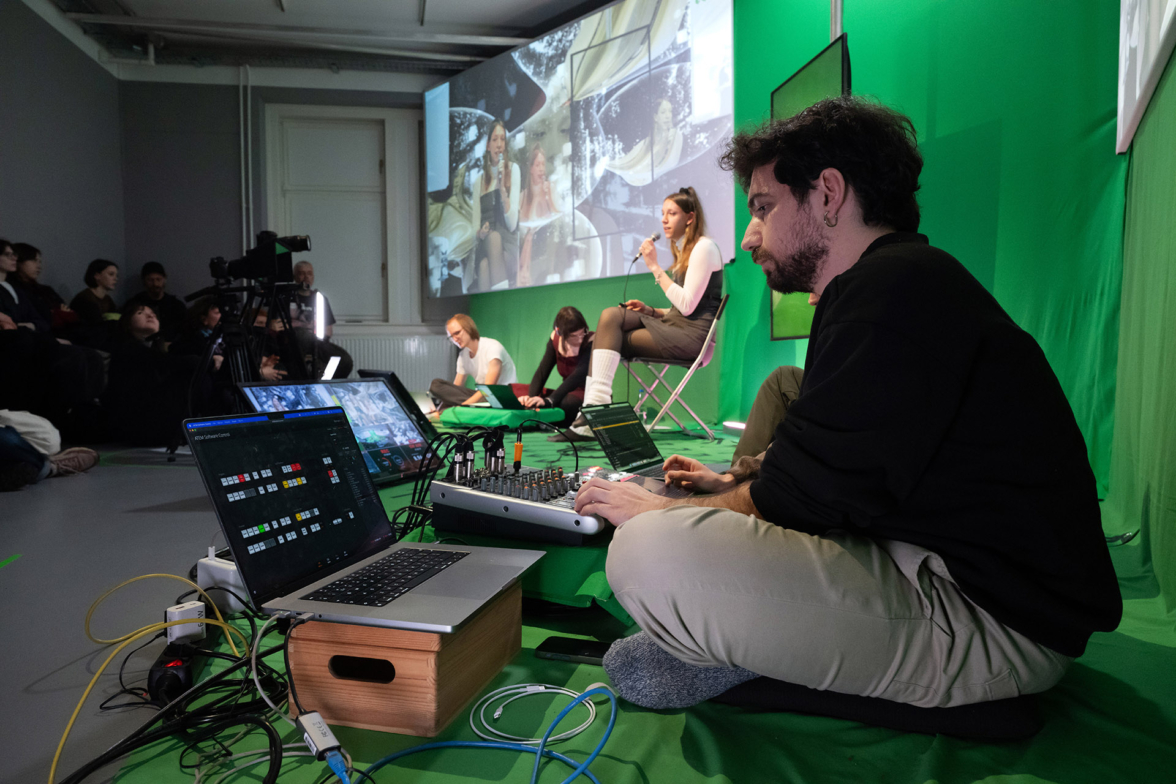
Balloons etc.

Simone C Niquille
Simone C Niquille
Balloons etc.

Artist talk
WED, 13 May 2026 at 3 PM
ALUO / Erjavčeva, Ljubljana

Part of the symposium tactics&practice #17: Becoming Image
Curated by Marco De Mutiis


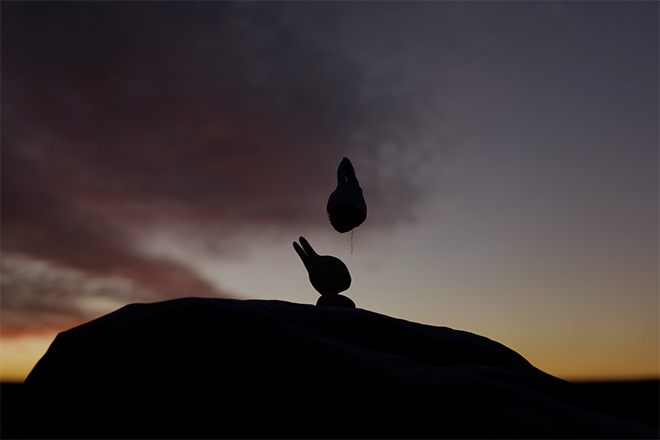
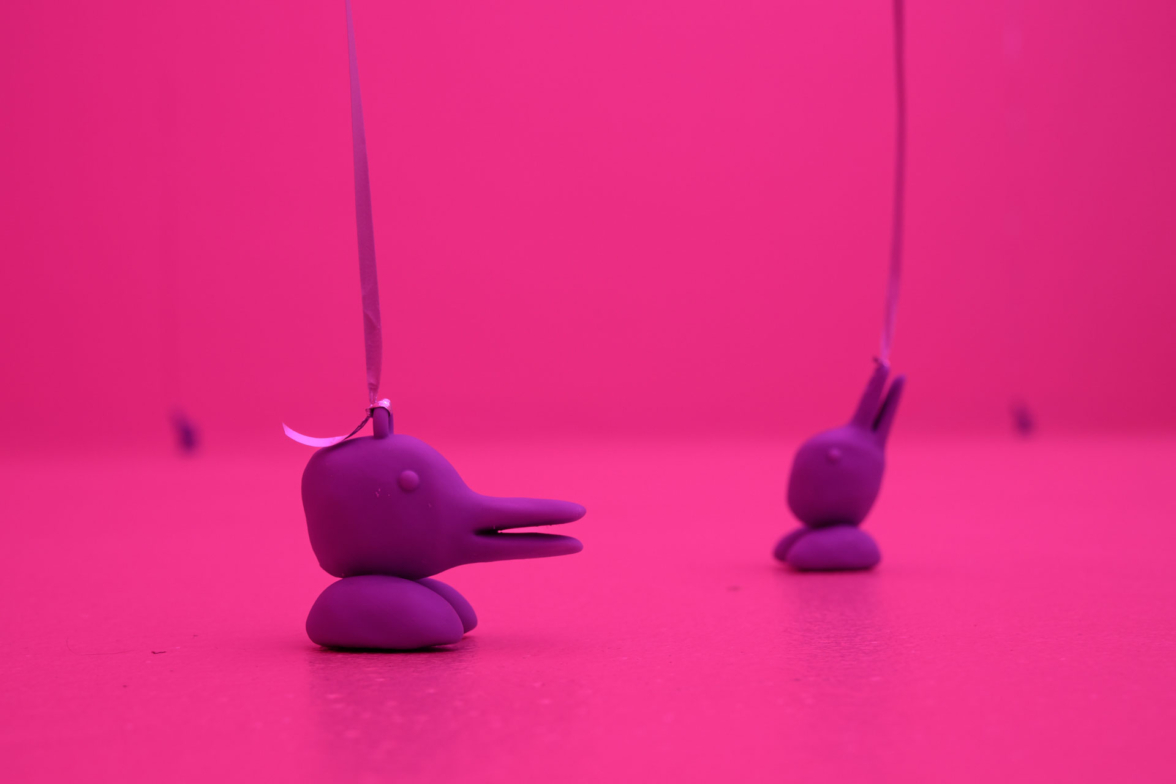
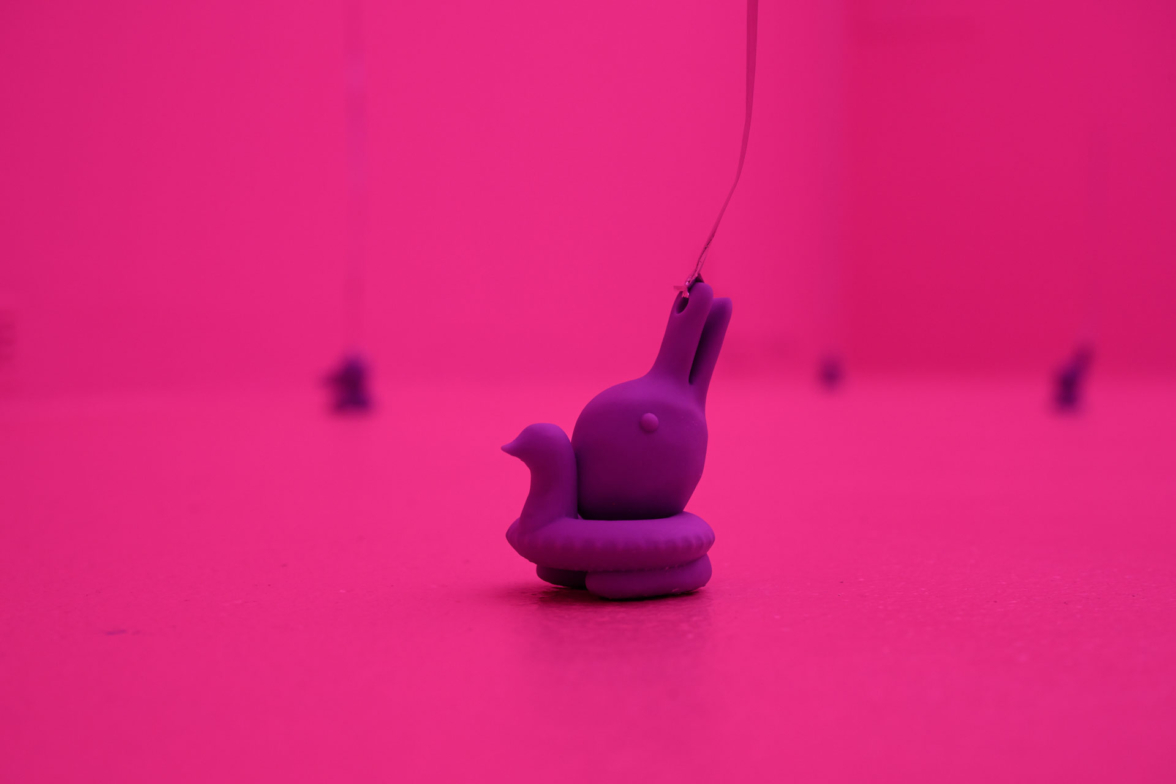
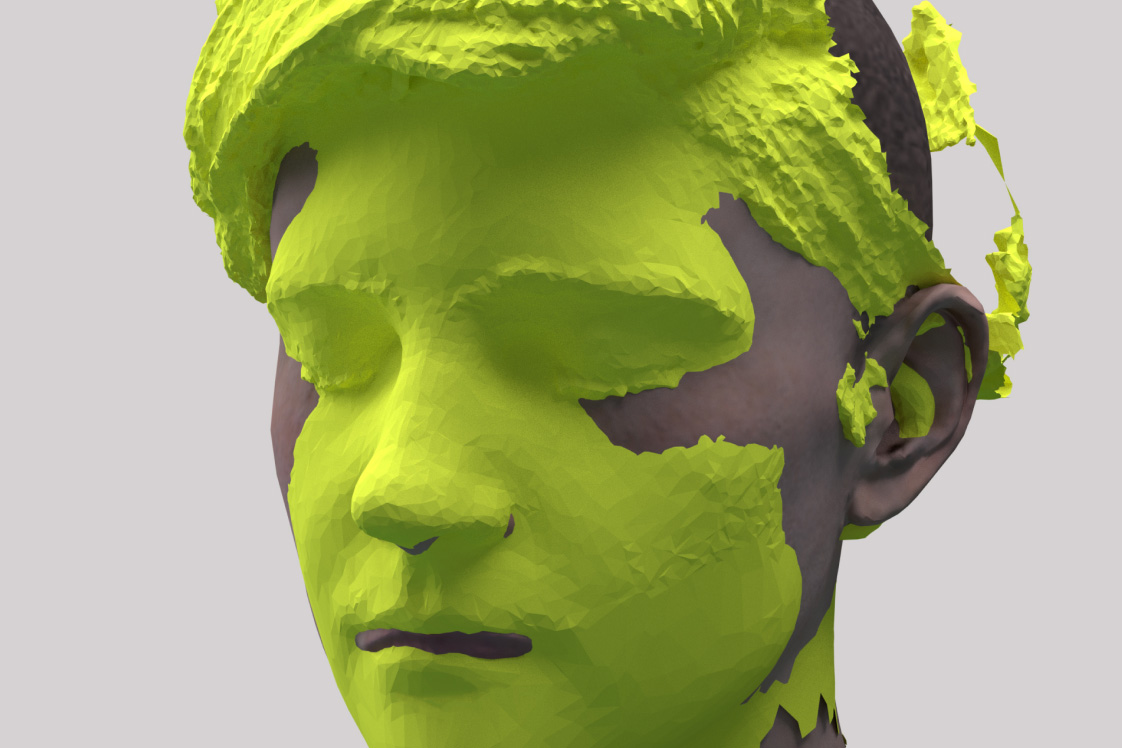
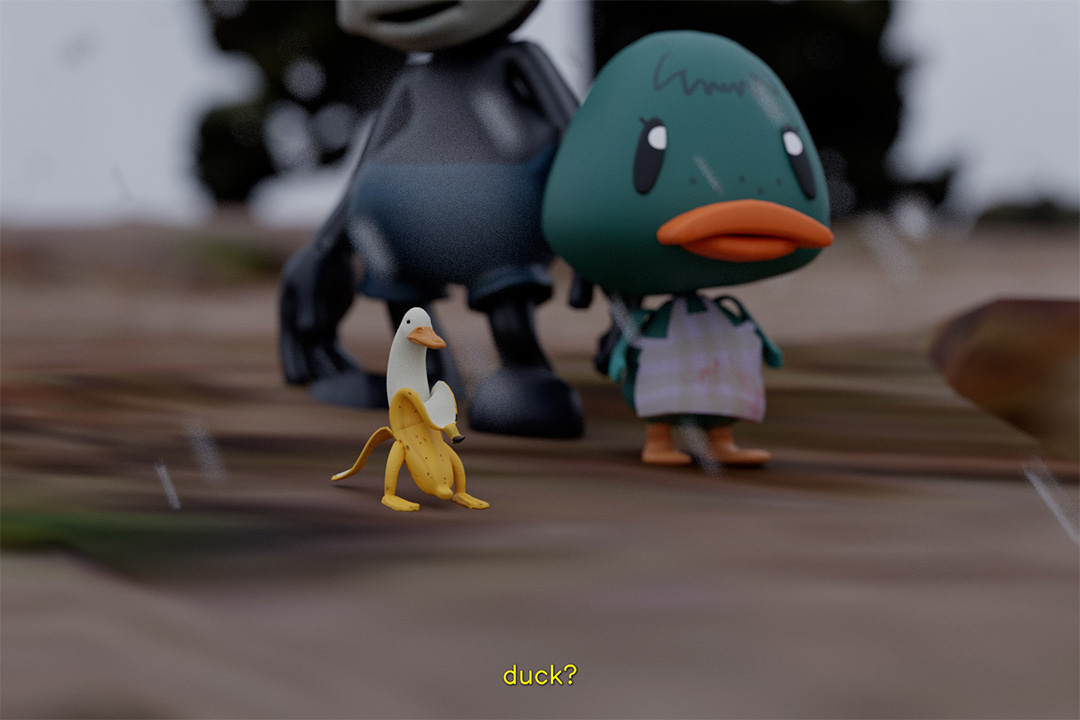
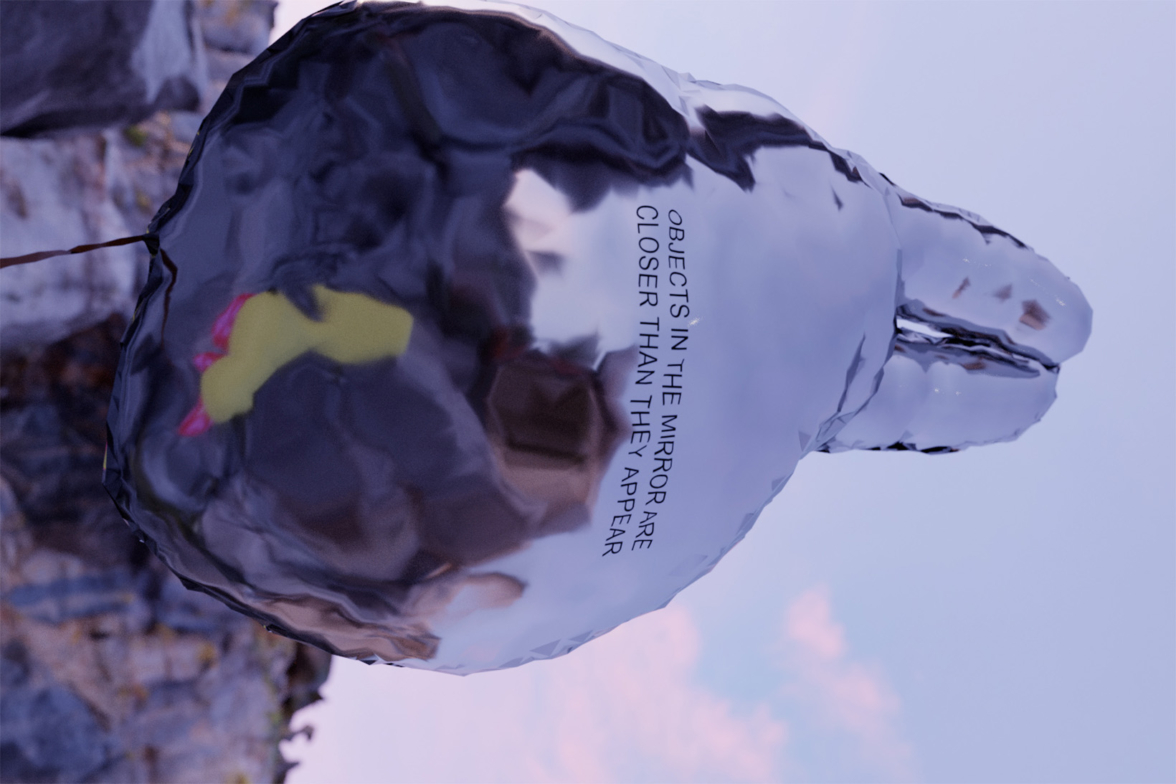
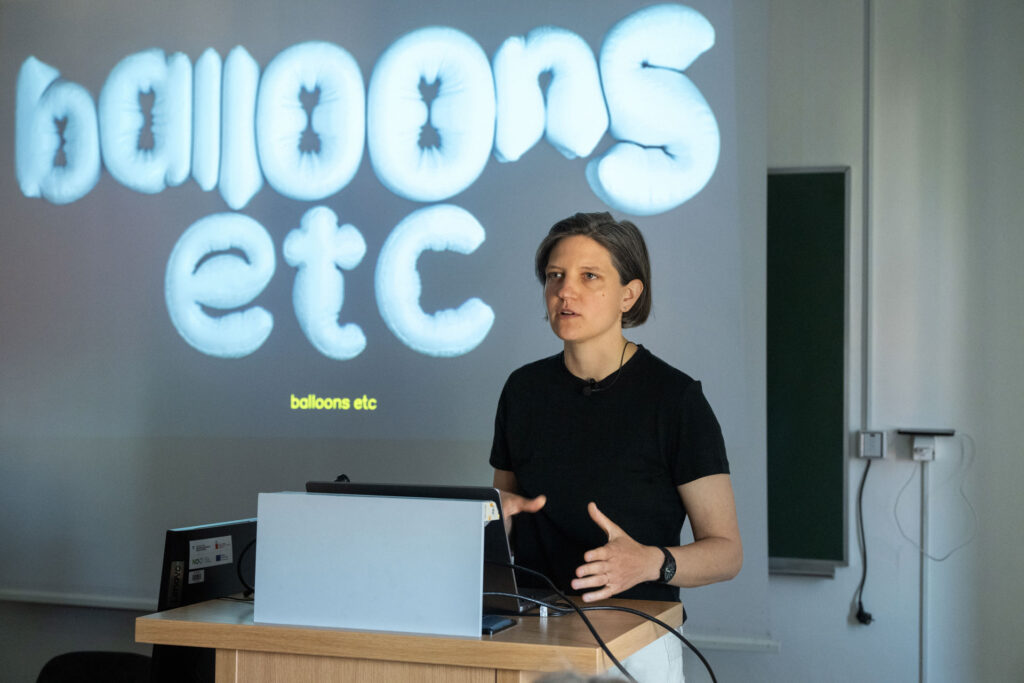
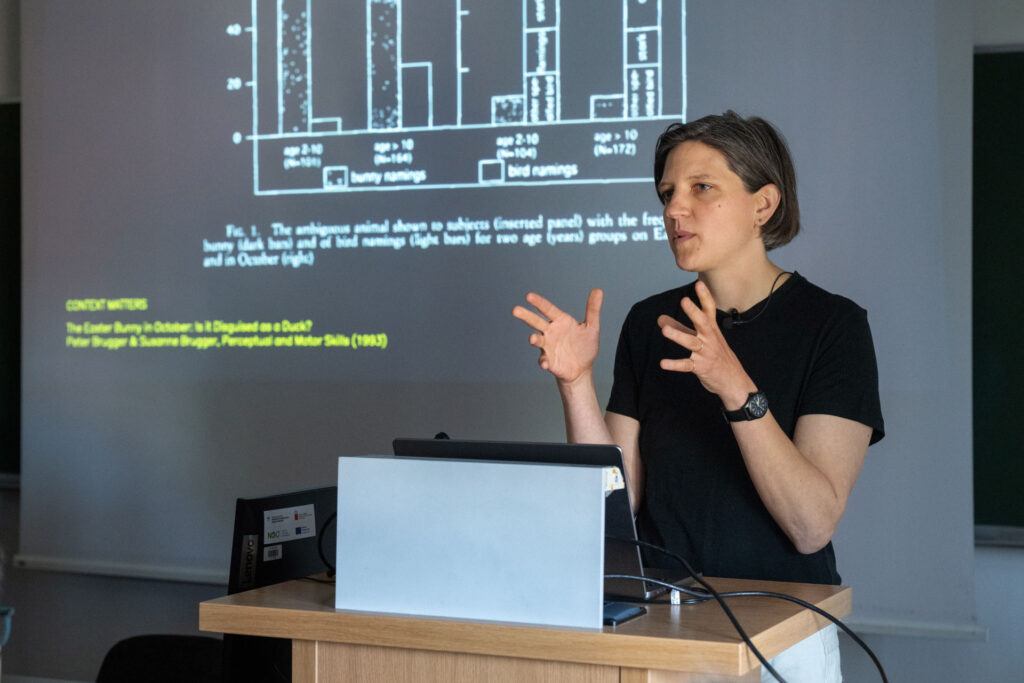
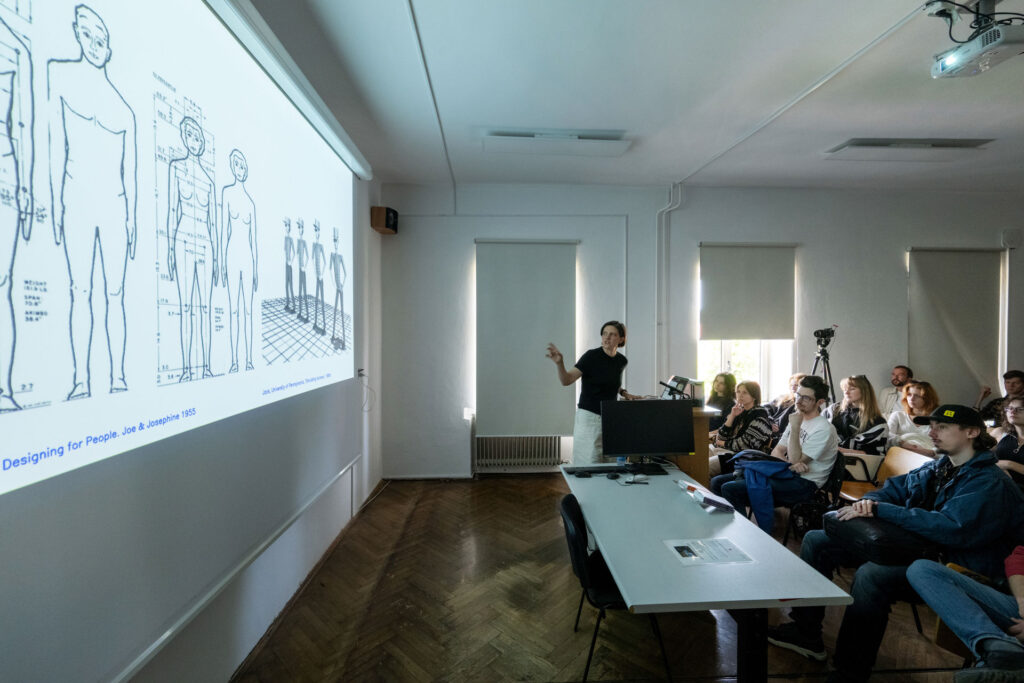
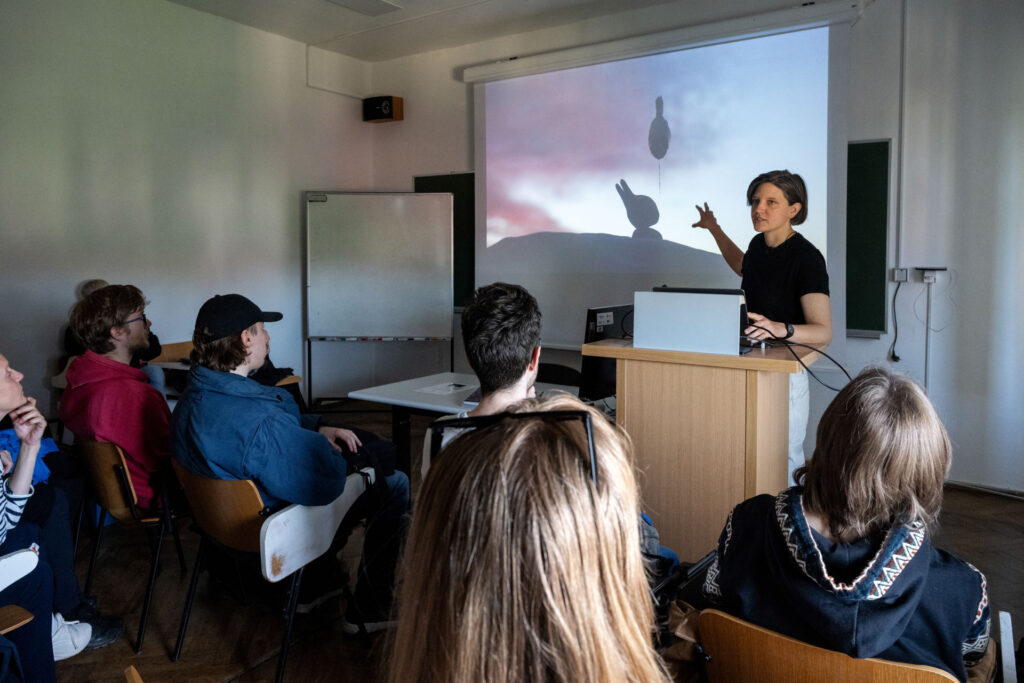
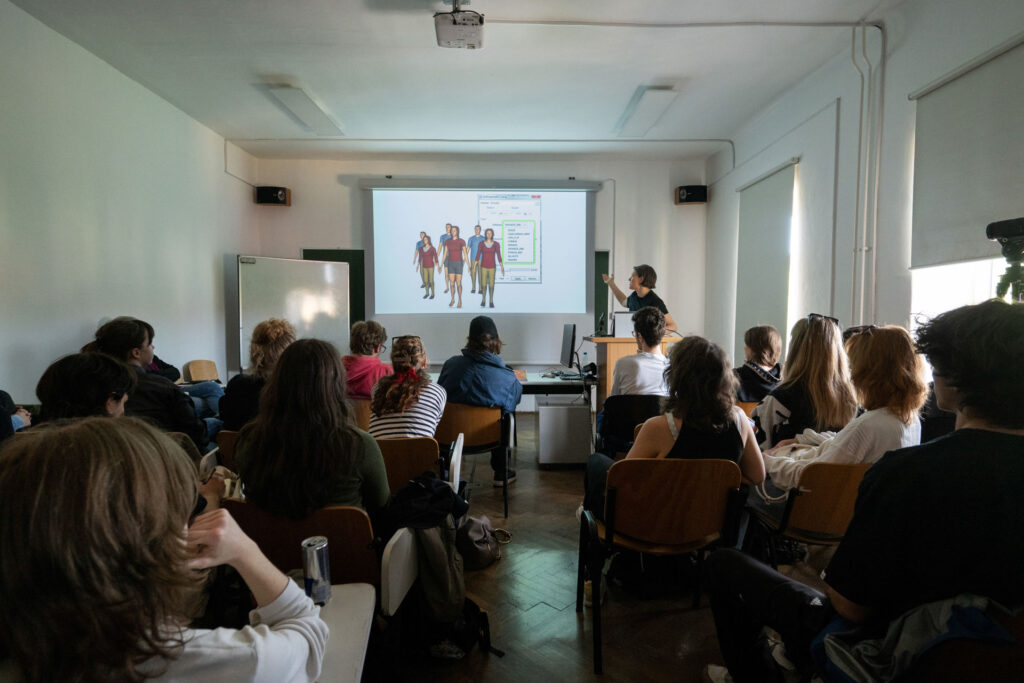
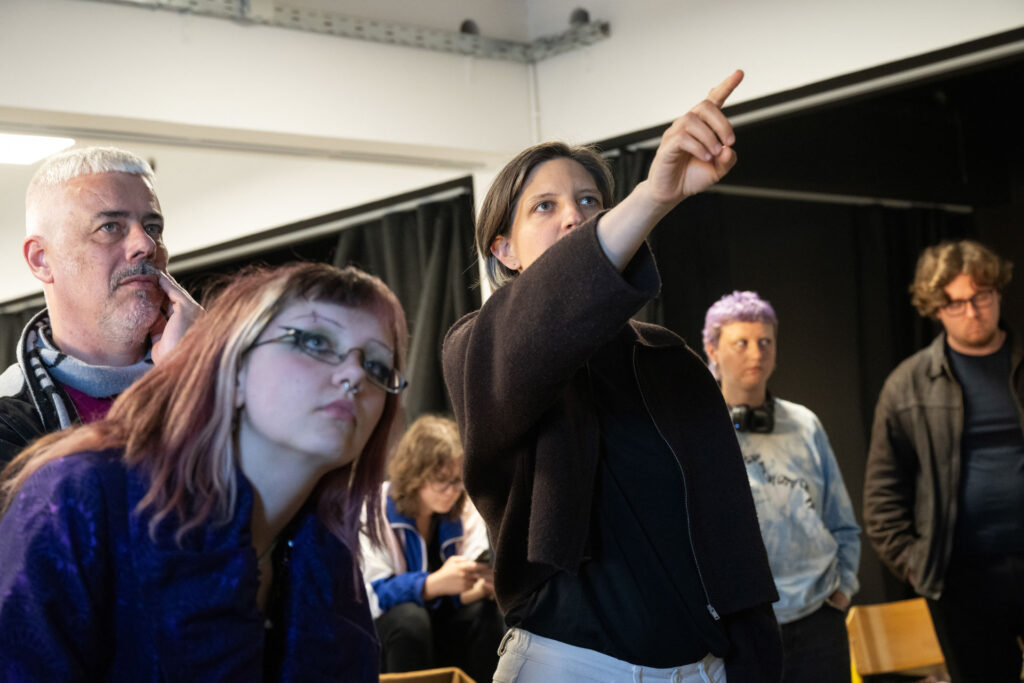
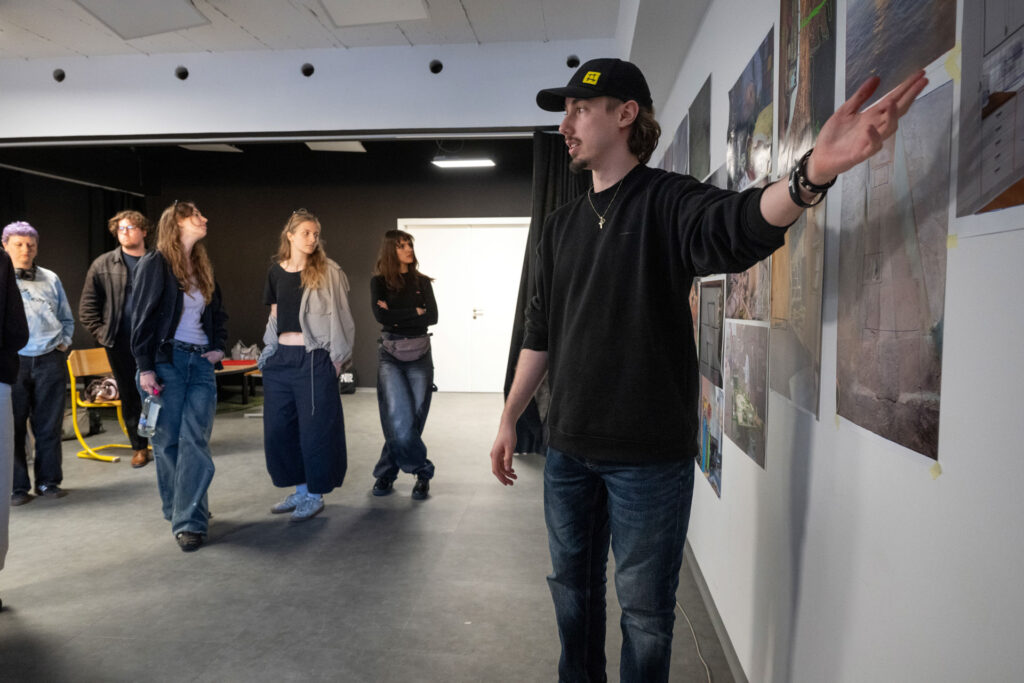
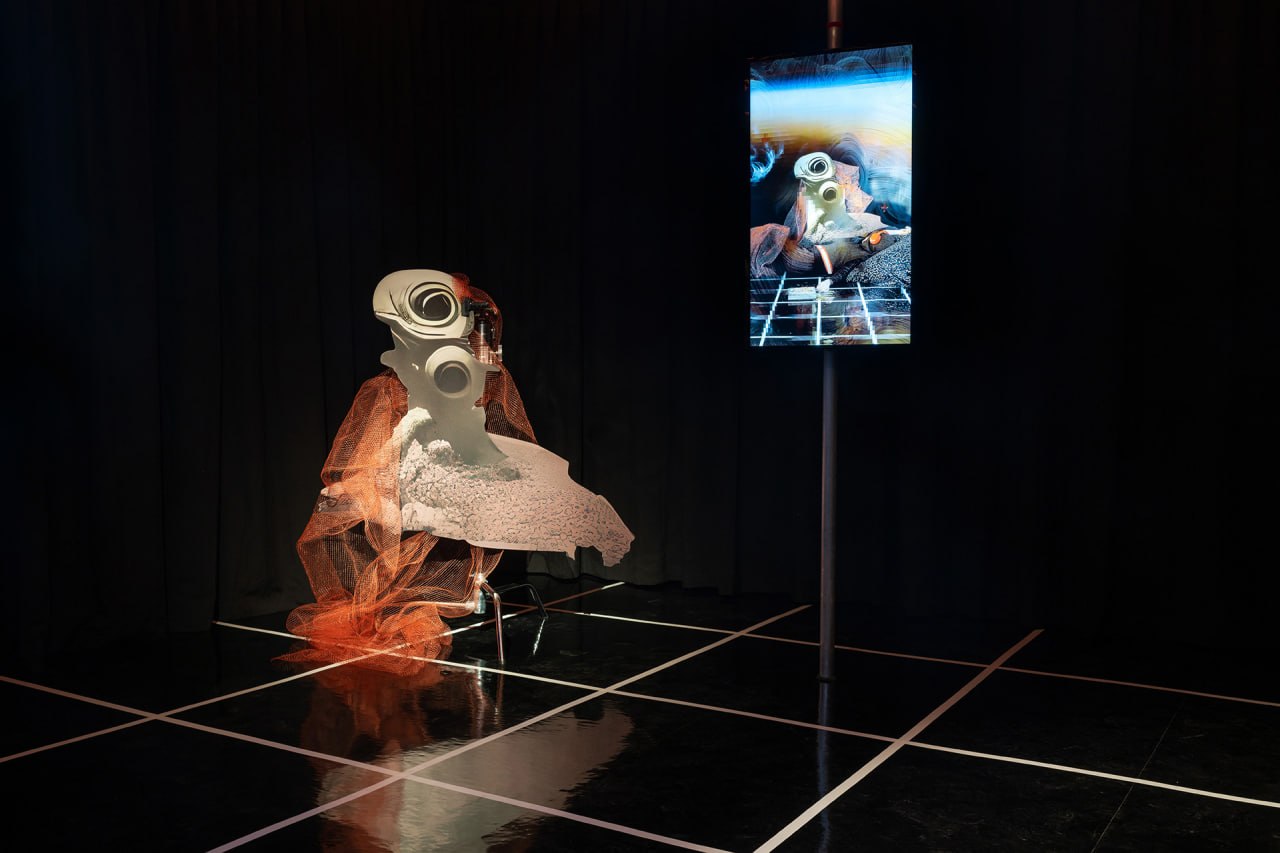
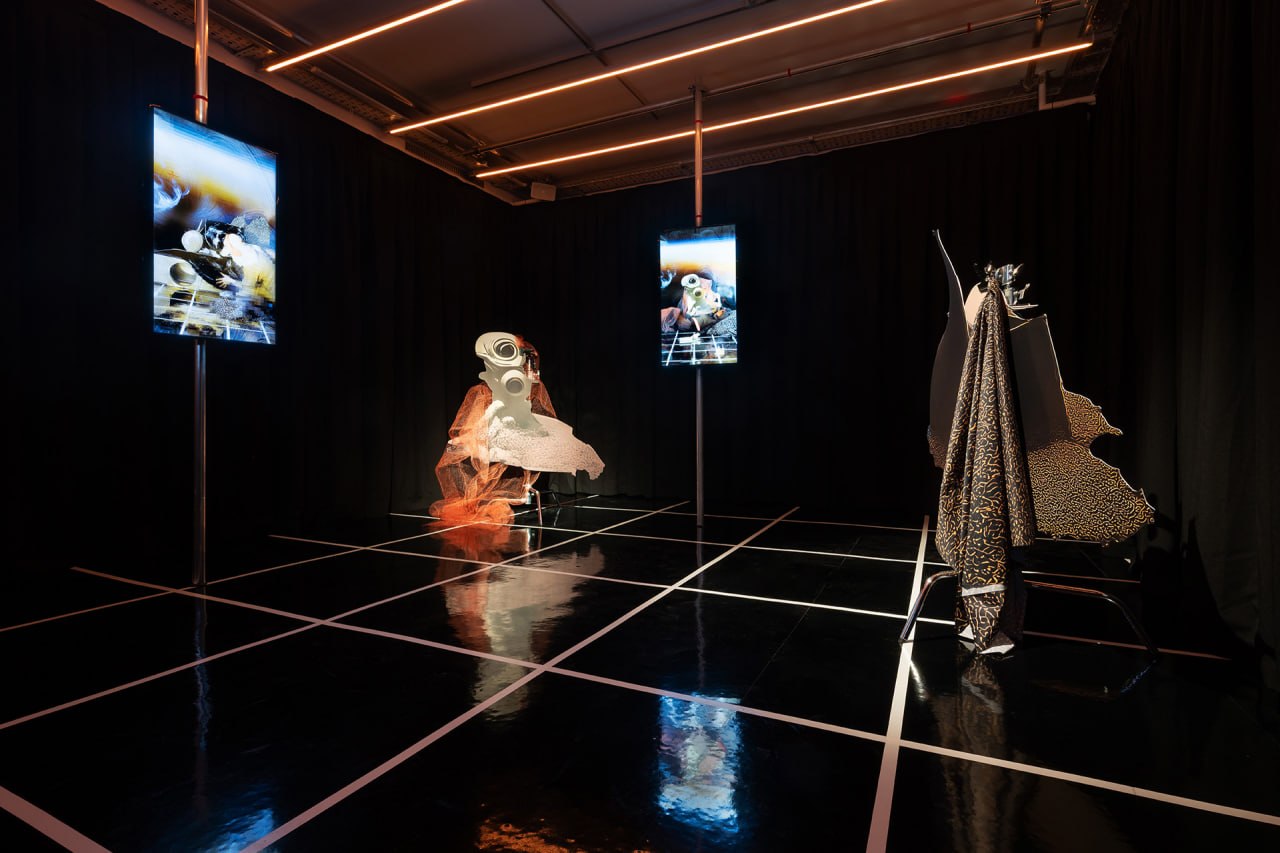
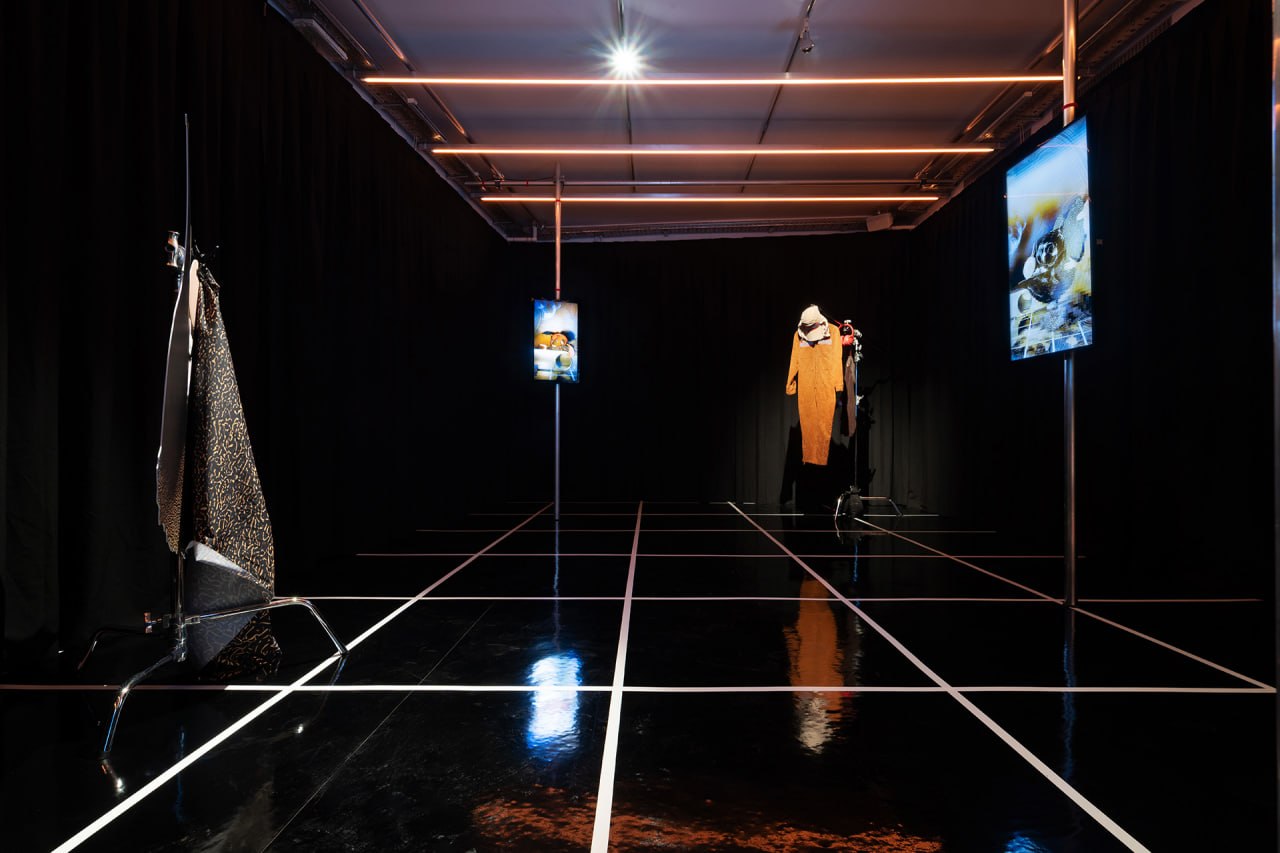
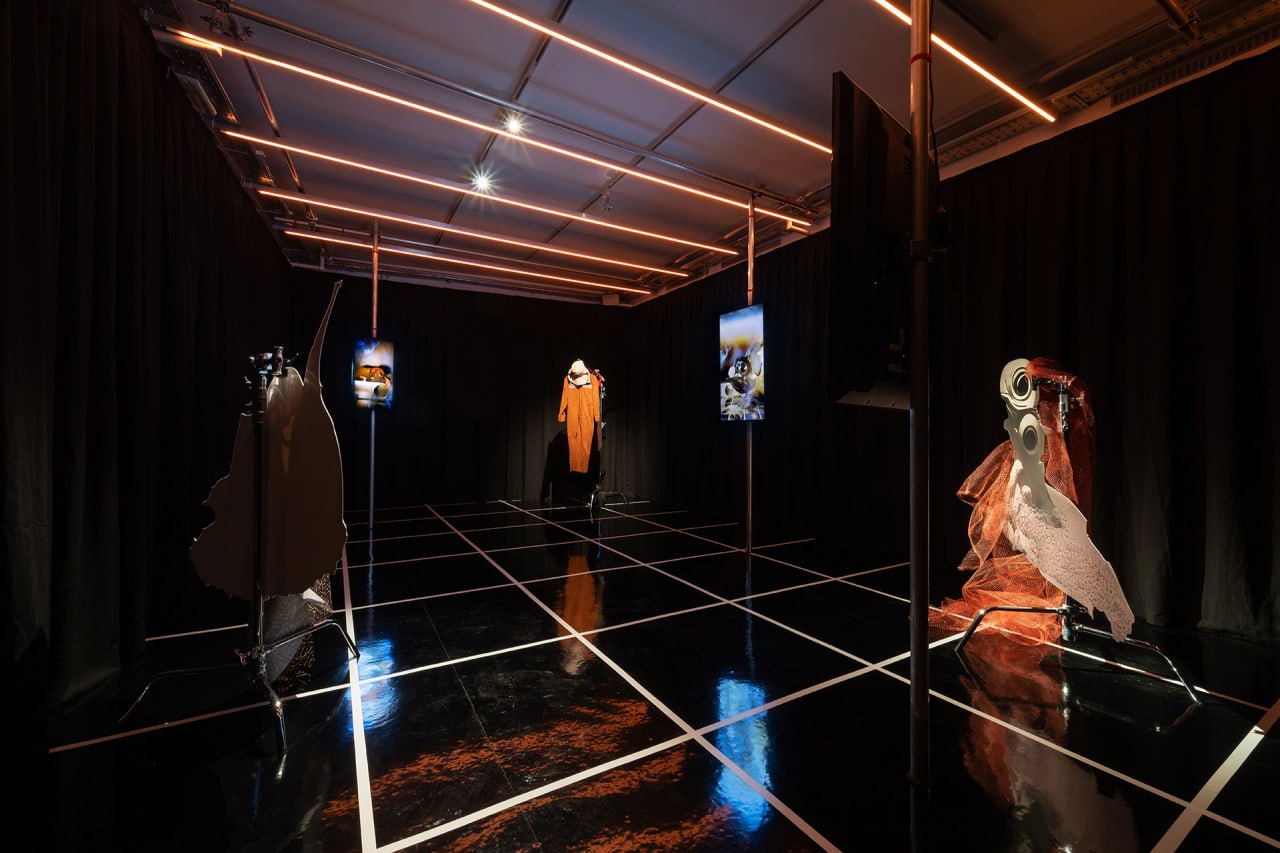
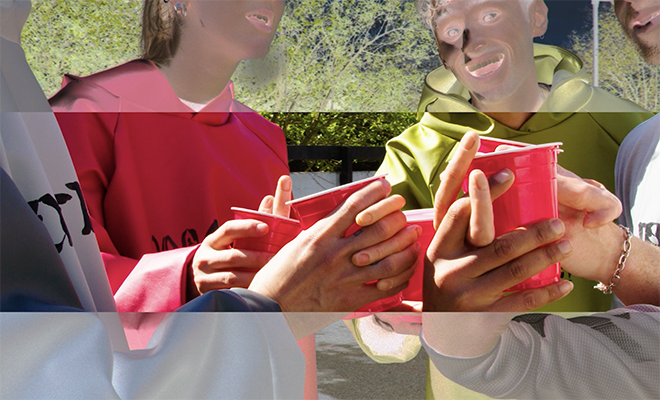
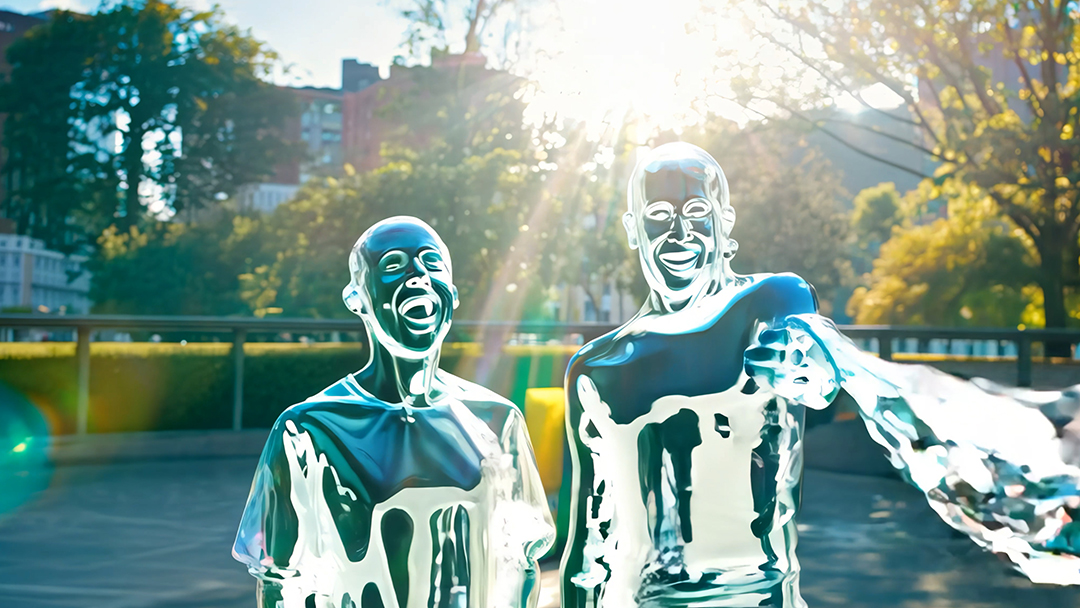
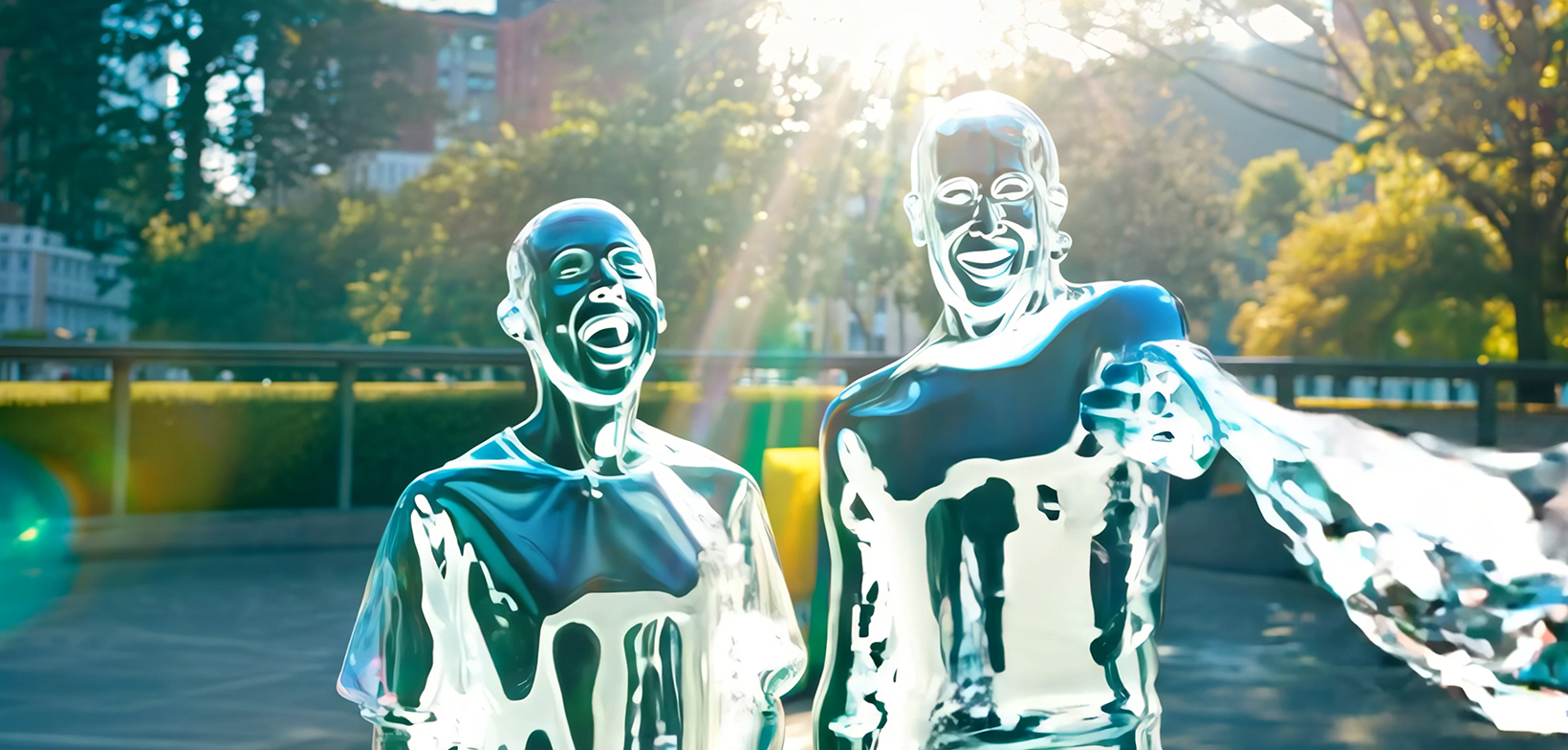
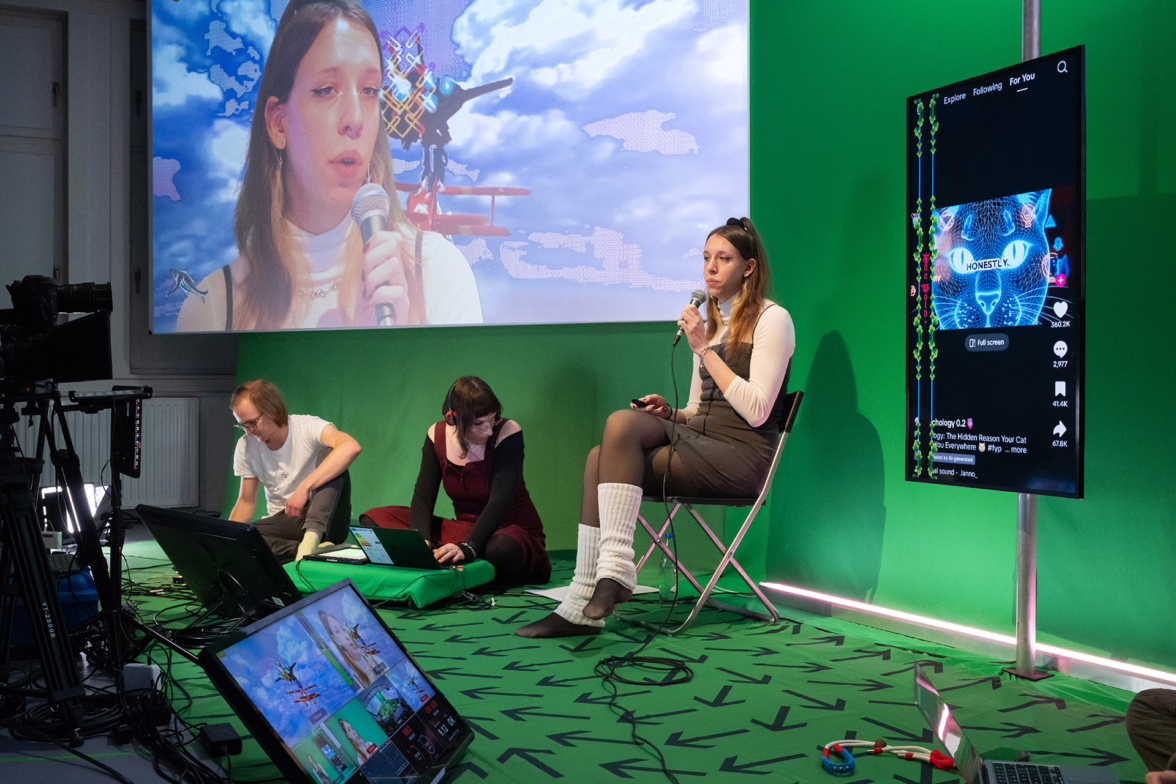
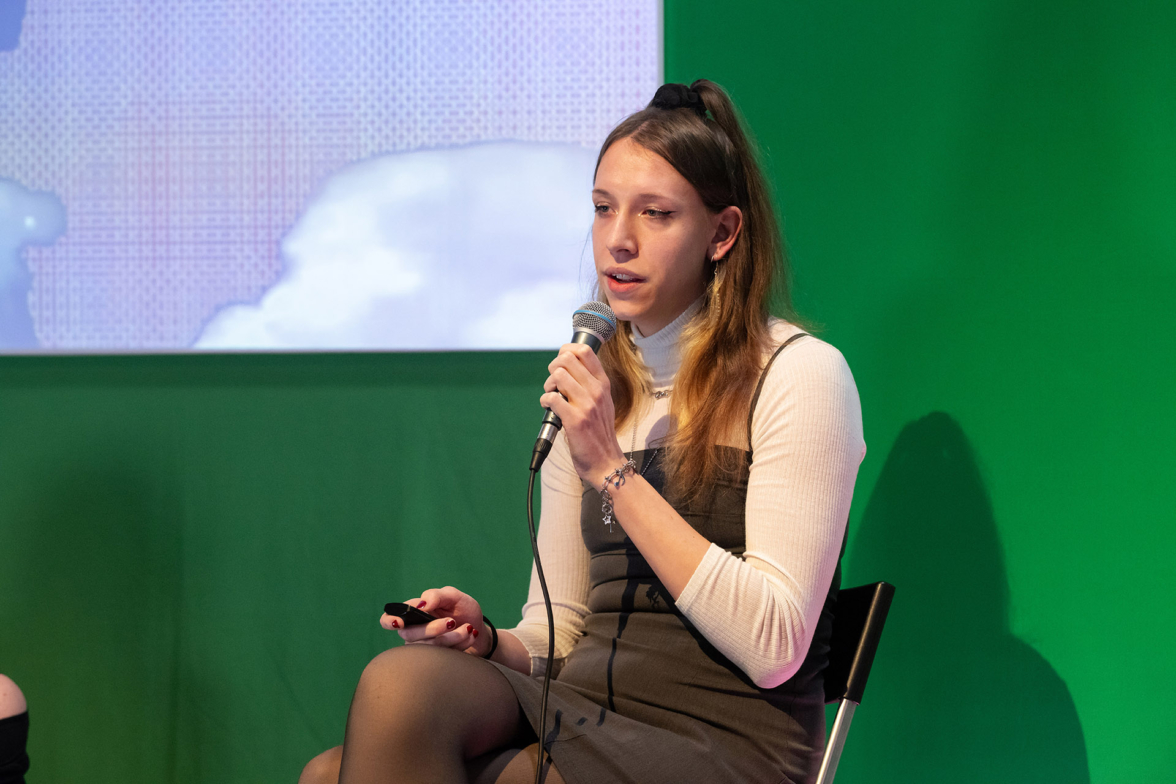
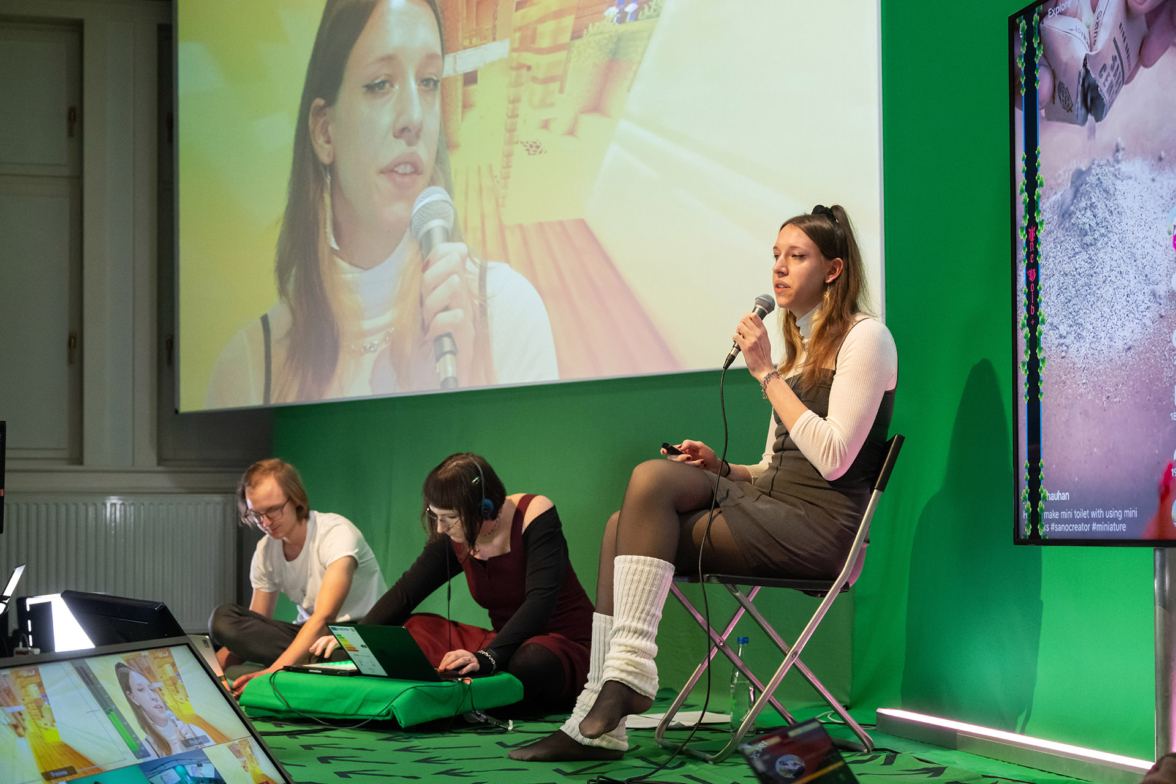
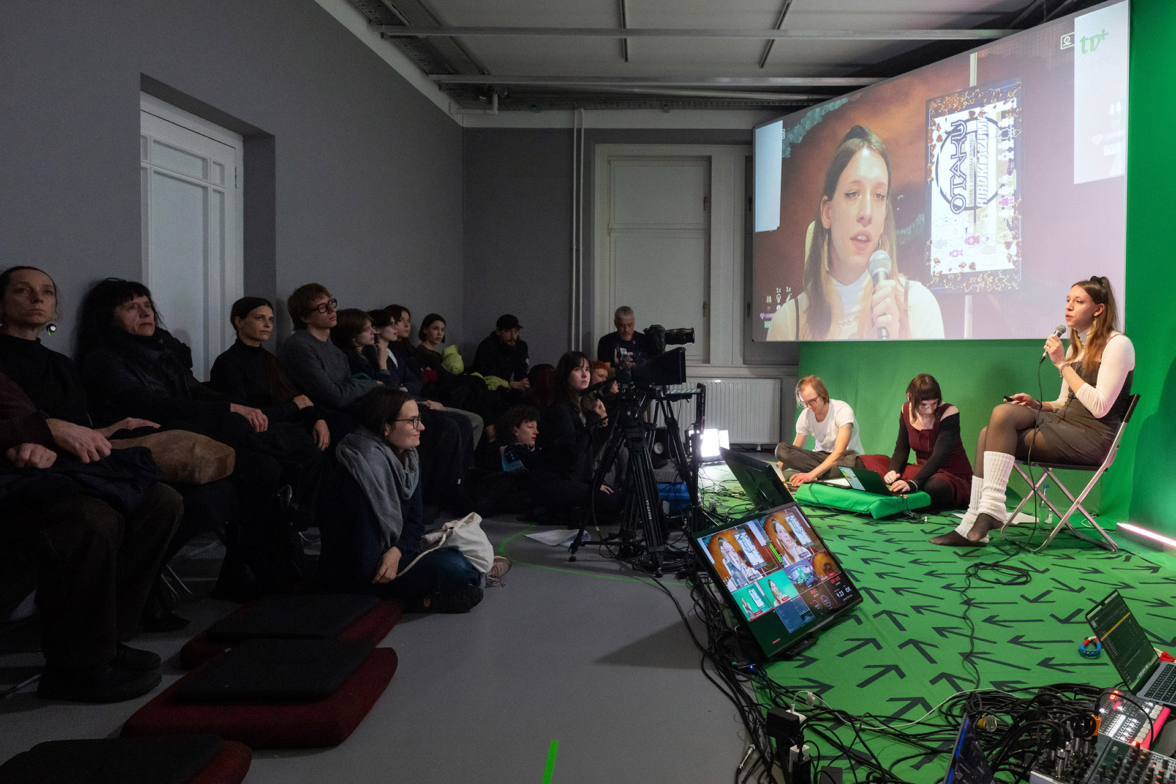
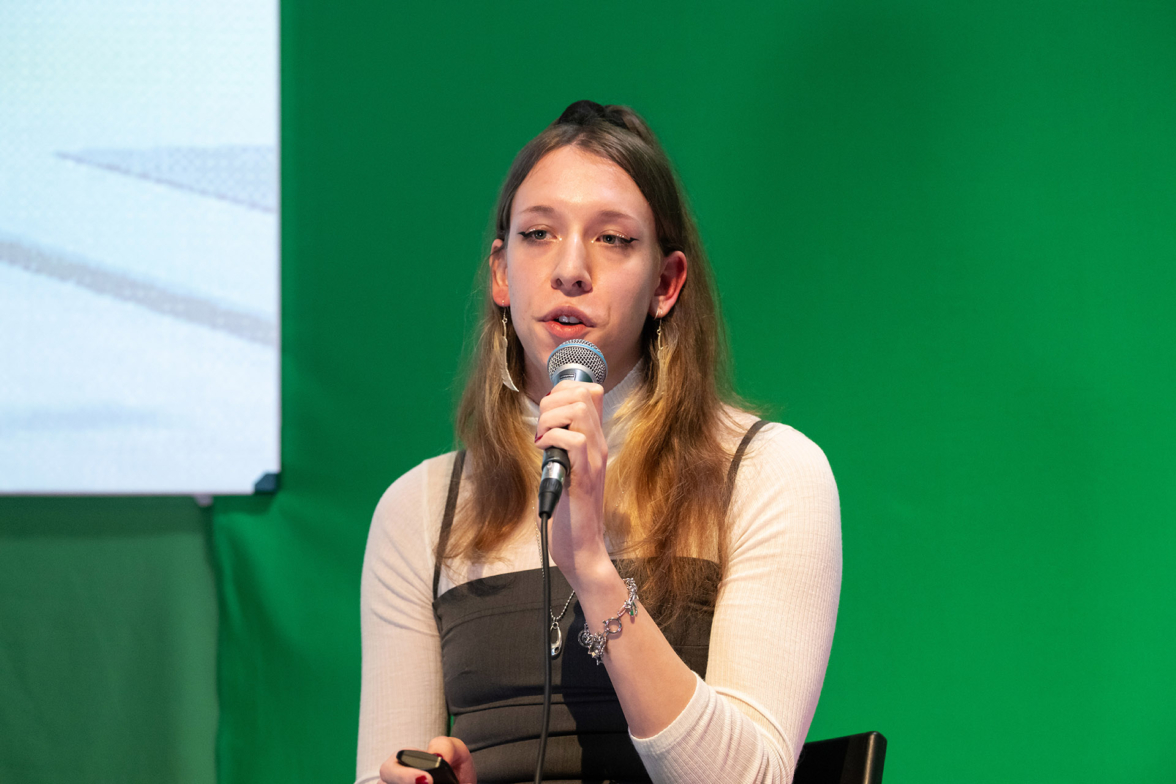
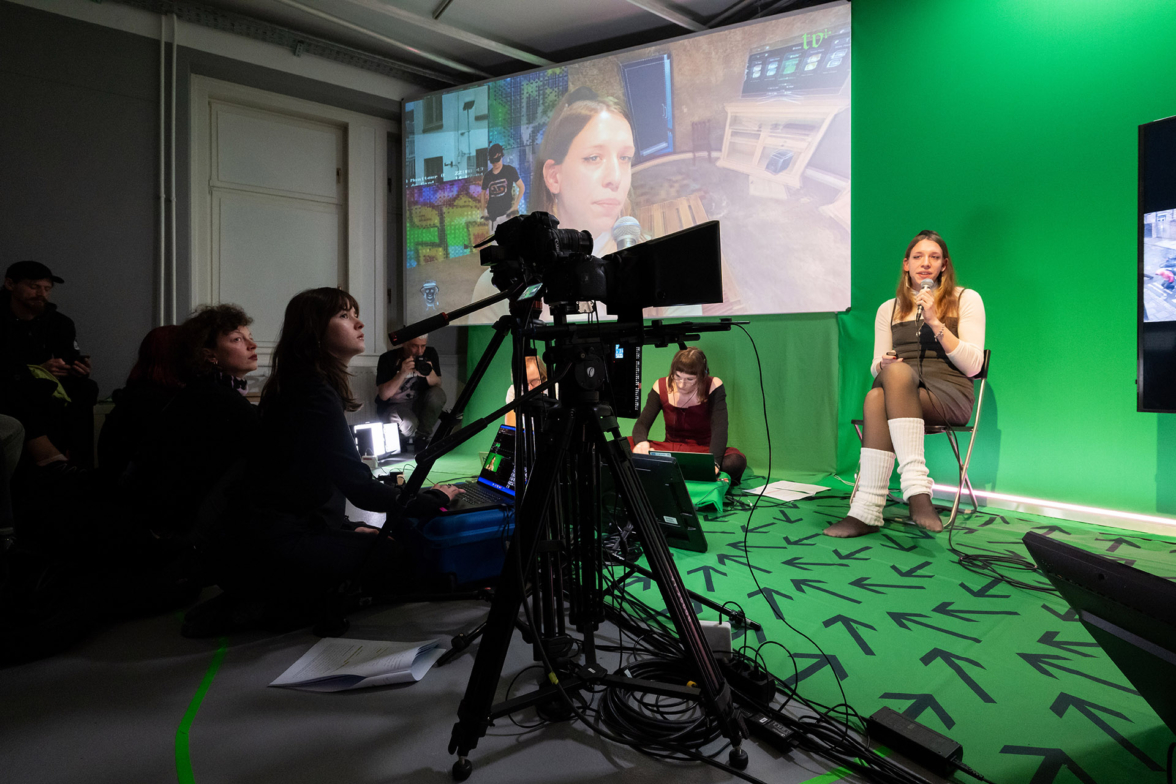
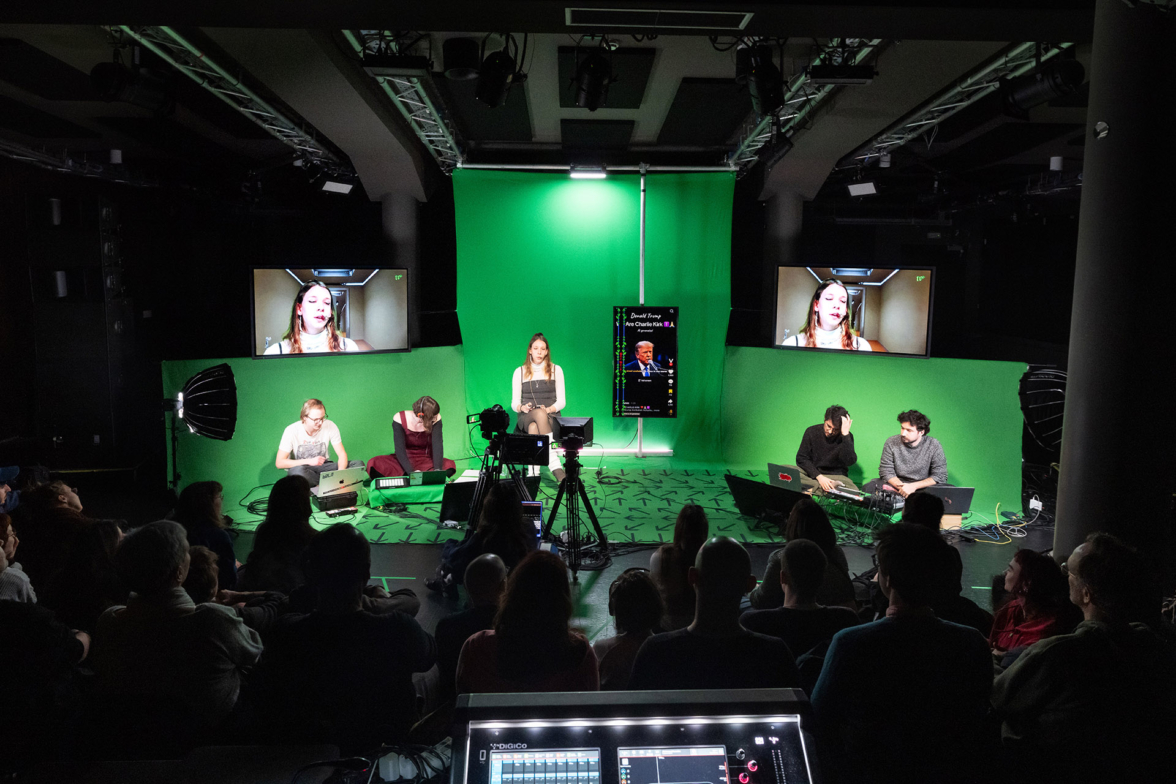
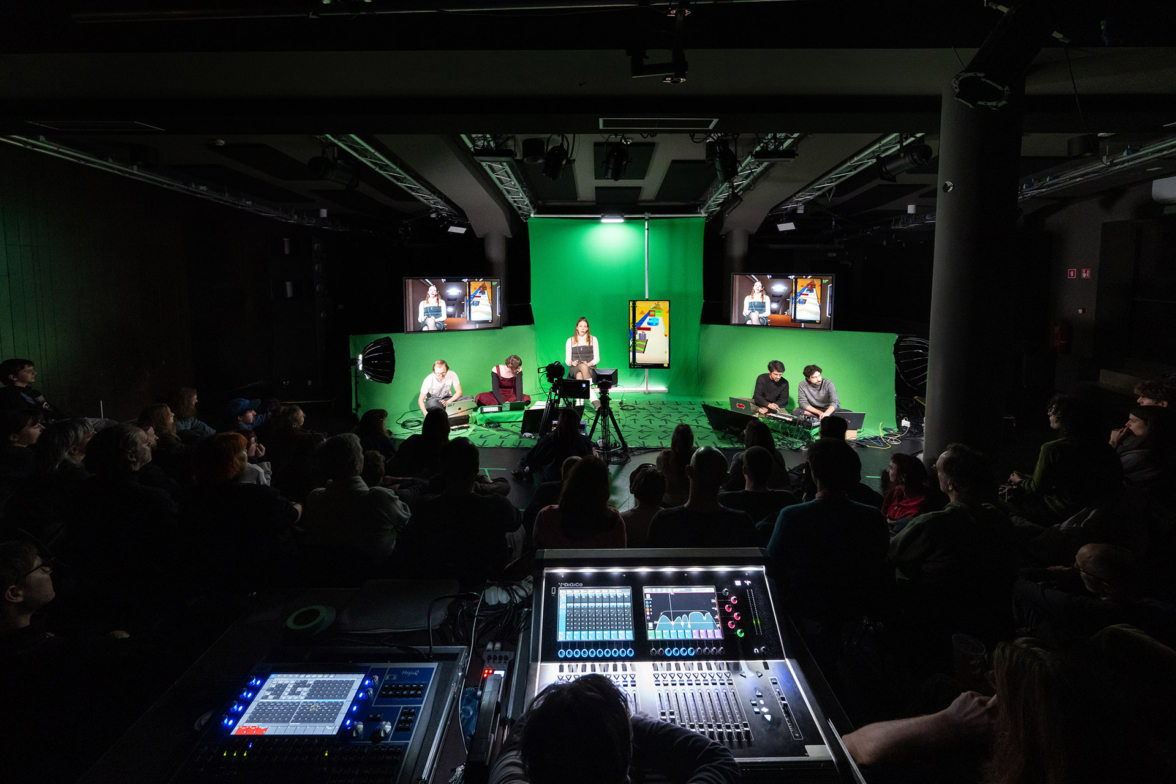
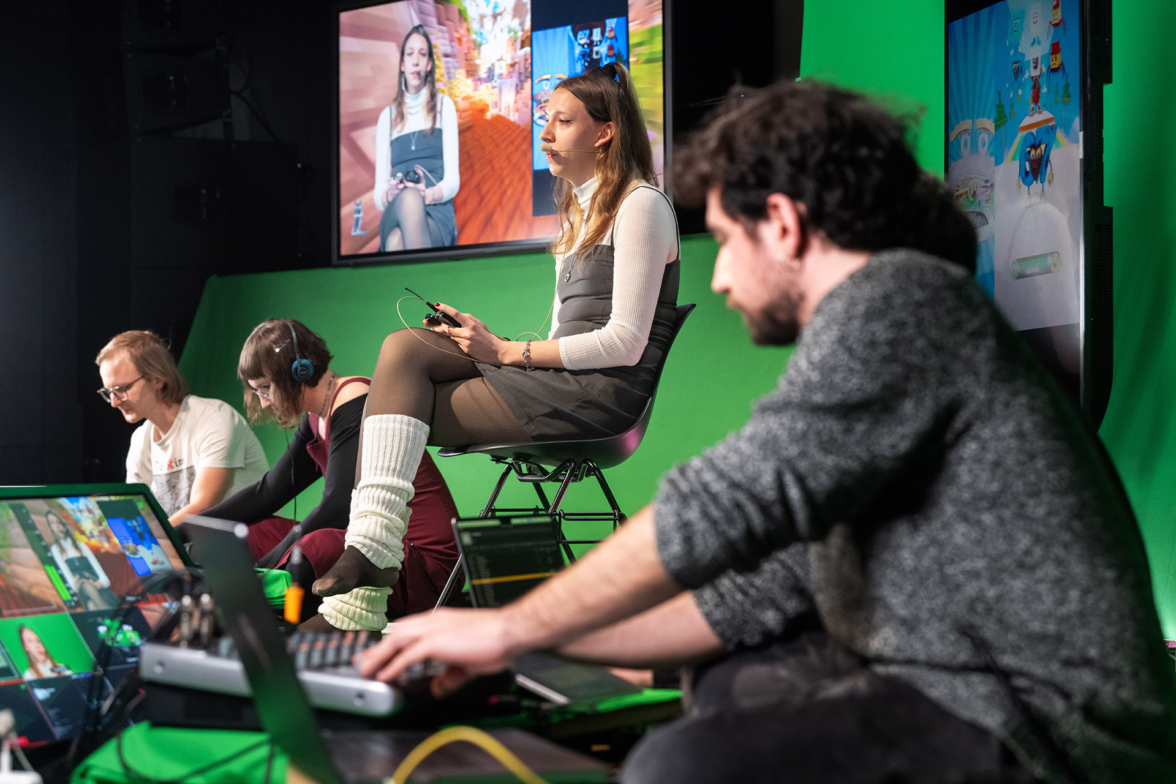
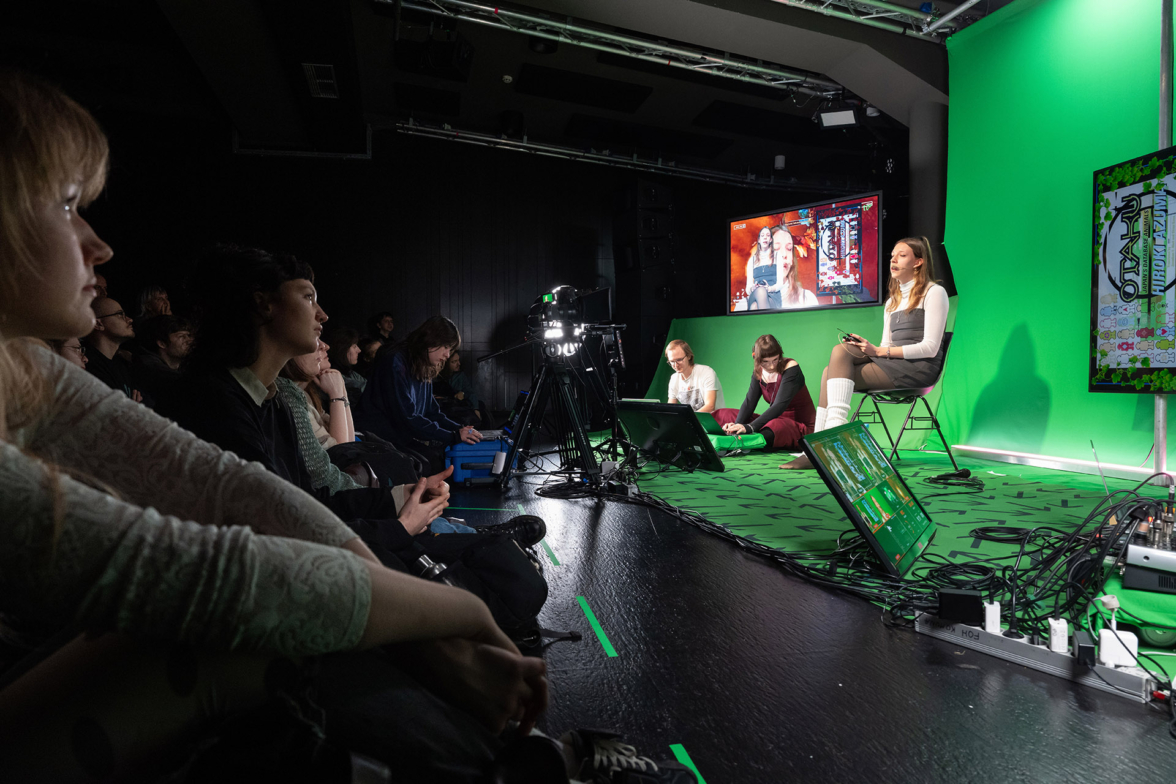
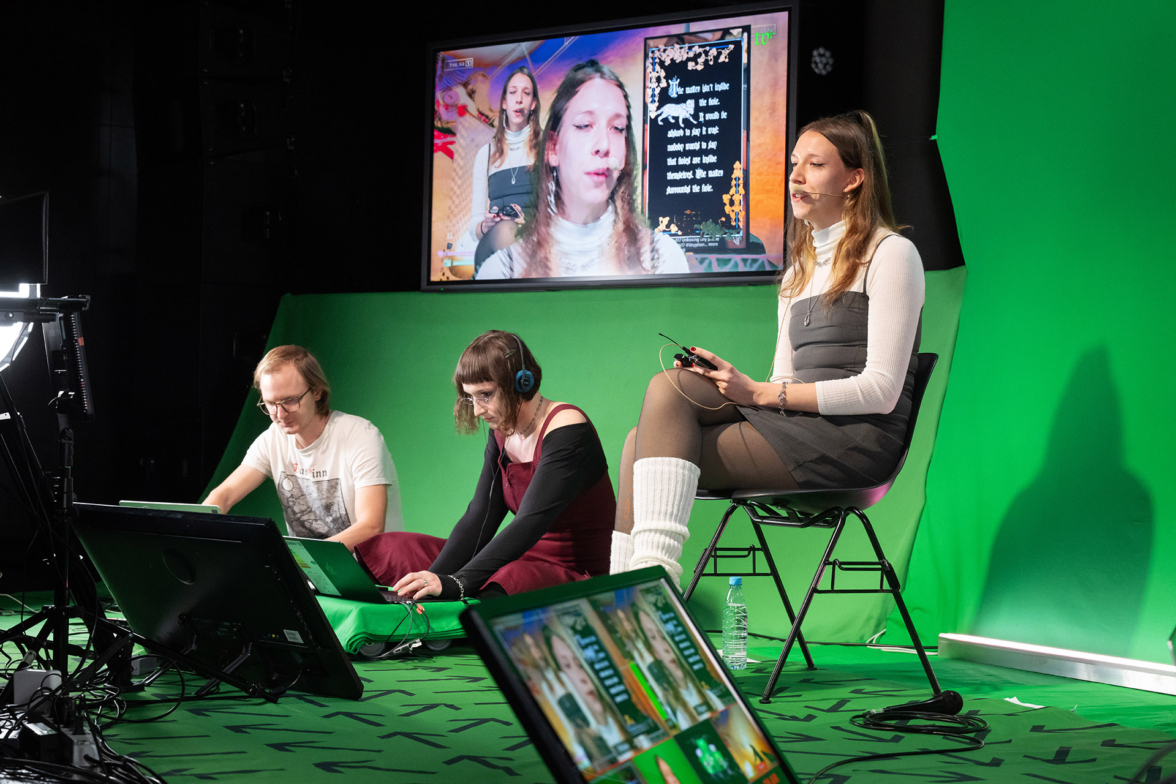
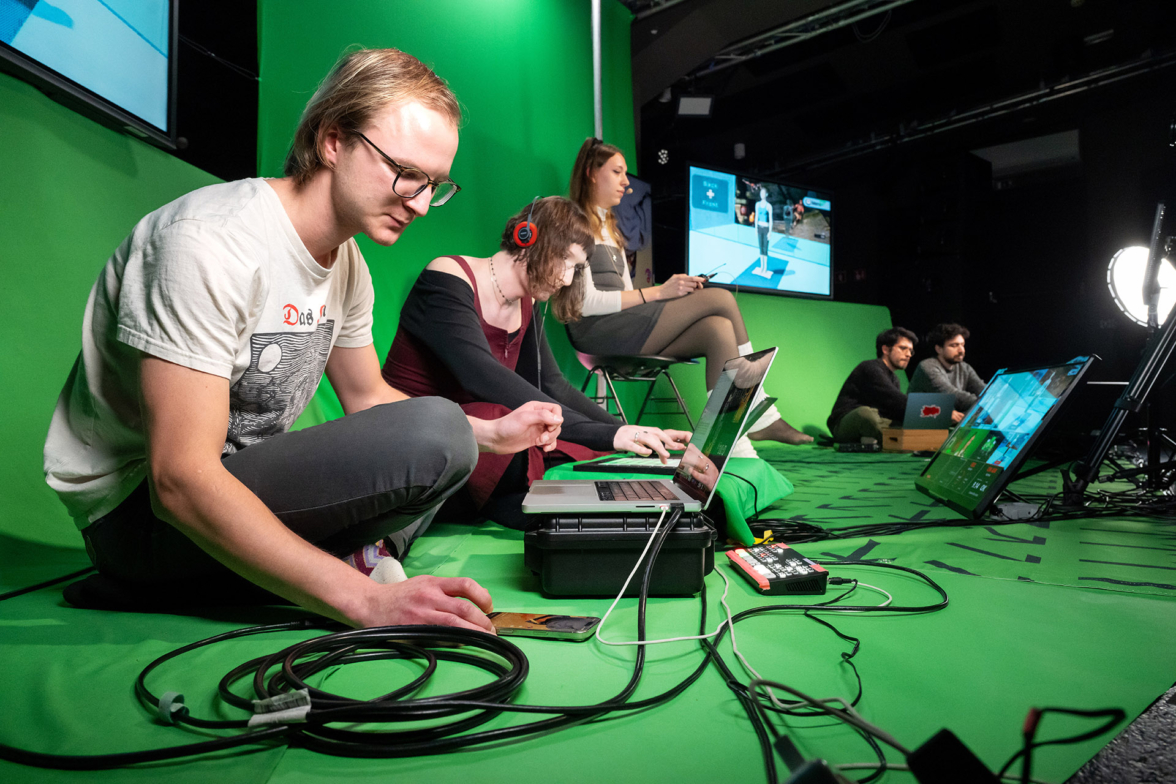
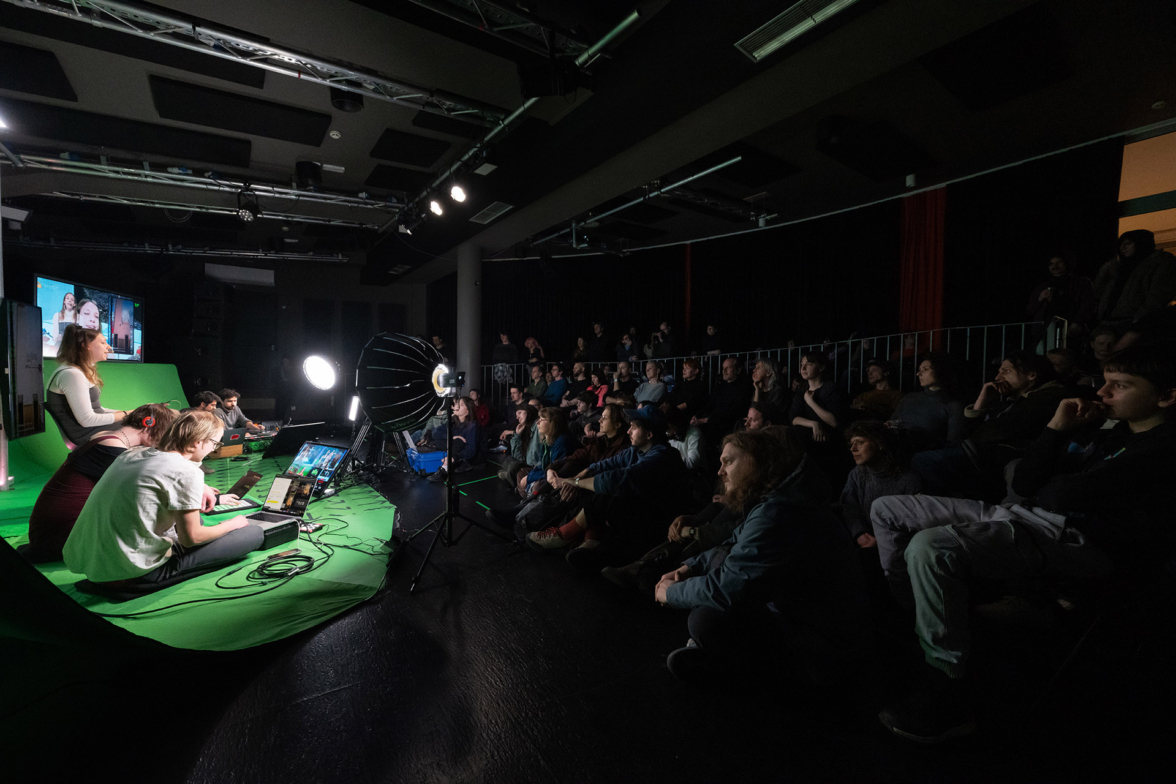
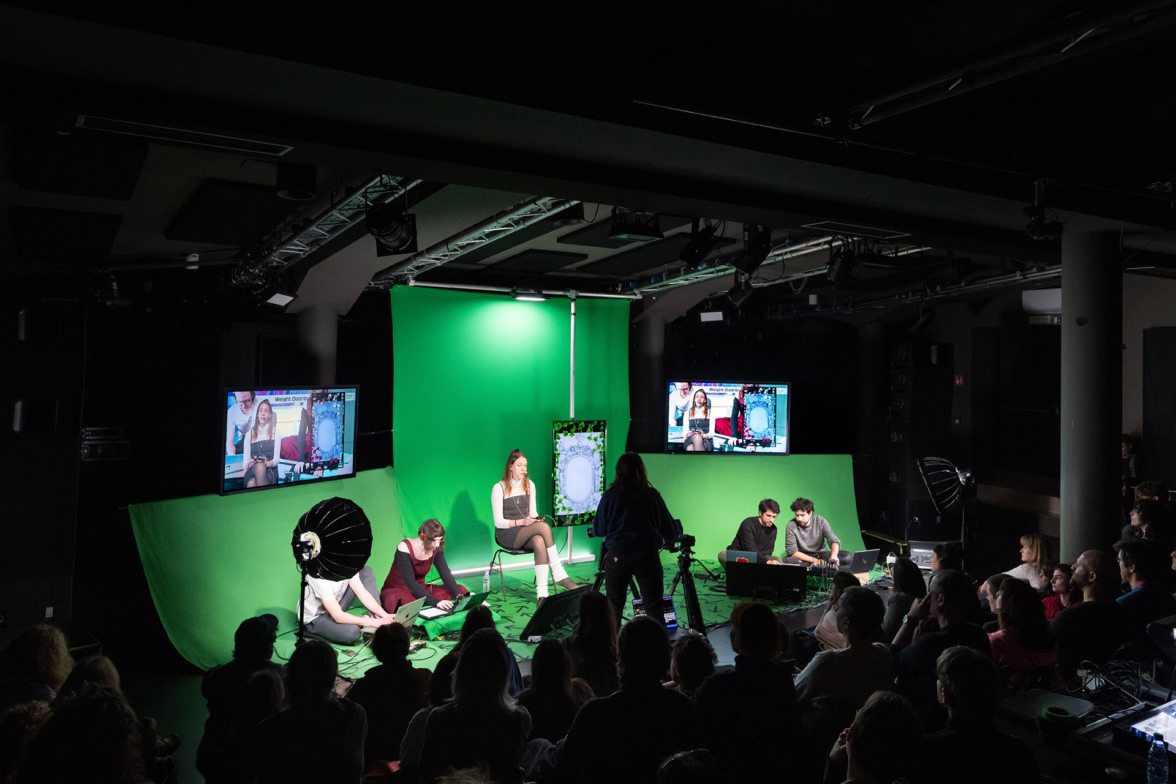
Balloons etc. is a lecture that presents a research narrative following the construction of computer-generated images. Departing from a balloon, the lecture unfolds through inflated objects, blown-up JPEG images, projected textures and expanded expectations, while questioning the synthetic image’s depiction of the world. The lecture draws from technical sources, popular culture and art history to puncture the promise of synthetic imagery to represent the world wholesale.

THE AUTHOR

Simone C Niquille is a designer and researcher whose work investigates how computation functions as a contemporary optical system. Working with vision technologies such as computer vision, 3D animation, computational photography, and synthetic training datasets, their practice examines how images no longer simply represent the world but actively organise perception, legibility, and reality itself. Engaging these systems from within, Niquille critiques machine learning as a tool for stabilising assumptions and instrumentalising difference, advocating instead for non-binary technological imaginaries. They teach and conduct research across design, architecture, and critical software and are currently a PhD researcher within the ARTILACS graduate school at HFBK Hamburg. Their work has been exhibited and published internationally.

CREDITS

Author: Simone C Niquille

Production of the event:
Aksioma – Institute for Contemporary Art, Ljubljana, 2026

In partnership with:
ALUO – The Academy of Fine Arts and Design of the University of Ljubljana

Part of the symposium tactics&practice #17: Becoming Image

Financial support:
the Ministry of Culture of the Republic of Slovenia, the Municipality of Ljubljana and the Italian Cultural Institute in Ljubljana

EXHIBITION

Simone C Niquille
duckrabbit.tv 2.0
12 May–12 June 2026
Aksioma | Project Space, Ljubljana

WORKSHOP

Simone C Niquille
WAWLA (What Are We looking At)
WED, 13 May 2026 at 5 PM
The Academy of Fine Arts and Design, UL, Video, Animation and New Media, Tobačna 5, Ljubljana

WAWLA (What Are We Looking At)

Simone C Niquille
Simone C Niquille
WAWLA (What Are We Looking At)

Workshop
WED, 13 May 2026 at 5 PM
ALUO, Tobačna 5, Ljubljana

Part of tactics&practice #17: Becoming Image
Curated by Marco De Mutiis


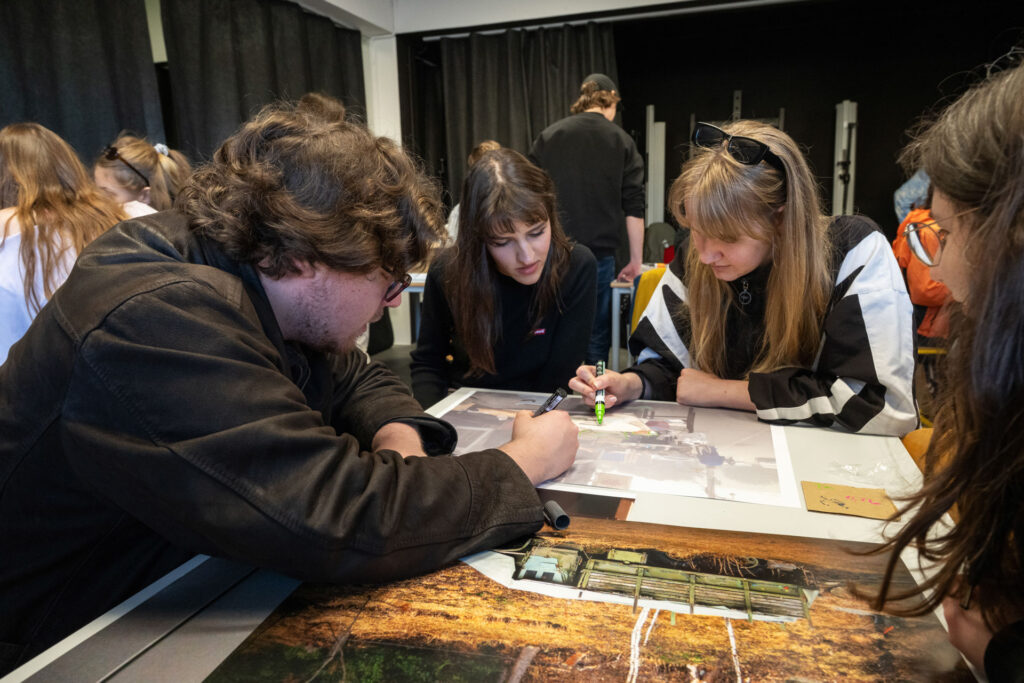
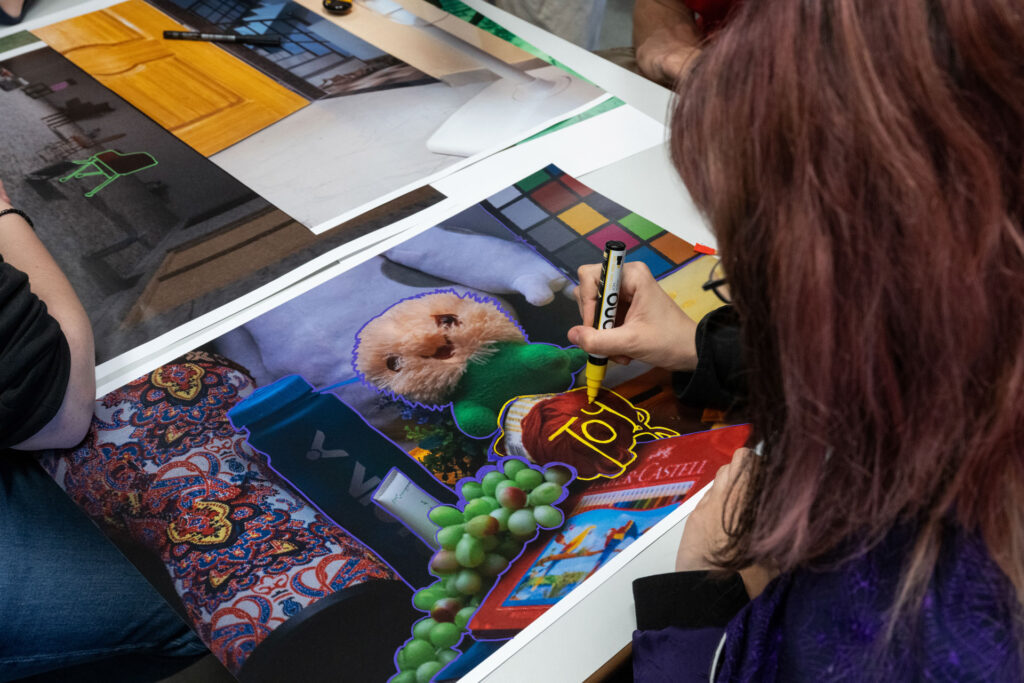
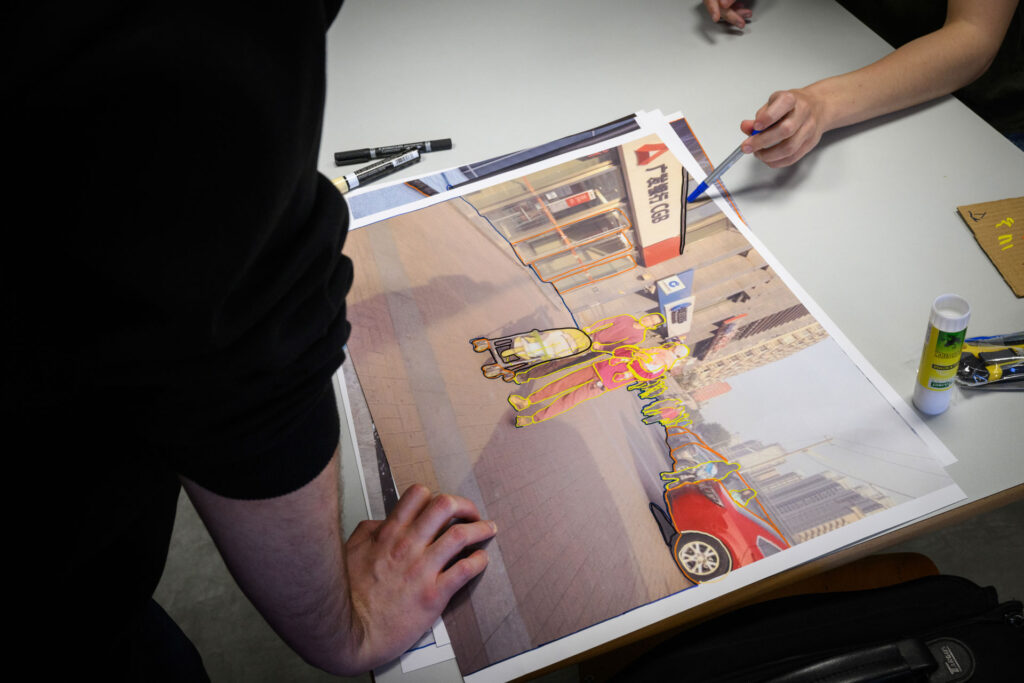
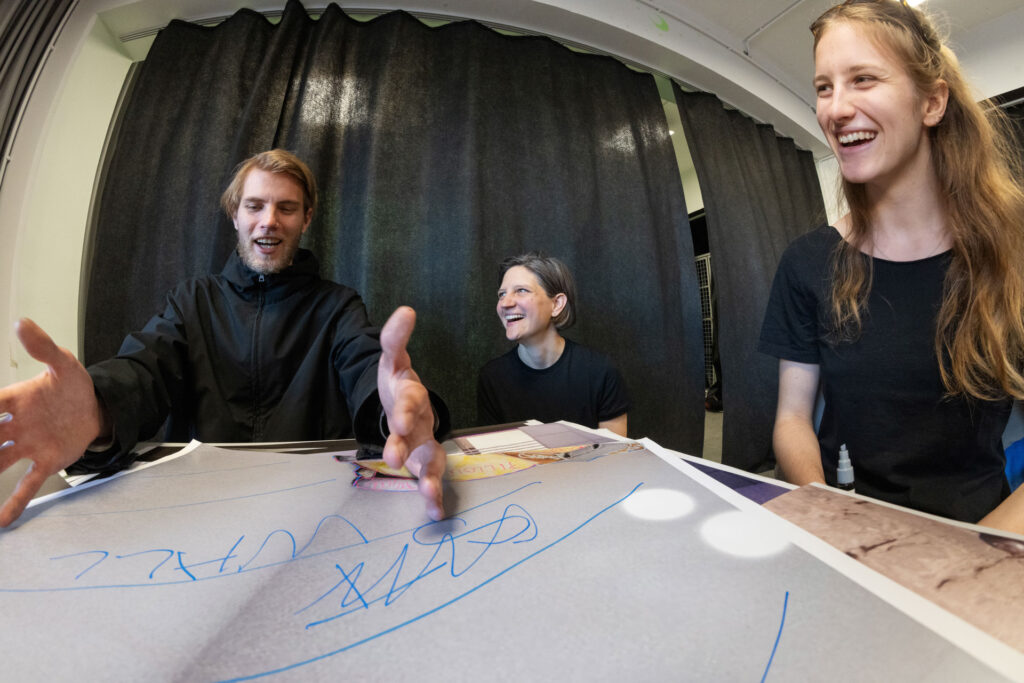
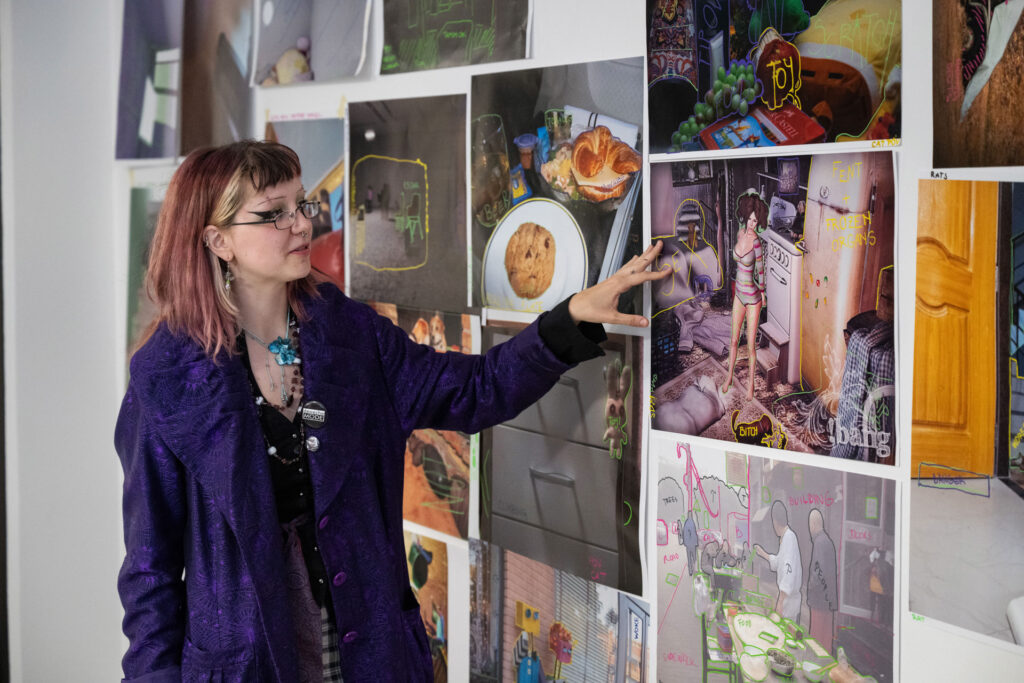
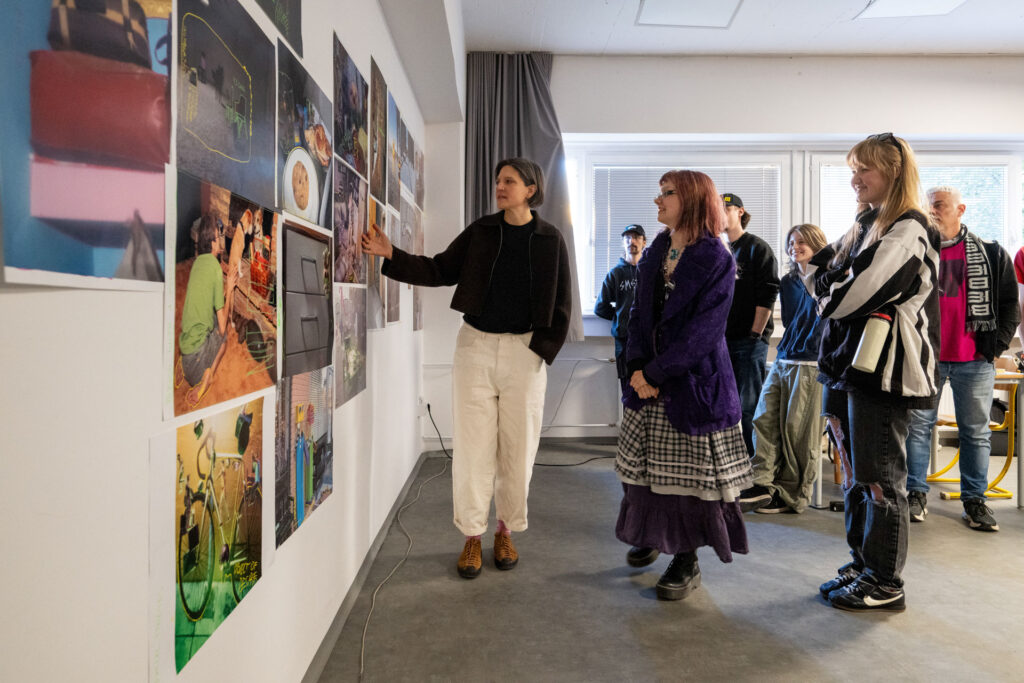
WAWLA (What Are We Looking At) is a workshop that dives into the world of computer vision, image training datasets and the invisible human labour that makes machines see. We will get familiar with the workflow of creating a computer vision model and the steps behind assembling and preparing an image training dataset while specifically focusing on image segmentation. Segmentation is crucial for computer vision as it “points out” the parts of an image that are of value to the system. At this stage of image processing, an image is visually separated into areas of information. By outlining an object of interest (a road sign, a deer, a face) or filling in a region of particular focus (the road, the tree, shadows), these marked segments ultimately inform the computer vision model’s way of perceiving the world. What is and isn’t segmented depends on various factors, from the technology’s future application to cultural context, image resolution, operation language, subjective perception, and might differ from our own way of reading an image.

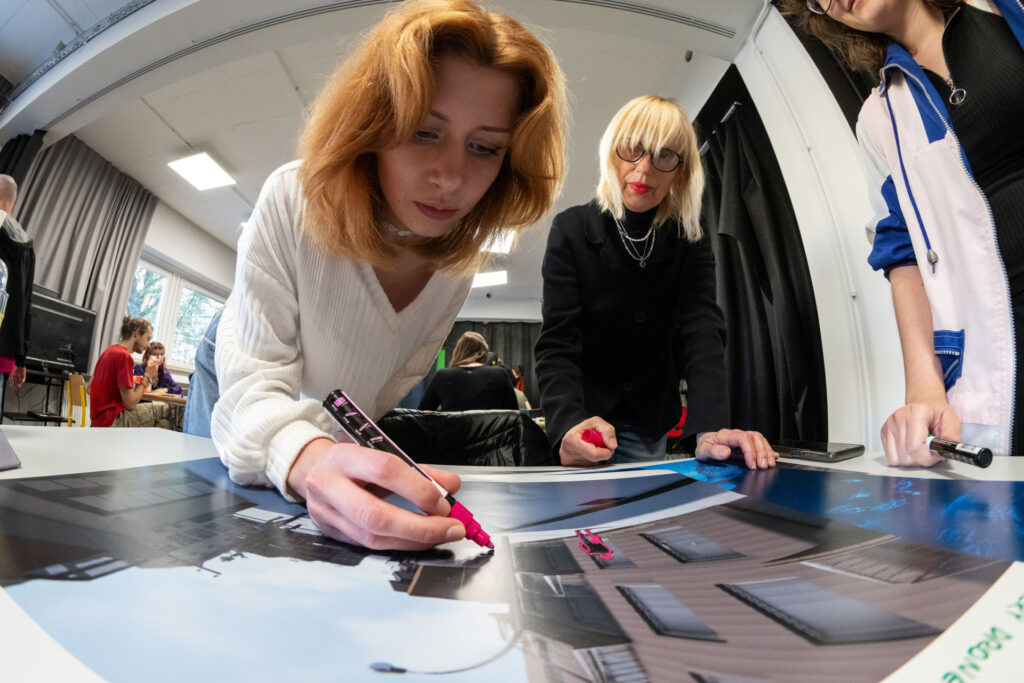
During the workshop, participants will get introduced to different examples of image training datasets and the workflow of processing visual data through image segmentation tasks while being faced with the ethical, philosophical and political challenges of teaching systematic vision and deciding “what is important to see”. This workshop is deliberately non-technical. We will be working with paper and markers for accessibility and to make tangible the labour and compromises involved in creating technology that otherwise is obscured by innovation.

Duration: 3h
No prior knowledge required.


THE AUTHOR

Simone C Niquille is a designer and researcher whose work investigates how computation functions as a contemporary optical system. Working with vision technologies such as computer vision, 3D animation, computational photography, and synthetic training datasets, their practice examines how images no longer simply represent the world but actively organise perception, legibility, and reality itself. Engaging these systems from within, Niquille critiques machine learning as a tool for stabilising assumptions and instrumentalising difference, advocating instead for non-binary technological imaginaries. They teach and conduct research across design, architecture, and critical software and are currently a PhD researcher within the ARTILACS graduate school at HFBK Hamburg. Their work has been exhibited and published internationally.

CREDITS

Author: Felicity Hammond

Production:
Aksioma – Institute for Contemporary Art, Ljubljana, 2026

Partner:
ALUO – Akademija za likovno umetnost in oblikovanje Univerze v Ljubljani

Part of the series:
tactics&practice

Financial support:
the Ministry of Culture of the Republic of Slovenia and the Municipality of Ljubljana

ARTIST TALK

Simone C Niquille
Balloons etc.
WED, 13 May 2026 at 3 PM
ALUO / Erjavčeva, Ljubljana

EXHIBITION

Simone C Niquille
duckrabbit.tv 2.0
12 May–12 June 2026
Aksioma | Project Space, Ljubljana

Becoming Image – The symposium

Latent Space

Felicity Hammond
Felicity Hammond
Latent Spaces

Exhibition
1 April–30 April 2026
Aksioma | Project Space, Ljubljana

Opening
WED, 1 April at 8 PM

Part of tactics&practice #17: Becoming Image
Curated by Marco De Mutiis


In November 2025, the first orbital data centre was launched, marking a bold shift: by relocating computation to space, we leave behind the ecological limits of Earth. The current terrestrial system is on the brink of collapse; natural resources are depleting and the grid will soon no longer support the power needed for the reckless race towards AGI. AI data centres in space therefore offer a potential new frontier for machine learning infrastructures, leaving the failed model behind.

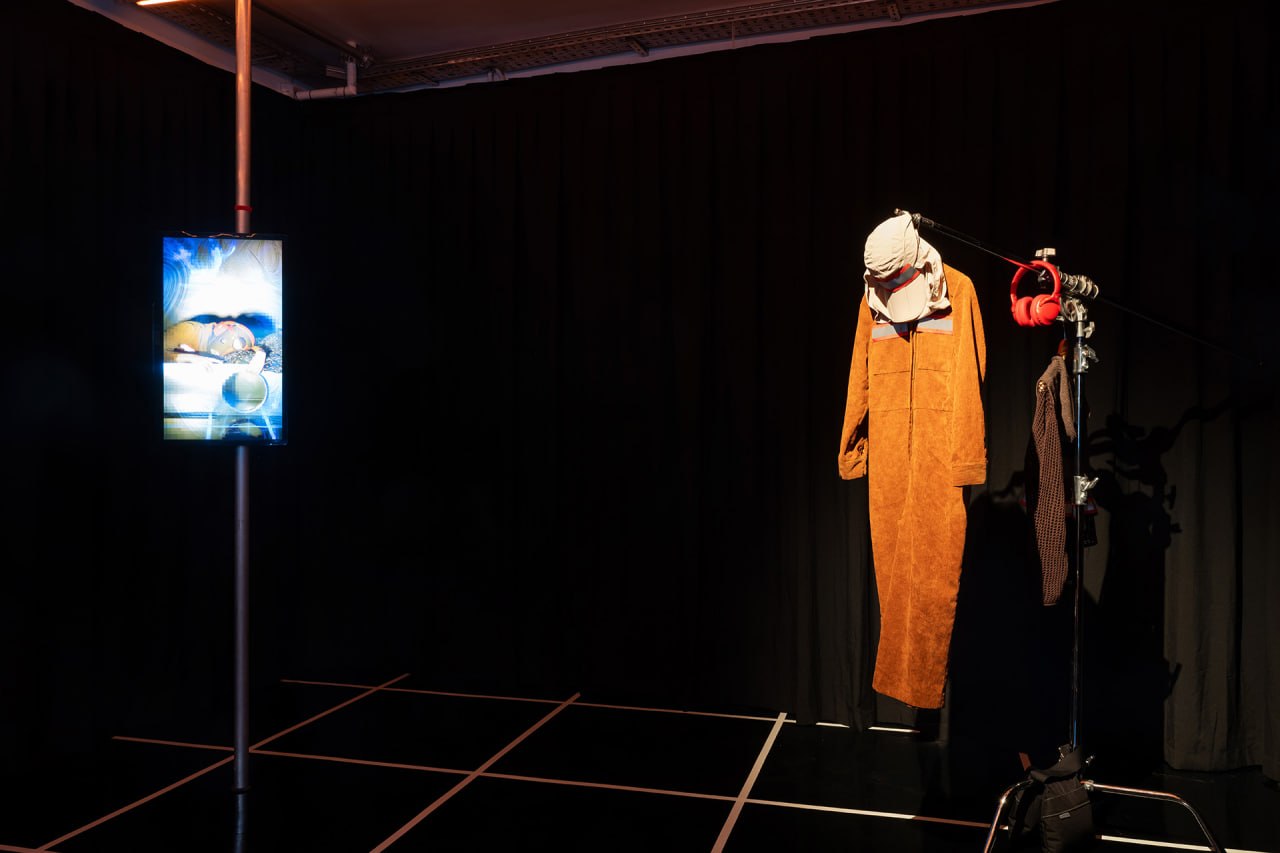
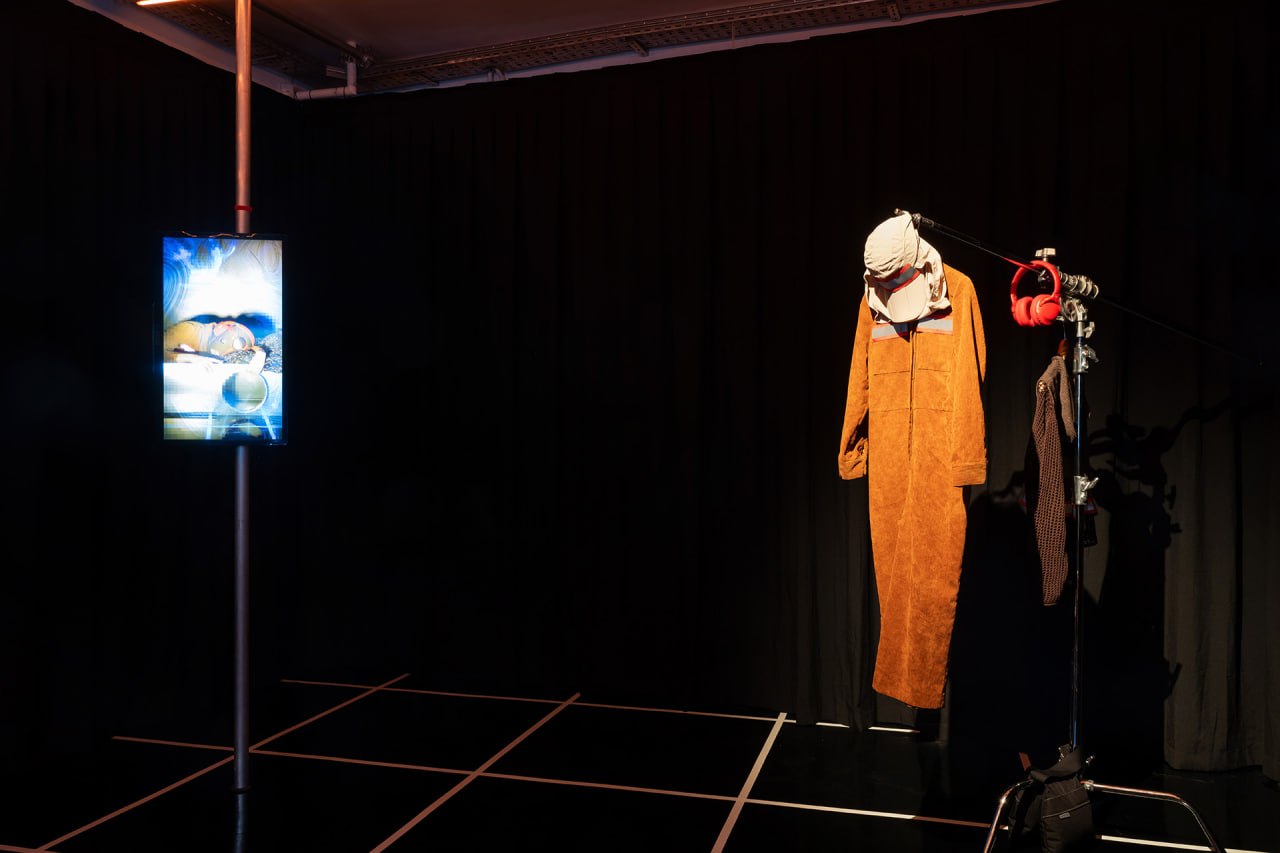
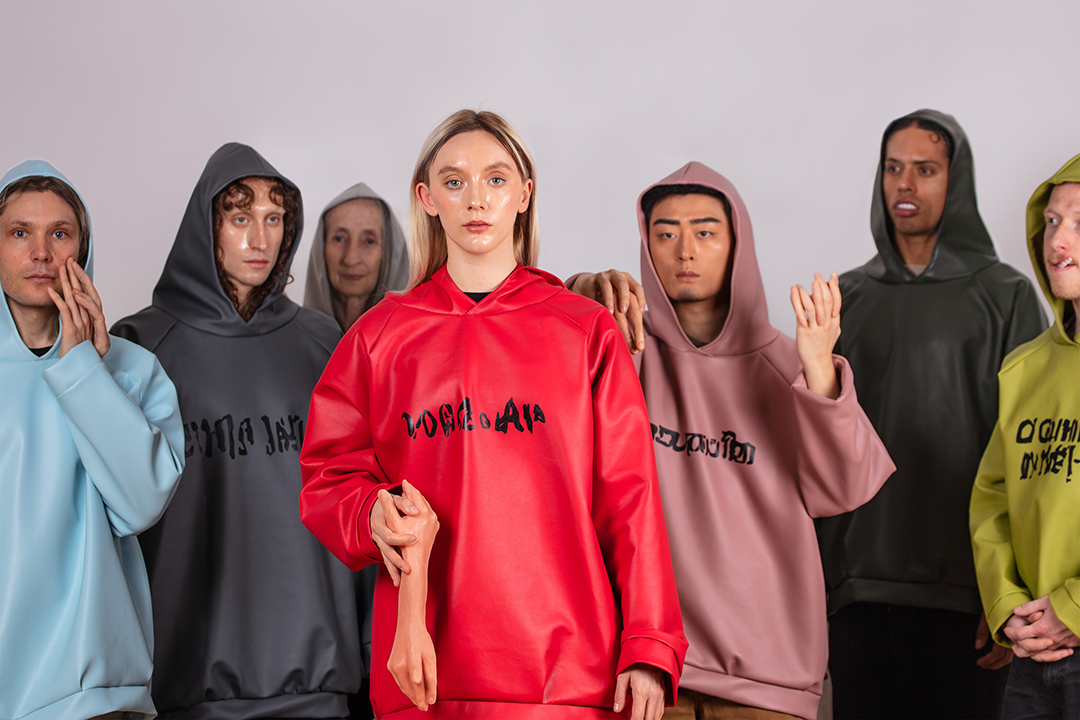
In this newly commissioned installation titled Latent Space, Felicity Hammond offers a speculative glimpse into a not-too-distant future where this new approach to space-based computation has become the dominant position in the AI industry. However, the system continues to battle with the effects of model collapse – a process by which generative models are trained on data generated by previous AI models, causing data loss, degradation, and abstraction from the experience and representation of the phenomenal world. In an attempt to recalibrate the system, performers have been employed to restage original data. Data-performers absorb this image material and attempt to re-imagine a set of average images, an amalgam of the originals. On-board surveillance captures these gestures in photographic form and feeds them back into the system. This recalibration process is tested via the online image archive of Aksioma, scraped from Flickr for the purposes of this pilot test.

Meanwhile, the orbital data centres themselves inhabit their determined optimal trajectory: a path along the day/night boundary where the spacecraft remains in near-continuous solar illumination. As they bathe in this eternal sunlight – a condition engineered for efficiency, not comfort – the data-performers begin to long for the planet below.

THE AUTHOR

Alice Zoo

Felicity Hammond (Birmingham UK, 1988) works with installation and world building to explore digital materialities. Her recent practice-based research seeks to understand extraction as a process that binds the geological with the digital realm, creating evolving generative installation works that expose this relationship. Re-staging is a key method in Hammond’s work, where the re-production of digital events draws attention to their flaws. Hammond was the recipient of the Ampersand Photoworks fellowship (2023) and has exhibited her work at The Photographers’ Gallery, C/O Berlin, Fotomuseum Winterthur, VOX Centre de l’image Contemporaine Montreal and Transmediale/HKW, among others. 

CREDITS

Author: Felicity Hammond

Production of the event:
Aksioma – Institute for Contemporary Art, Ljubljana, 2026

Part of the series:
tactics&practice

Financial support:
the Ministry of Culture of the Republic of Slovenia, the Municipality of Ljubljana

ARTIST TALK

Felicity Hammond
Variations
Tue, 31 March 2026 at 7:30 PM
Kino Šiška, Ljubljana

WORKSHOP

Felicity Hammond
Model Collapse
Wed, 1 April 2026 at 4 PM
The Academy of Fine Arts and Design, UL, Video, Animation and New Media, Tobačna 5, Ljubljana

Model Collapse

Felicity Hammond
Felicity Hammond
Model Collapse

Workshop
Wed, 1 April 2026 at 4 PM
ALUO, Tobačna 5, Ljubljana

FREE admissionRegistration required!

Part of tactics&practice #17: Becoming Image
Curated by Marco De Mutiis


In this practical workshop, participants will experiment with expanded collage making as a way to understand the circulation of images in the age of machine learning. They will explore the phenomenon of model collapse: a degenerative learning process caused when a model is trained on AI generated content. AI images reverse the indexical logic of photography and play a role in shaping the world; through this practical workshop, we will ask what happens when the image comes first.

Please note: whilst we are exploring machine learning tools, we will not be using generative AI software in this workshop.

Takeaways: 

Participants will develop an understanding of how:

  1. Model collapse causes data loss, degradation, and abstraction within generative AI systems.
  2. Collage and generative AI have many overlapping qualities.
  3. Data labelling is a limiting and unethical practice.

Duration: 3h

Knowledge required: 
No prior knowledge required

FREE admissionRegistration required!


THE AUTHOR

Alice Zoo

Felicity Hammond (Birmingham UK, 1988) works with installation and world building to explore digital materialities. Her recent practice-based research seeks to understand extraction as a process that binds the geological with the digital realm, creating evolving generative installation works that expose this relationship. Re-staging is a key method in Hammond’s work, where the re-production of digital events draws attention to their flaws. Hammond was the recipient of the Ampersand Photoworks fellowship (2023) and has exhibited her work at The Photographers’ Gallery, C/O Berlin, Fotomuseum Winterthur, VOX Centre de l’image Contemporaine Montreal and Transmediale/HKW, among others. 

CREDITS

Author: Felicity Hammond

Production:
Aksioma – Institute for Contemporary Art, Ljubljana, 2026

Partner:
ALUO – Akademija za likovno umetnost in oblikovanje Univerze v Ljubljani

Part of the series:
tactics&practice

Financial support:
the Ministry of Culture of the Republic of Slovenia and the Municipality of Ljubljana

ARTIST TALK

Felicity Hammond
Variations
Tue, 31 March 2026 at 7:30 PM
Kino Šiška, Ljubljana

EXHIBITION

Felicity Hammond
Latent Space
1 April–30 April 2026
Aksioma | Project Space, Ljubljana

Variations

Felicity Hammond
Felicity Hammond
Variations

Artist talk
Tue, 31 March 2026 at 7:30 PM
Kino Šiška, Ljubljana

Part of the symposiumtactics&practice #17: Becoming Image
Curated by Marco De Mutiis


The focus of this talk will be Variations – an artistic research project by Felicity Hammond that interrogates the meeting places of geological mining and data mining. Over the past two years, Hammond has explored the extractive systems that bind these processes together, inserting herself into the machine that drives contemporary image production. Staged across four chapters and ending in a funeral service for artificial intelligence, Variations
maps how digital material makes its way from mineral to pixel, from the subsurface to the screen.

This talk will share the details of each chapter, from the fictional organisation set up to manually classify physical materials as data, to the enactment of model collapse. Hammond will also contextualise these findings with her new commission for Aksioma Project Space, Latent Space, where the proposed afterlife of artificial intelligence lives on in outer-space.

THE AUTHOR

Alice Zoo

Felicity Hammond (Birmingham UK, 1988) works with installation and world building to explore digital materialities. Her recent practice-based research seeks to understand extraction as a process that binds the geological with the digital realm, creating evolving generative installation works that expose this relationship. Re-staging is a key method in Hammond’s work, where the re-production of digital events draws attention to their flaws. Hammond was the recipient of the Ampersand Photoworks fellowship (2023) and has exhibited her work at The Photographers’ Gallery, C/O Berlin, Fotomuseum Winterthur, VOX Centre de l’image Contemporaine Montreal and Transmediale/HKW, among others. 

CREDITS

Author: Felicity Hammond

Production of the event:
Aksioma – Institute for Contemporary Art, Ljubljana, 2026

In partnership with:
Kino Šiška Centre for Urban Culture
ALUO – The Academy of Fine Arts and Design of the University of Ljubljana

Part of the symposium tactics&practice #17: Becoming Image

Financial support:
the Ministry of Culture of the Republic of Slovenia, the Municipality of Ljubljana and the Italian Cultural Institute in Ljubljana

EXHIBITION

Felicity Hammond
Latent Space
1 April–30 April 2026
Aksioma | Project Space, Ljubljana

WORKSHOP

Felicity Hammond
Model Collapse
Wed, 1 April 2026 at 4 PM
The Academy of Fine Arts and Design, UL, Video, Animation and New Media, Tobačna 5, Ljubljana

Anatomy of Non-Fact. Chapter 1: AI Hyperrealism

Martyna Marciniak
Martyna Marciniak
Anatomy of Non-Fact. Chapter 1: AI Hyperrealism

Exhibition
31 March–22 May 2026
Kino Šiška, Ljubljana

Opening
TUE, 31 March at 21 PM

Part of tactics&practice #17: Becoming Image
Curated by Marco De Mutiis


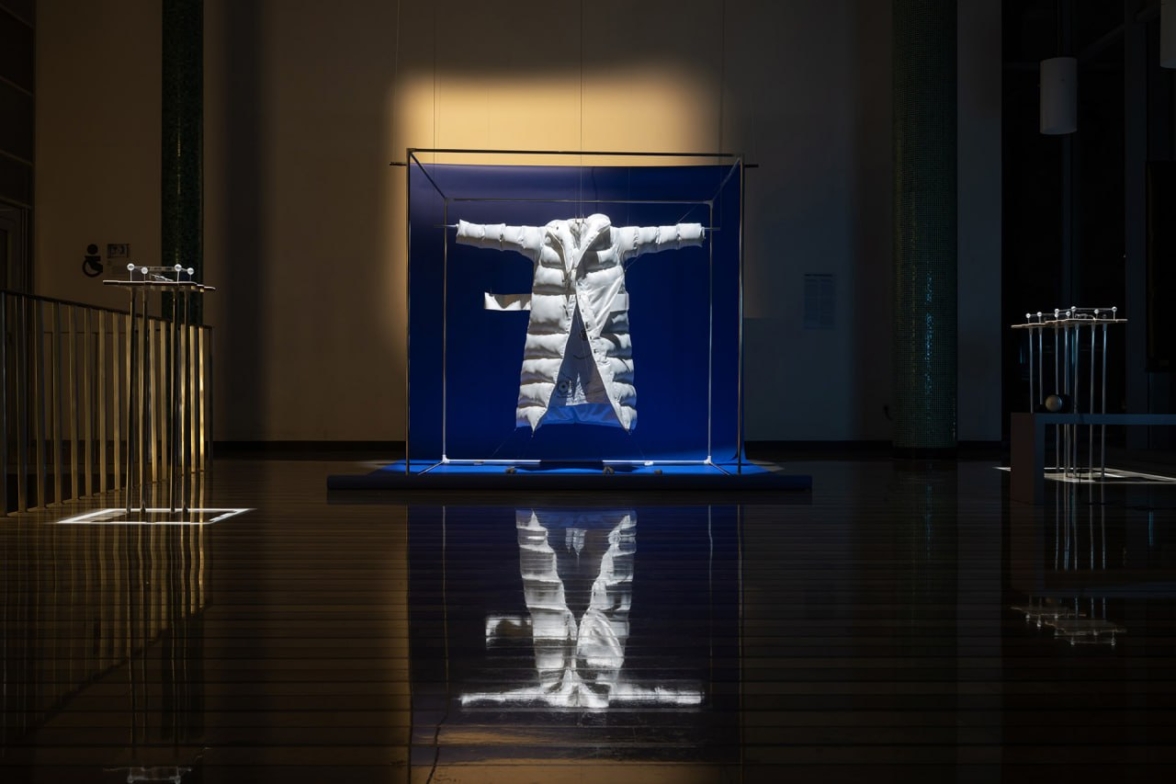
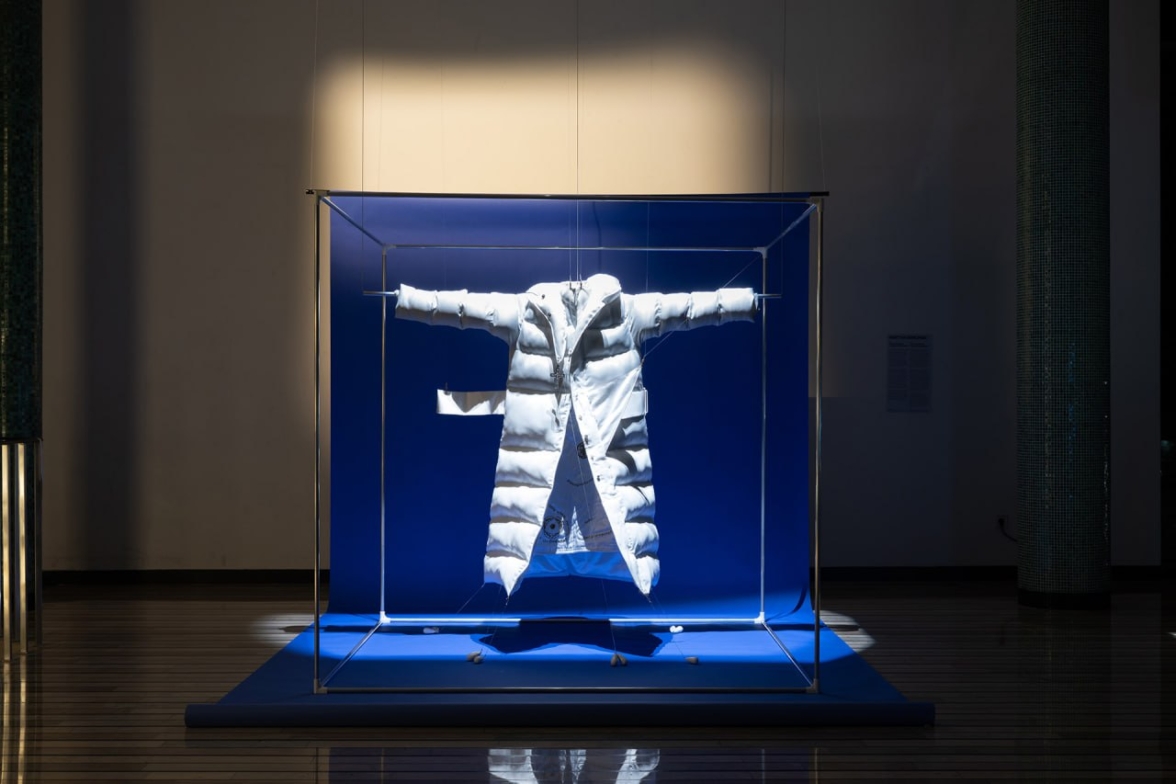
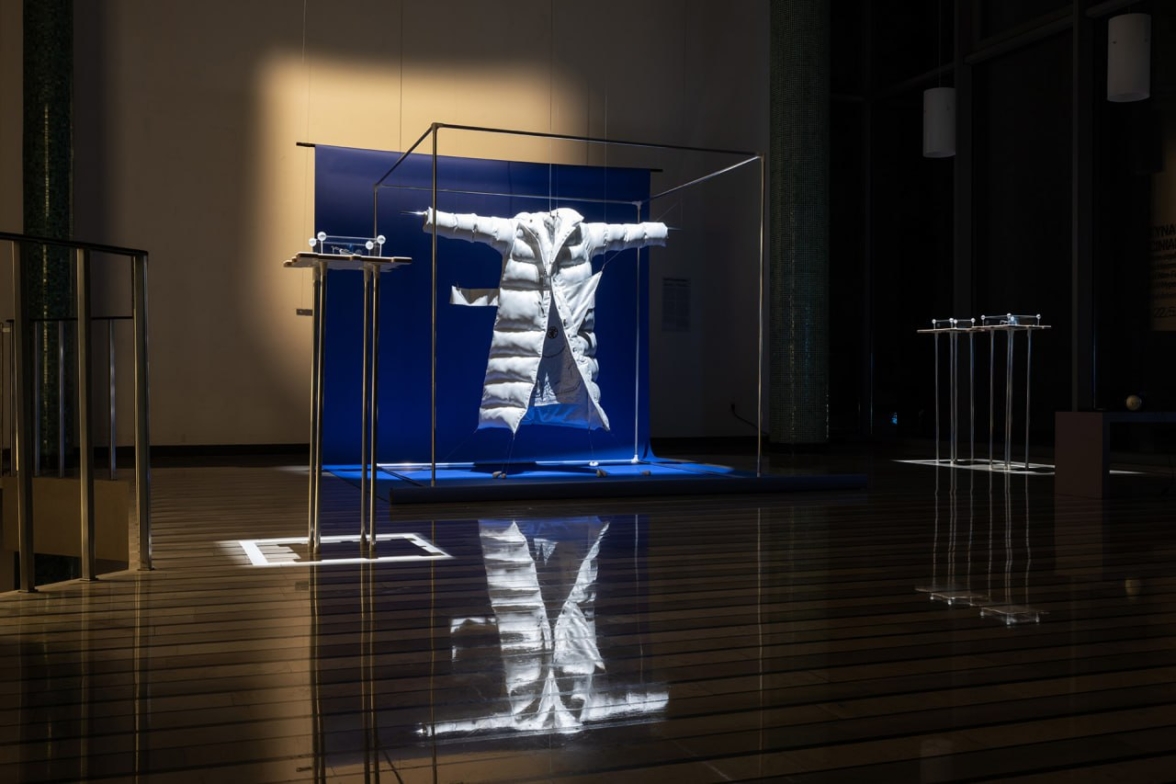
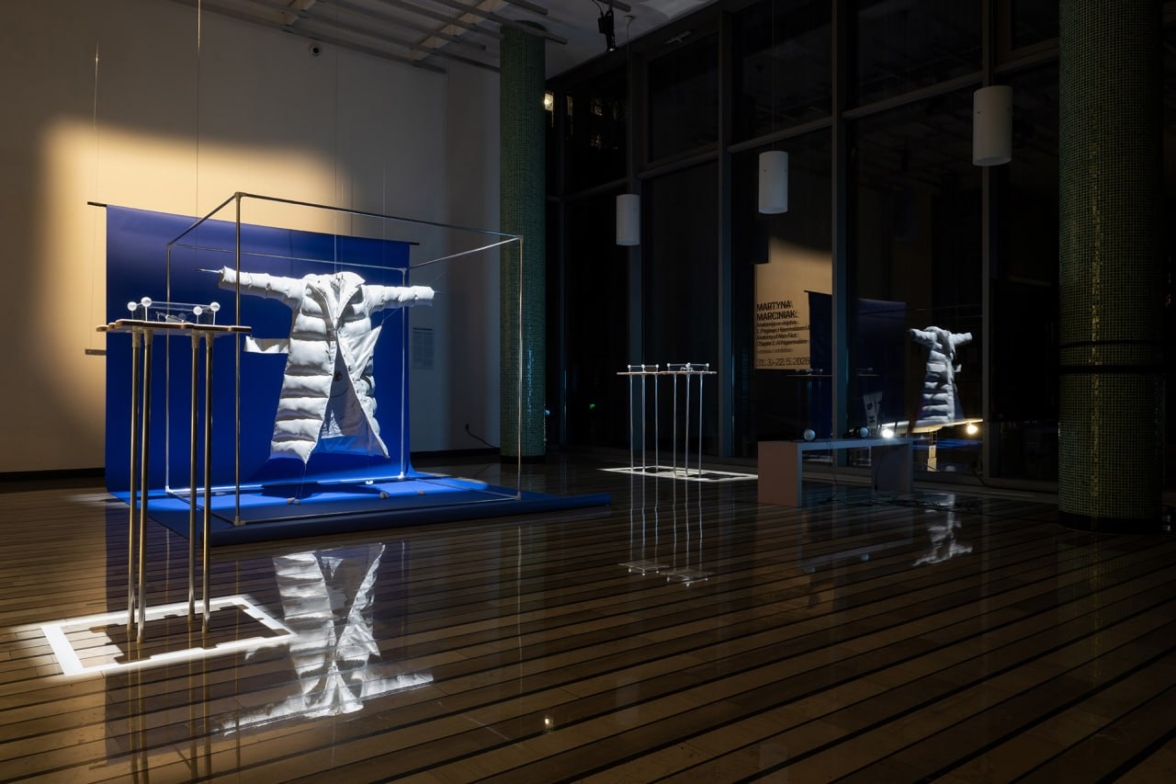
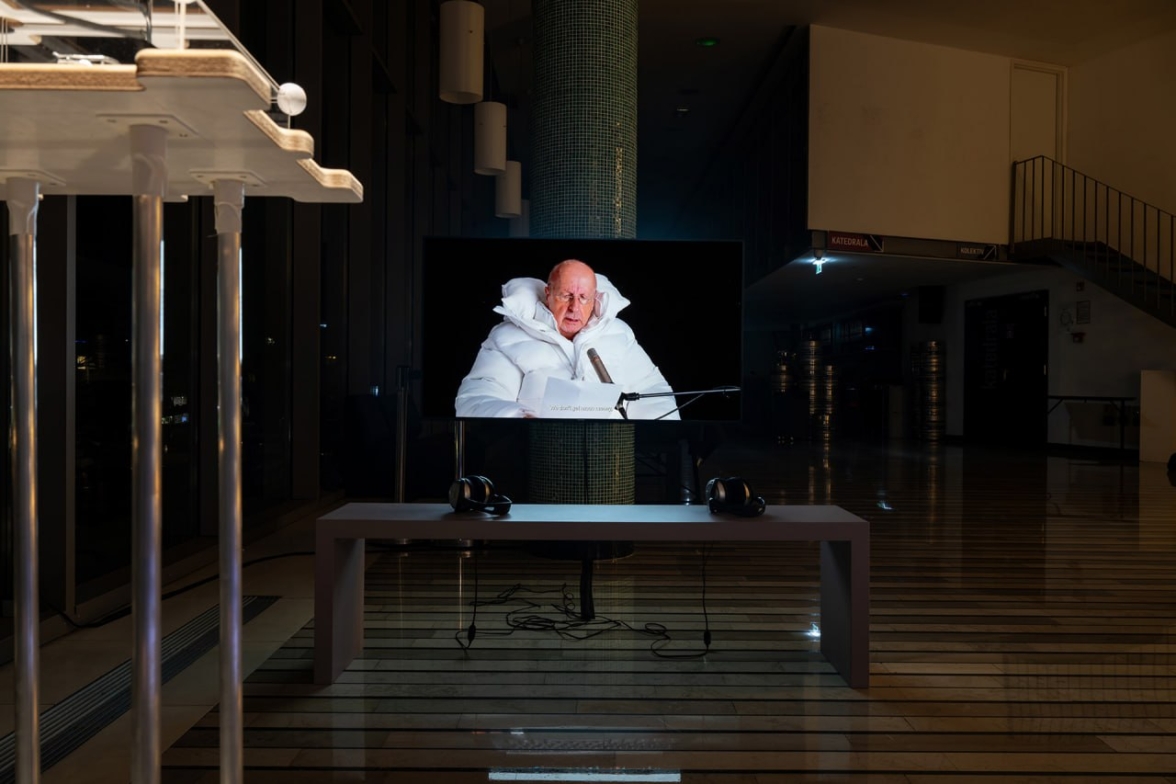
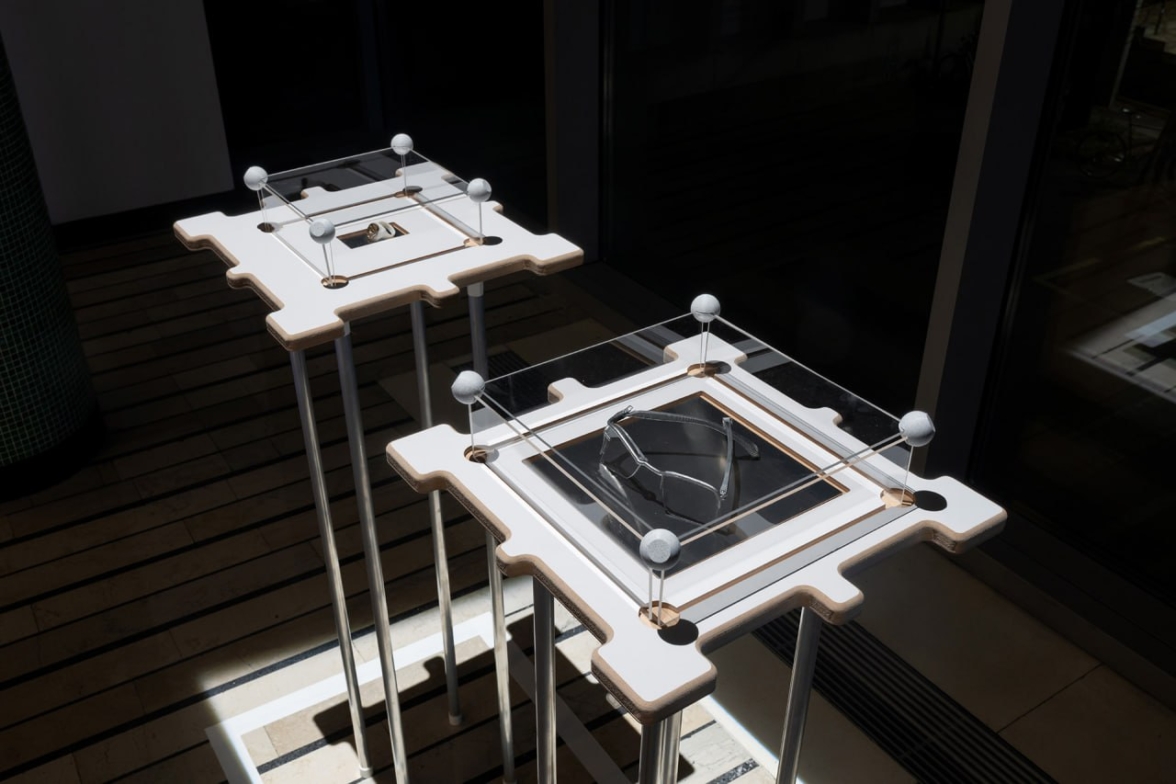
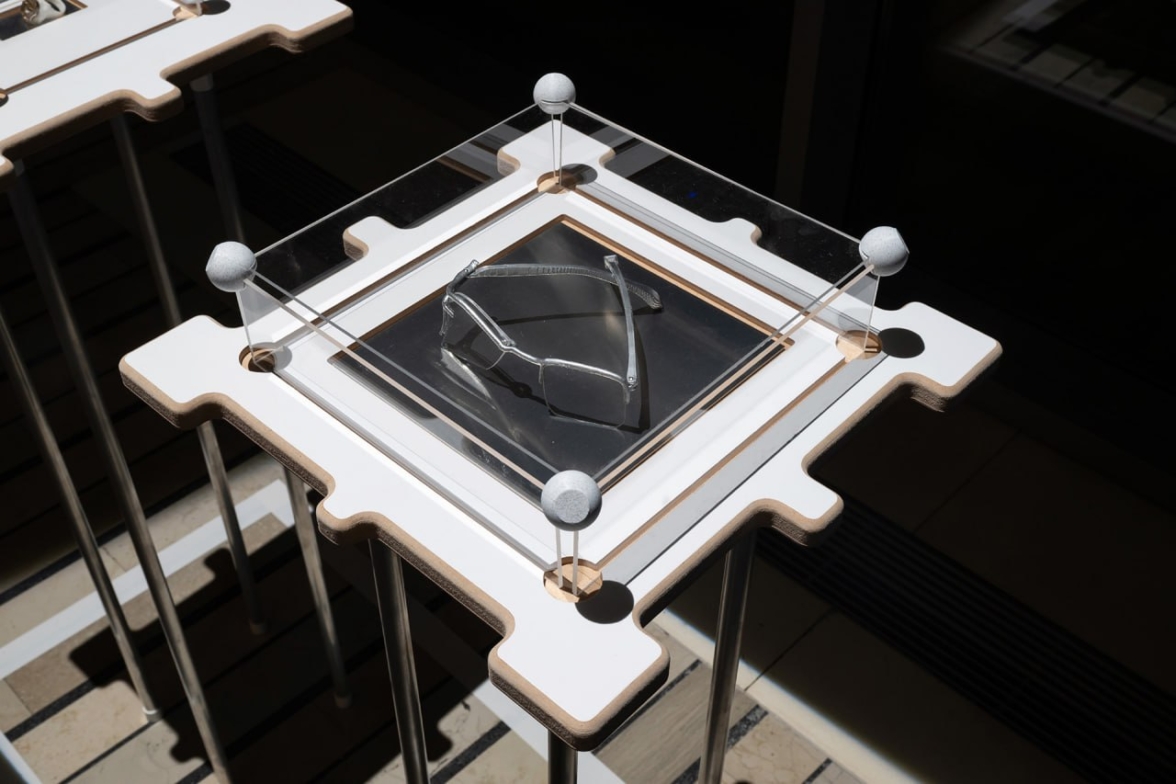
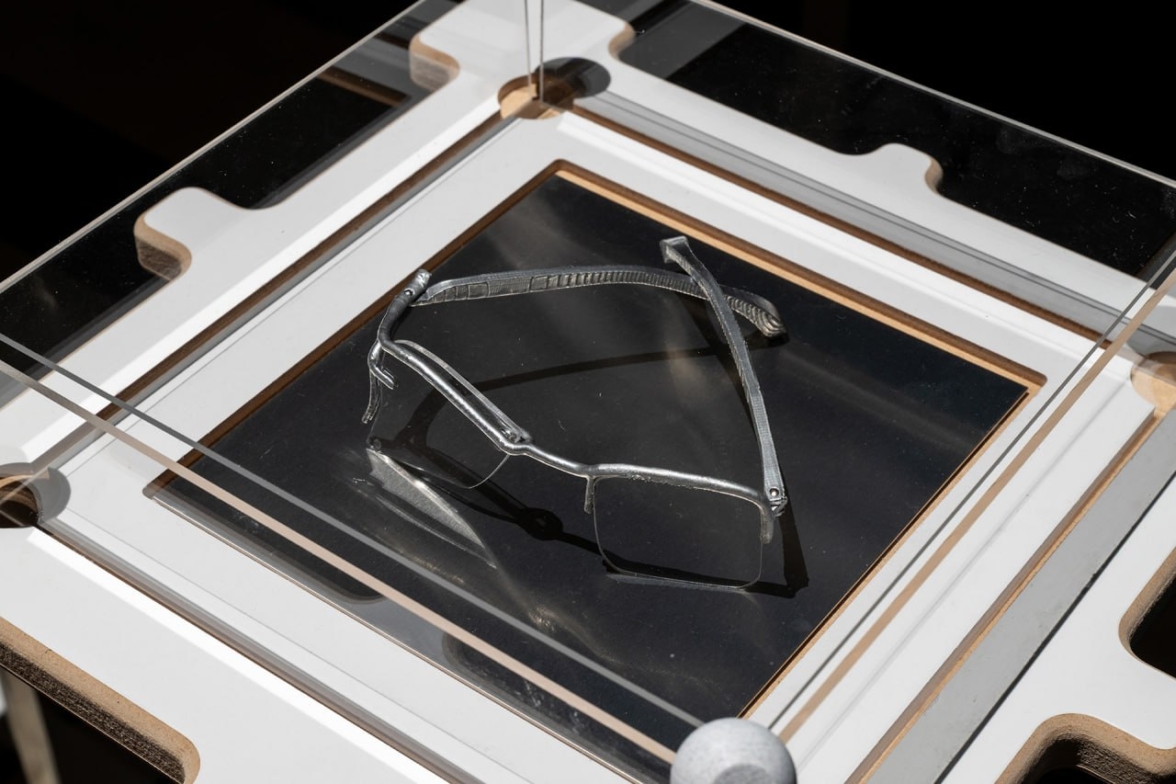
In AI Hyperrealism, Martyna Marciniak materializes the puffer jacket made infamously viral by the AI-generated image of the so-called Balenciaga Pope. The image was originally created by a 31-year-old man named Pablo Xavier using Midjourney, while he was tripping on shrooms, and quickly became the symbol of the AI boom of 2023. It reignited discussions about truth and misinformation in photography and journalism, and sparked controversies about digital reproduction of human likeness.

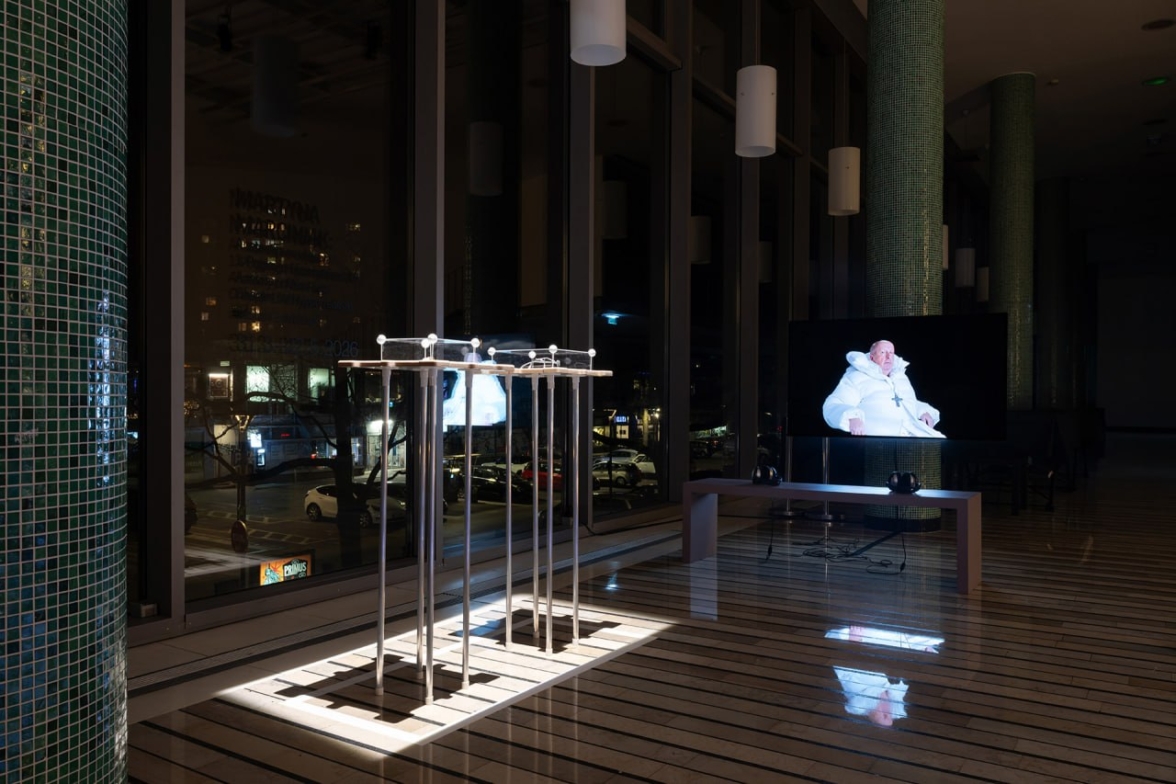
In AI Hyperrealism, the first chapter of Marciniak’s Anatomy of Non-Fact project, the artist inverts the relations between physical and virtual, between material object and image, and between experienced and perceived reality. By creating the infamous puffer jacket, the artist transforms the image into material reality and makes the collective imagination of Pope Francis’s stylish coat tangible. AI Hyperrealism also connects with the present shift in commercial fields based on economies of attention – where goods exist first solely as synthetic images, to be produced only if the AI image seduces the gaze of enough potential buyers.

Accompanying the installation is a short video featuring the Balenciaga Pope monologuing about notions of truth and questioning the reliability of images and traditional sources of authority. Reflecting on the contemporary role of photography and visual culture, the work explores the implications of a world shaped, and even entirely built, from synthetic images.

THE AUTHOR

Marina Cavazza

Martyna Marciniak’s practice bridges media theory and legal imaginaries to trace how power inscribes itself through image regimes and visual infrastructures. Often revisiting historical events, her work engages in a form of pataforensics – poking at the tropes of scientific and forensic aesthetics, revealing their uncertainties, contradictions and lapses. Oscillating between sculpture, video and animation, she writes visual counter histories and smuggles in other ways of seeing. Her work has been shown by Onassis Stegi, Copenhagen Contemporary, Ars Electronica, Galerie Stadt Sindelfingen, Warsaw Biennale, LABoral Centro de Arte, among others. She is the 2025 CERN Collide resident. Her project Anatomy of Non-Fact received the Award of Distinction Prix Ars Electronica in 2025.

CREDITS

Author: Martyna Marciniak

Production of the event:
Kino Šiška Centre for Urban Culture
Aksioma – Institute for Contemporary Art, Ljubljana, 2026

Part of the series:
tactics&practice

Financial support:
the Ministry of Culture of the Republic of Slovenia, the Municipality of Ljubljana

ARTIST TALK

Martyna Marciniak
Blobsters, Slop and Hyper-Events: Negotiating Visual Trust in a Post-Optical Era
Tue, 31 March 2026 at 5 PM
Kino Šiška, Ljubljana

Blobsters, Slop and Hyper-Events: Negotiating Visual Trust in a Post-Optical Era

Martyna Marciniak
Martyna Marciniak
Blobsters, Slop and Hyper-Events: Negotiating Visual Trust in a Post-Optical Era

Artist talk
Tue, 31 March 2026 at 5 PM
Kino Šiška, Ljubljana

Part of the symposium tactics&practice #17: Becoming Image
Curated by Marco De Mutiis


In her talk, Martyna Marciniak unpacks the complex landscape of synthetic image misinformation from 2018 until now by applying strategies informed by her forensic practice and a deep fascination with glitches and errors. By tracing the various visual mechanisms of manufacturing belief and trust, informed by Catholic Church aesthetics, media history and technomyths, selected synthetic images unfold as deep repositories of technical and cultural knowledge. The presentation allows for contemplation, reconsideration and reorganisation of the visual language of trust, evidence and attention.

In the second part of the talk, the artist considers synthetic images as generators of “deep realities” and devices for conjuring hyperstitious, self-fulfilling prophecies. Countering the prevailing dichotomy of the “real vs fake” (an unwelcome gift of post-Trumpian parlance), a project-specific lexicon is employed as an attempt to identify the operational functions of synthetic images, their aesthetic nuances and finally as a practice of undoing the popularised yet harmful anthropomorphisation of the AI concepts.

THE AUTHOR

Marina Cavazza

Martyna Marciniak’s practice bridges media theory and legal imaginaries to trace how power inscribes itself through image regimes and visual infrastructures. Often revisiting historical events, her work engages in a form of pataforensics – poking at the tropes of scientific and forensic aesthetics, revealing their uncertainties, contradictions and lapses. Oscillating between sculpture, video and animation, she writes visual counter histories and smuggles in other ways of seeing. Her work has been shown by Onassis Stegi, Copenhagen Contemporary, Ars Electronica, Galerie Stadt Sindelfingen, Warsaw Biennale, LABoral Centro de Arte, among others. She is the 2025 CERN Collide resident. Her project Anatomy of Non-Fact received the Award of Distinction Prix Ars Electronica in 2025.

CREDITS

Author: Martyna Marciniak

Production of the event:
Aksioma – Institute for Contemporary Art, Ljubljana, 2026

In partnership with:
Kino Šiška Centre for Urban Culture
ALUO – The Academy of Fine Arts and Design of the University of Ljubljana

Part of the symposium tactics&practice #17: Becoming Image

Financial support:
the Ministry of Culture of the Republic of Slovenia, the Municipality of Ljubljana and the Italian Cultural Institute in Ljubljana

EXHIBITION

Martyna Marciniak
Anatomy of Non-Fact. Chapter 1: AI Hyperrealism
31 March–22 May 2026
Kino Šiška, Ljubljana

THE VOID +
We have always been brainrotted

Theory music performance
10 Februar 2026 at 7 PM
Aksioma | Project Space, Ljubljana

11 Februar 2026 at 8 PM
Kino Šiška, Ljubljana

FREE admission. Registration required!


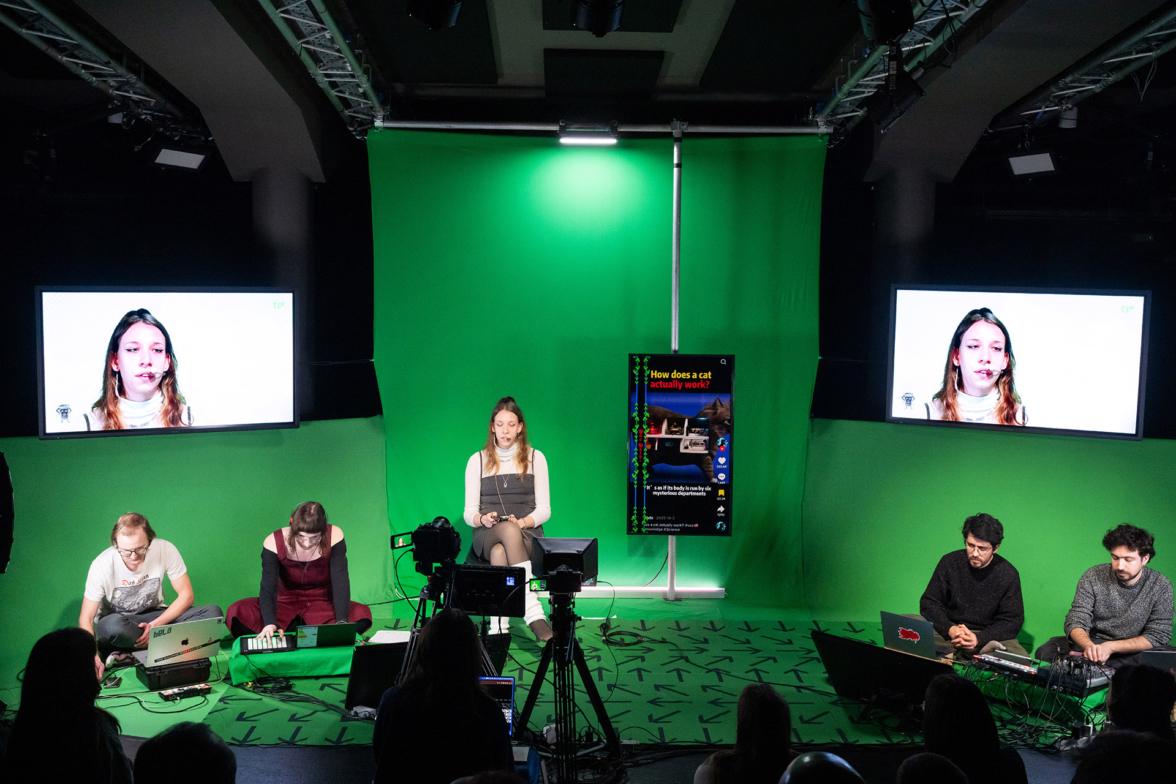
In the transdisciplinary performative essay We have always been brainrotted, Aksioma joins forces with the collective THE VOID. The essay, interwoven with audio-visual elements that will be composed on the spot, addresses the prevailing imperative of contemporary social media cultural production, brainrot, which tends towards a form of vertical video defined primarily by unconditional algorithmic curation.

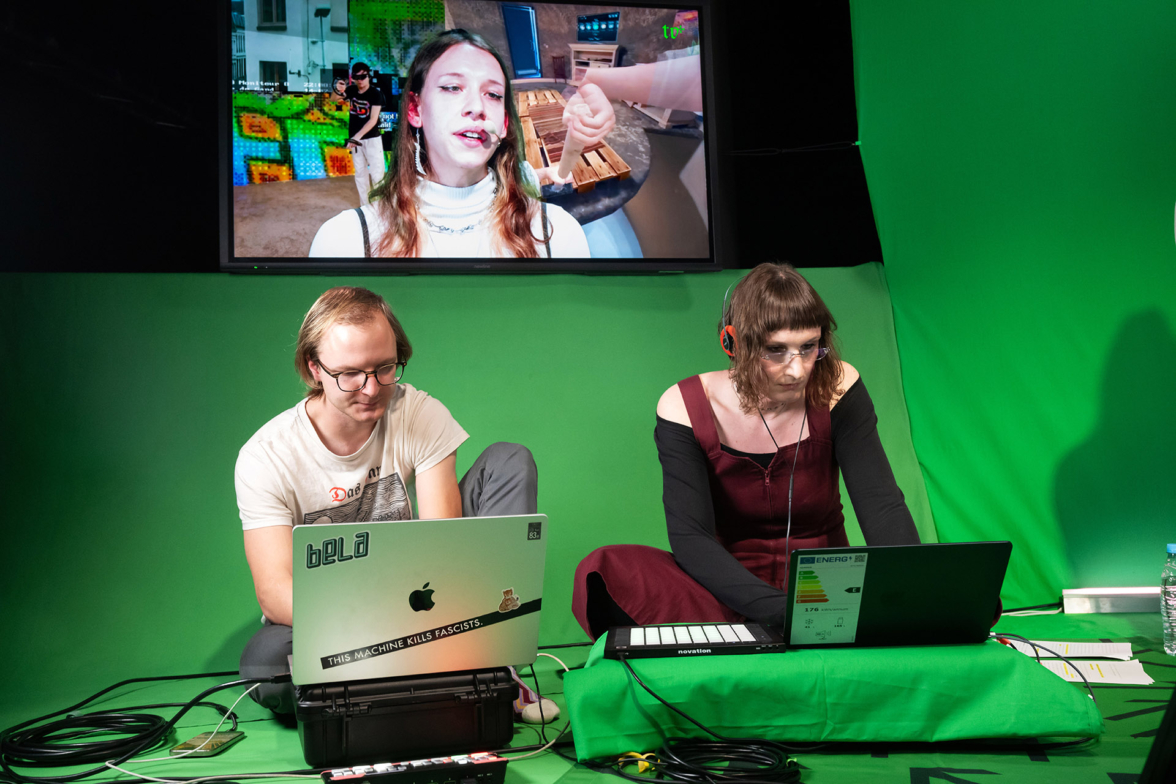
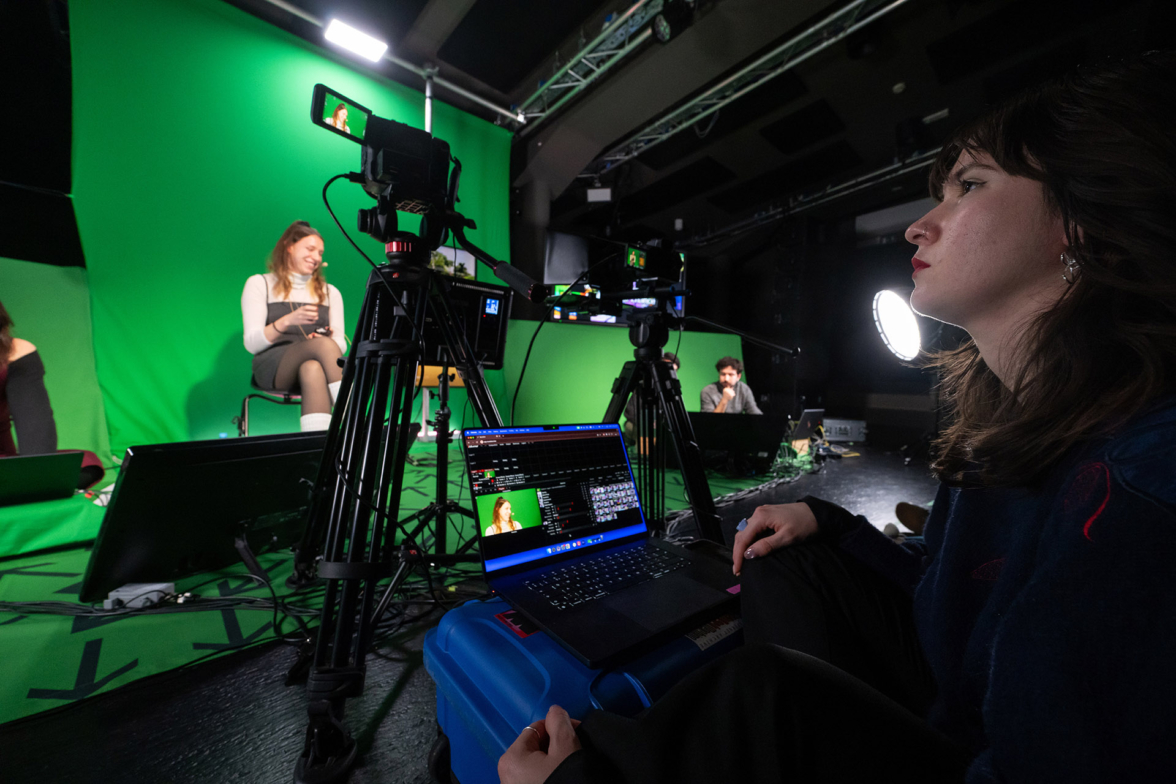
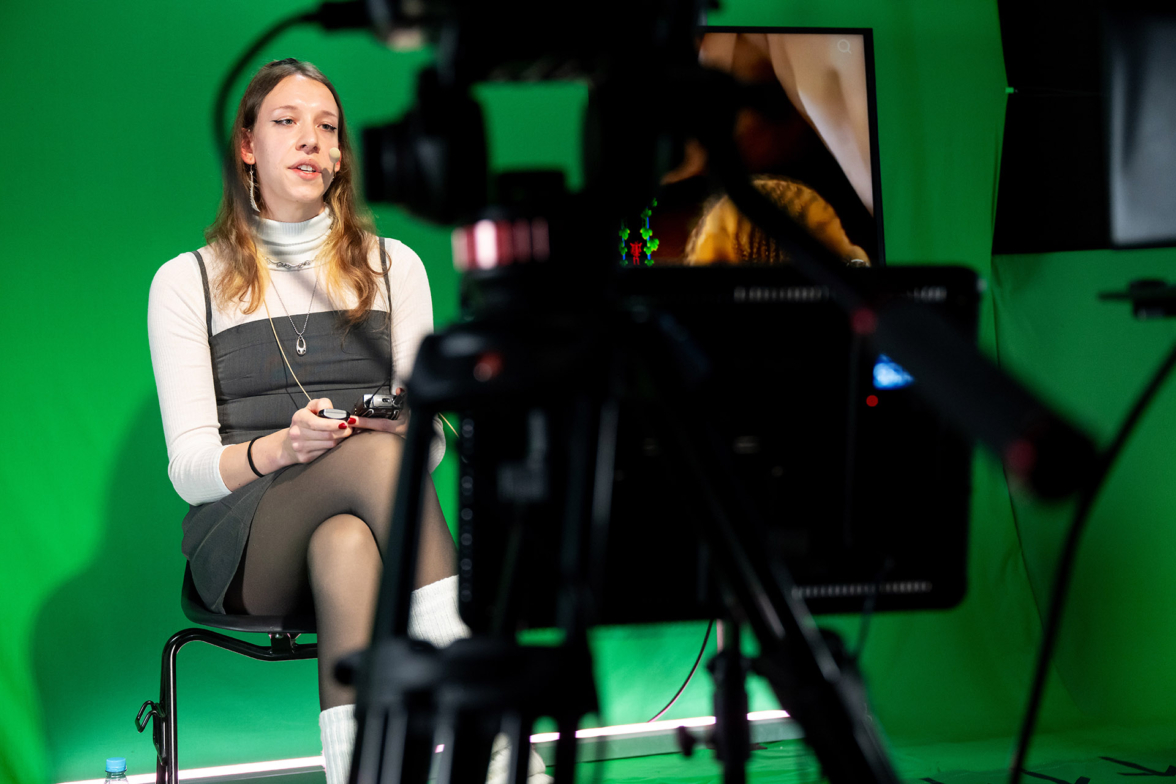
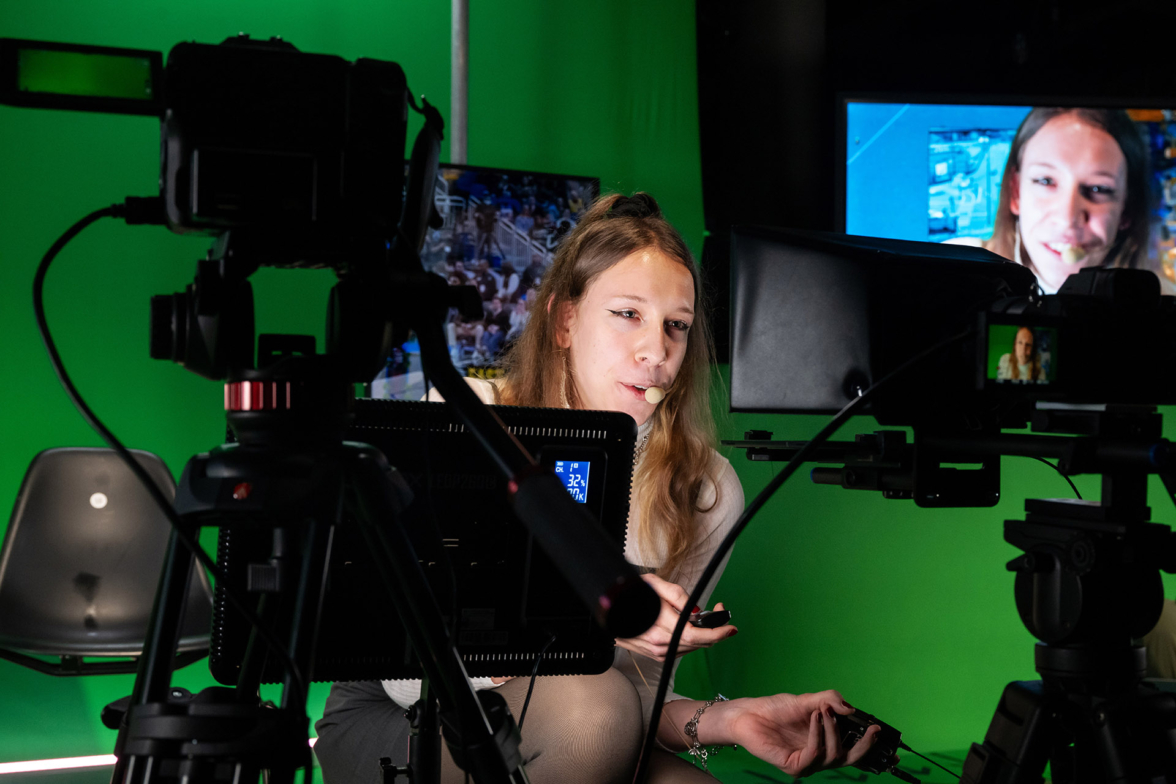
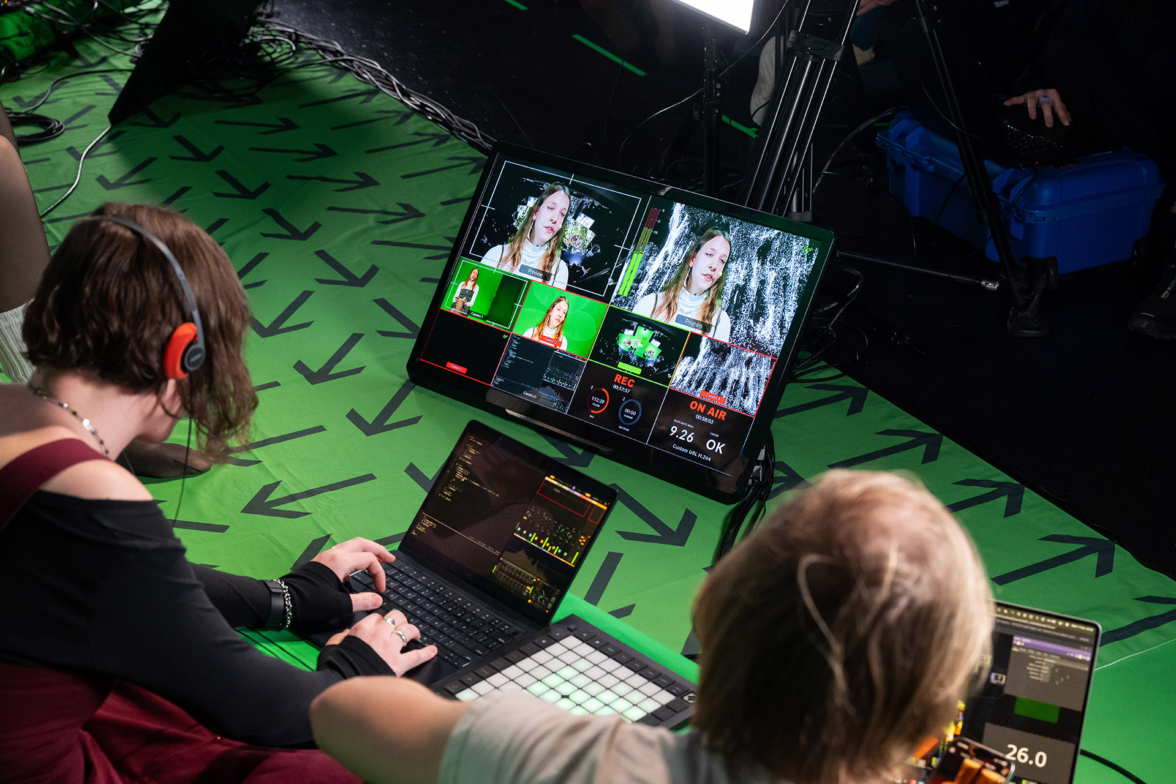
THE VOID (T.V.) is a project that questions the boundaries of audiovisual publishing and creates a platform for sharing the findings of online researchers. It achieves this by establishing a hybrid recording and broadcasting studio that uses a green screen to add live-coded visuals and multi-layered images, broadcasting the event in person and online. For this edition, the collective is expanding into THE VOID +, joined by a group of local artists and the Aksioma team.

We have always been brainrotted addresses the elusive definition of the cultural phenomenon of brainrot. The performative essay attempts to distance itself from understanding of brainrot as a genre of content or a social media trend and instead conceives of it as an imperative and true expression of algorithmic culture. Through an examination of digital holes, peripheral media, and operational images, it anchors brainrot as a reflection of the intertwining of technological, cultural, social, and economic factors.

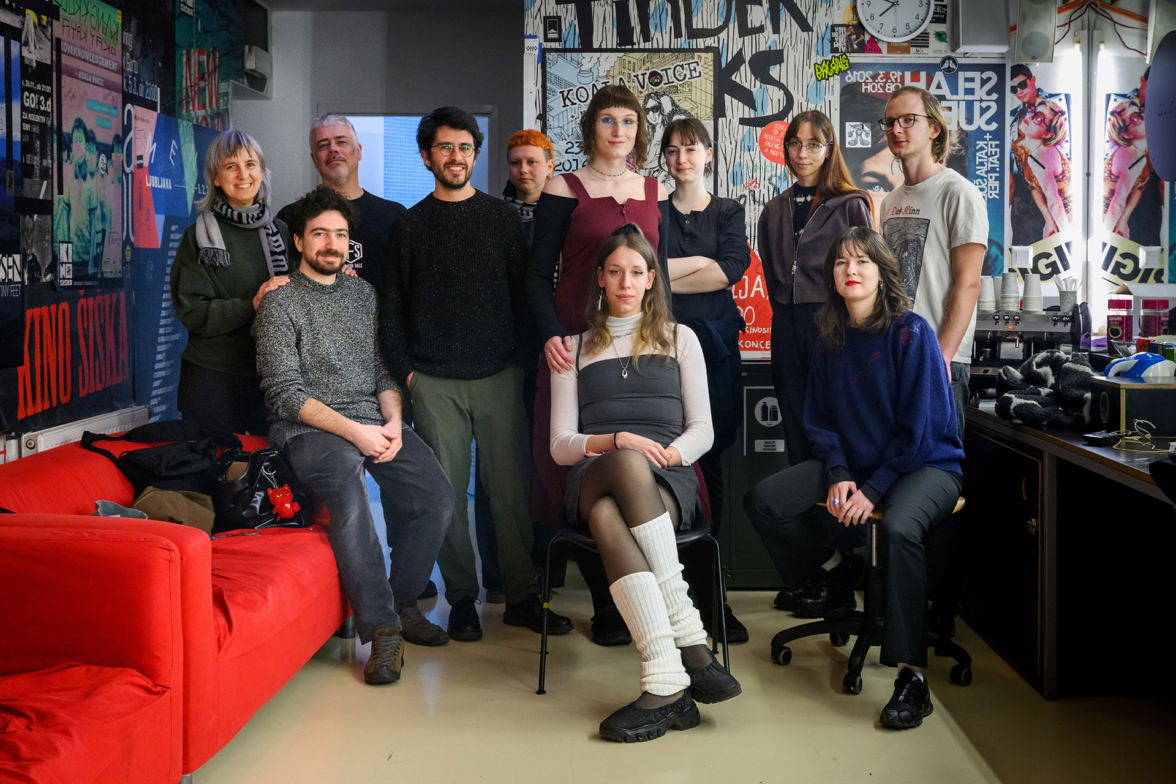
THE VOID + “band” consists of members of the Amsterdam Institute of Network Cultures (INC) Tommaso Campagna, Jordi Viader Guerrero, and Giulia Timis, intermedia artist and VJ Neža Knez, DJ and producer Tisa Troha aka msn gf, and researcher Lea Sande.


The Band
Lea Sande: SINGER (research, text, voice)
Tisa Troha: SYNTH (research, text editor, musical performer)
Neža Knez: SCREEN (visual performer, video editor, graphic design)
Giulia Timis: CAMERA (3D visuals, camera, live image processing)
Jordi Viader Guerrero: DESKTOP (research, text editor, visual performer, video editor)
Tommaso Campagna: MODEM (director of photography, live streaming, stage design, video editor)

The Roadies
Oskar Kandare: live camera, debugger
Valter Udovičić: stage technician, sound engineer

The Managers
Janez F. Janša: fat boss with cigar
Marcela Okretič: production and tour manager
Ema Maznik Antić: stage manager

The Promoter
Neža Bukovec

THE AUTHORS

Lea Sande is a researcher, journalist and editor. She produces a monthly programme called Povratne zanke (Feedback Loops) at Radio Študent, where she discusses internet theory, culture, and literature. She coedits the book series multithread and works as a student researcher at the Black Hole Photography research project. She does her work in the field of sociology of technology, focusing on the role of computation in contemporary capitalism, new developments in AI and the cultural derivatives of emerging technologies. She studies sociology of culture at UL FF.

Tisa Troha is an architect, music producer and DJ. Her work in both music and architecture focuses on the interplay between technology, pop culture, and heritage. She has performed at festivals and clubs both in Slovenia and abroad. With the collectives Nimaš Izbire and Ustanova, she organises events at the intersection of queer, club and internet culture. Since 2021, she is part of the creative team behind Šum, a journal for art theory and criticism.

Neža Knez is a new media artist specialising in graphic and interactive communication. Her works, which combine animation, video, computer-generated imagery, and music, have been presented, among others, at Svetlobna gverila, DobraVaga, CUK Kino Šiška, osmo/za, etc. She is a member of the Beam Team and part of the V2V community.

Tommaso Campagna is a visual artist, researcher at the Institute of Network Cultures (Amsterdam University of Applied Sciences) and member of the a/v research platform THE VOID. His practice spans documentary, curatorial projects, and academic contributions on video as a medium for critical inquiry and publishing experimentation. His work has been presented at Locarno Film Festival (CH), Beeld & Geluid (NL), Hangar.org (ES), among others.

Giulia Timis is an artist and researcher specialising in virtual and mixed reality who incorporates experimental formats such as radio, performance and ethnographic research into her work to investigate the affective and political dimensions of digital presence. She gives workshops and lectures and has presented her work at Hangar (ES), Louisiana Museum (DK), IMPAKT (NL) and Ars Electronica (AT), among others.

Jordi Viader Guerrero is a practice-based researcher with a background in a/v production and philosophy. His work bridges critical theory with tactical media practices. He is a member of the a/v research platform THE VOID. Among many, he has exhibited in venues like Het Nieuwe Instituut (NL), the Porto Design Biennale (PT), Locarno Film Festival (CH) and Medialab Matadero (ES) and published in journals such as Philosophy & Technology.

CREDITS

We have always been brainrotted
Author: THE VOID +

Organised and produced by:
Aksioma – Institute for Contemporary Art, Ljubljana, 2026

In partnership with:
CUK Kino Šiška
INC – Institute of Network Cultures, Amsterdam
THE VOID
Radio Študent

Supported by:
The Ministry of Culture of the Republic of Slovenia
The Municipality of Ljubljana
Italian Cultural Institute in Ljubljana

Funded by the European Union and implemented by the Goethe-Institut
This work was produced with the financial assistance of the European Union. The views expressed herein can in no way be taken to reflect the official opinion of the European Union.

Kino Šiška team:
Jasna Jernejšek: coordination
Matevž Ftičar, Matej Marinček, Maj Pušica, Jure Vlahovič: technicians

Technical support:
Kersnikova, Projekt Atol, Mladinski center Velenje, konS ≡ Platform for Contemporary Investigative Art

Synchronising with Images

Nina Davies
Nina Davies
Synchronising with Images

Artist talk
Tue, 24 February 2026 at 6 PM
Moderna galerija, Ljubljana

Part of tactics&practice #17: Becoming Image
Curated by Marco De Mutiis


In this talk, Nina Davies examines how early image-making technologies, originally invented for scientific purposes, came to be adopted as tools for storytelling, and trace how these storytelling logics have seeped into courtrooms and other high-stakes environments. In this sense, images synchronise with reality so convincingly that we treat them as faithful reflections of events, yet techniques like slow motion can subtly distort what we see – implying, for example, that a person had more time to act than they actually did, a distortion that can influence judgments of guilt or innocence.

The talk also explores what it might mean for people to physically synchronise with images. From moving in slow motion to walking like an NPC to presenting oneself as an AI-generated image, she demonstrates how her work imagines a world in which the body can recalibrate – or even disrupt – our relationship to technology.

THE AUTHOR

Rachel Topham Photography

Nina Davies is a Canadian-British artist who considers the present moment through observing dance in popular culture and how it is disseminated, circulated, made, and consumed. Previous research projects have included; the recent commodification of the dancing body on digital platforms and rethinking dances of today as traditional dances of the future. Her work explores how popular dance trends mimic digital misrepresentations of the human body, using glitchy and repetitive movement as a choreographic vernacular that tests how bodies are read, captured, and circulated by technological systems. Oscillating between the use of fiction and non-fiction, her work helps build new critical frameworks for engaging with dance practices. Her work has recently been shown at venues such as Tate Britain, V&A Museum, Somerset House and the Photographers Gallery. In 2021, she co-founded Future Artefacts FM, an artist-run program that showcases artists working with speculative fiction for broadcast.

CREDITS

Author: Nina Davies

Production:
Aksioma – Institute for Contemporary Art, Ljubljana, 2026

In partnership with:
the Academy of Fine Arts and Design (University of Ljubljana)
Moderna galerija

In the frame of:
Tactics & Practice

Financial support:
the Ministry of Culture of the Republic of Slovenia, the Municipality of Ljubljana

EXHIBITION

Nina Davies
Image Syncers
25 February–25 March 2026
Aksioma | Project Space, Ljubljana

WORKSHOP

Nina Davies
Generated Choreographies
Wed, 25 February 2026 at 4 PM
The Academy of Fine Arts and Design, UL, Video, Animation and New Media, Tobačna 5, Ljubljana

Image Syncers

Nina Davies
Nina Davies
Image Syncers

Exhibition
25 February–25 March 2026
Aksioma | Project Space, Ljubljana

Opening
WED, 25 February at 8 PM

Part of tactics&practice #17: Becoming Image
Curated by Marco De Mutiis


In Image Syncers, Nina Davies speculates on a near-future where synthetic images not only structure visual culture but begin to dictate how bodies move, behave, and express themselves. Drawing on contemporary online phenomena – particularly TikTok trends where users mimic uncanny, AI-generated dance videos – Davies imagines a world in which people internalise machine logic, choreographing themselves to match computational aesthetics and the properties of generative AI imagery.

At the center of the installation is a video narrated by two fictional podcast hosts, recounting the story of the “Plot Corps” – a shadowy collective attempting to physically transform their appearance to resemble AI-generated imagery. As the characters spiral into discussions of “image syncing,” “perception collapse,” and ontological uncertainty, the artist unpacks the recursive relationship between the self and synthetic imaging technologies. Identity becomes not just represented by images, but actively shaped and trained in relation to them.

By dramatizing the breakdown of boundaries between human and machine, Image Syncers reframes the politics of visual representation. In this world, images are not just seen – they are identities to conform to and realities to adhere to. They open spaces for communication with algorithmic forces that reside in opaque black boxes, where glitches are no longer errors but can be interpreted as languages and forms of expression. Davies’ work captures the unsettling moment in which subjects no longer stand in front of images, but live within them – and communicate with them – negotiating identity, agency, and legibility in an image world that operates autonomously from its physical index.

THE AUTHOR

Rachel Topham Photography

Nina Davies is a Canadian-British artist who considers the present moment through observing dance in popular culture and how it is disseminated, circulated, made, and consumed. Previous research projects have included; the recent commodification of the dancing body on digital platforms and rethinking dances of today as traditional dances of the future. Her work explores how popular dance trends mimic digital misrepresentations of the human body, using glitchy and repetitive movement as a choreographic vernacular that tests how bodies are read, captured, and circulated by technological systems. Oscillating between the use of fiction and non-fiction, her work helps build new critical frameworks for engaging with dance practices. Her work has recently been shown at venues such as Tate Britain, V&A Museum, Somerset House and the Photographers Gallery. In 2021, she co-founded Future Artefacts FM, an artist-run program that showcases artists working with speculative fiction for broadcast.

CREDITS

Author: Nina Davies

Production of the event:
Aksioma – Institute for Contemporary Art, Ljubljana, 2026

Part of the series:
tactics&practice

Financial support:
the Ministry of Culture of the Republic of Slovenia, the Municipality of Ljubljana

The exhibition was realised in partnership with Fotomuseum Winterthur.

ARTIST TALK

Nina Davies

Nina Davies
Synchronising with Images
Tue, 24 February 2026 at 6 PM
Moderna galerija, Ljubljana

WORKSHOP

Nina Davies
Generated Choreographies
Wed, 25 February 2026 at 4 PM
The Academy of Fine Arts and Design, UL, Video, Animation and New Media, Tobačna 5, Ljubljana

Generated Choreographies

Nina Davies
Nina Davies
Generated Choreographies

Workshop
Wed, 25 February 2026 at 4 PM
ALUO, Tobačna 5, Ljubljana

Part of tactics&practice #17: Becoming Image
Curated by Marco De Mutiis


Generated Choreographies is a performance workshop by Nina Davies, which explores movement in relation to generated videos, deep fakes, and AI interrupted memes. Through a series of choreographic exercises, the workshop will support participants to explore how generated footage can be simulated by the body rather than computational devices.

To begin the workshop, Davies will introduce methods she has used to mimic digital processes within the body as well as present some AI videos for participants to scan through and find re-creatable choreographies from. Following this, she will demonstrate and teach the group a short repertoire of movements drawn from popular generated videos found on TikTok and other shortform video platforms.

Participants will then break out into smaller groups to explore creating their own choreographic phrases inspired by generated videos of their choosing. To conclude the workshop, participants will present what they have made and collectively discuss where these sets of movements could be used in everyday life to alter our perceptions of events.

Takeaways:

– An understanding of how new image technologies affect the way we might move
– Learn methods of evading surveillance technology using dance
– Authorship of fakeness

Duration3h

Materials and knowledge required:

– Please bring your phone for recording session
– Phone charger


THE AUTHOR

Rachel Topham Photography

Nina Davies is a Canadian-British artist who considers the present moment through observing dance in popular culture and how it is disseminated, circulated, made, and consumed. Previous research projects have included; the recent commodification of the dancing body on digital platforms and rethinking dances of today as traditional dances of the future. Her work explores how popular dance trends mimic digital misrepresentations of the human body, using glitchy and repetitive movement as a choreographic vernacular that tests how bodies are read, captured, and circulated by technological systems. Oscillating between the use of fiction and non-fiction, her work helps build new critical frameworks for engaging with dance practices. Her work has recently been shown at venues such as Tate Britain, V&A Museum, Somerset House and the Photographers Gallery. In 2021, she co-founded Future Artefacts FM, an artist-run program that showcases artists working with speculative fiction for broadcast.

CREDITS

Author: Nina Davies

Production:
Aksioma – Institute for Contemporary Art, Ljubljana, 2026

Partner:
ALUO – Akademija za likovno umetnost in oblikovanje Univerze v Ljubljani

Part of the series:
tactics&practice

Financial support:
the Ministry of Culture of the Republic of Slovenia, the Municipality of Ljubljana

ARTIST TALK

Nina Davies

Nina Davies
Synchronising with Images
Tue, 24 February 2026 at 6 PM
Moderna galerija, Ljubljana

In this talk, Nina Davies examines how early image-making technologies, originally invented for scientific purposes, came to be adopted as tools for storytelling, and trace how these storytelling logics have seeped into courtrooms and other high-stakes environments. In this sense, images synchronise with reality so convincingly that we treat them as faithful reflections of events, yet techniques like slow motion can subtly distort what we see – implying, for example, that a person had more time to act than they actually did, a distortion that can influence judgments of guilt or innocence.

The talk also explores what it might mean for people to physically synchronise with images. From moving in slow motion to walking like an NPC to presenting oneself as an AI-generated image, she demonstrates how her work imagines a world in which the body can recalibrate – or even disrupt – our relationship to technology.

EXHIBITION

Nina Davies
Image Syncers
25 February–25 March 2026
Aksioma | Project Space, Ljubljana

Sara Bezovšek, Beti Frim, Neo Nor
Chronically Online

Curated by
Lara Mejač, Ugo Pecoraio, Heiko Schmid

Exhibition
2 February–28 February 2026
KUNSTSURFER

KUNSTSURFER is a browser-based art space. It runs on an add-on that recognises advertisements on web pages and replaces them with digital exhibitions.

To use the add-on, you’ll need to download and install it in your browser. The process is very simple, quick and 100% secure!

DOWNLOAD for Firefox
DOWNLOAD for Chromium-based browsers (Chrome, Opera, Brave, Microsoft Edge, etc.)


In today’s hyper-commercialized online environment, artists Sara Bezovšek, Beti Frim, and Neo Nor hijack digital advertisements to disrupt our scrolling habits. Their work invites us into their own digital worlds, where nostalgia for the early web intertwines with a critical examination of contemporary internet culture. In the group exhibition Chronically Online, their pieces linger between evoking the spirit of the first online communities and imagining what virtual spaces might yet become.

In their own distinct way, each artist of the exhibition explores how users navigate and inhabit online spaces. This includes analyzing meme logic and cultural absorption within the current cluttered digital environment, deliberately revisiting the DIY aesthetics of early web graphics, or creating virtual retreats from the constant demands of online performativity. 

Neo Nor constructs snippets into a nightmarish world dense with niche gaming references and marginal characters surviving at the edge of systemic collapse. His post-digital dystopia reflects on the internet’s role as both an escape and a site of identity formation, while at the same time alluding to the unpolished, ‘ugly’ aesthetics of the early web. The revival of this visual language, which contrasts sharply with today’s minimalist, commercial design, serves as a tool of playful resistance. 

Sara Bezovšek draws inspiration from the 2010s phenomenon of online personality quizzes, inviting users to “find out what their online personality is.” By answering a series of questions, the participants move through various belief systems, political opinions, and ideological paths. Beneath its engaging surface, which reflects the logic of online consumption, the project critically examines how the algorithmically informed worldview is constructed and commodified within today’s saturated media landscape. 

The overwhelming feelings of the average internet user are also captured in Beti Frim’s whimsical digital sanctuaries, which serve as a response to the relentless commercialization and performance pressure of contemporary online life. Her work offers a utopian retreat, a quiet refuge built within a dreamy, girlish aesthetic full of past online references and memes. Another layer of the project, conceived as a step-by-step online manual for Means of escapism, subverts the productivity-driven logic of the internet and invites exhausted users to slowly disconnect.

Beneath the exhibition’s critical engagement with today’s internet culture runs an undercurrent of nostalgia for a time when the web felt more manageable, slower, less monetised, and more community-oriented. But rather than longing for the simpler times, the Chronically Online exhibition reclaims agency within ad spaces and uses the attention economy’s own tools to question whether we could imagine the internet in another way.

In an era where meaning dissolves with every scroll, where memory lasts only as long as a story’s fleeting lifespan, and where ads, posts, and notifications wage a relentless battle for our attention, these artists ask: Can we redesign the structures of the internet? Through their work, they not only question the status quo but also imagine alternative ways of existing online.

THE AUTHORS

Sara Bezovšek is a new media artist working in the fields of internet art, experimental film and graphic design. Her artistic practice is characterized by reappropriation of online and pop cultural materials. Using a dense visual language of references, she taps into the collective imaginarium and constructs engaging narratives that are both a critique and a celebration of the highly saturated online media landscapes we navigate daily.

Beti Frim (aka Pixel Bambi) completed her Bachelor’s degree in Visual Communication and is continuing her Master’s degree in Video and New Media at the Academy of Fine Arts and Design in Ljubljana. Through the interplay of analog and digital media her work focuses on the theme of coexistence of human and non-human entities. By exploring post-internet aesthetics in combination with nature, she seeks connections between different perspectives in a visually oversaturated world.

Neo Nor completed his undergraduate studies in video and new media at the Academy of Fine Arts and Design in Ljubljana, where he is also pursuing a Master’s degree in the same field. He works mainly in digital techniques such as video, animation, digital graphics and video games. In his artistic practice he uses world-building, storytelling and the creation of different narratives to explore dream states and the blurred boundaries between the imaginary world and reality.

THE CURATORS

Lara Mejač is an art historian and independent curator based in Ljubljana. In her curatorial practice, she focuses on digital culture through experimental exhibition models and critical reflections on contemporary technologies, their societal power structures, and their political  and environmental implications. She has curated and produced exhibitions across Slovenia and internationally. In 2021, she curated the online exhibition Accept and Continue, a project she later explored further in her master’s thesis on the history and specificities of online exhibitions. She is the co-founder and member of the curatorial team of ETC. magazine.

Dr. Heiko Schmid is an art historian, curator and author based in Zurich. He holds a PhD from the Academy of Media Arts Cologne. His research focuses on media art and digital culture, cultural history of technological and the science fiction genre, posthumanism, contemporary comics, and outer space as a site of technocultural imagination. Through his combined academic and curatorial practice, he connects historical scholarship with speculative and future-oriented approaches to art, media, and technology.

Ugo Pecoraio is an independent curator and advisor specializing in digital culture, innovative exhibition formats, and cross-disciplinary collaborations. His curatorial practice is situated at the intersection of avant-garde artistic practices, institutional critique, technology, design, activism, and subcultures. He is currently the head of communications department at HEK (House of Electronic Arts) in Basel, while also collaborating on various projects aimed at fostering dialogue, questioning existing systems, and collectively imagining more open, just, and compassionate futures. 

CREDITS

Author: Sara Bezovšek, Beti Frim, Neo Nor
Curator and author of the text: Lara Mejač, Ugo Pecoraio, Heiko Schmid
Banner design: Jaka Juhant

Production: Aksioma – Institute for Contemporary Art, Ljubljana and KUNSTSURFER Association, 2026

tactics&practice #17: Becoming Image

THE VOID +
We Have Always Been Brainrotted

Theory music performance
10 Februar 2026 at 7 PM
Aksioma | Project Space, Ljubljana

11 Februar 2026 at 8 PM
Kino Šiška, Ljubljana


In the transdisciplinary performative essay We have always been brainrotted, Aksioma and THE VOID joined forces for two public presentations unfolding both on site and online. Interwoven with audio-visual elements composed live on the spot, the essay addressed the prevailing imperative of contemporary social media cultural production, brainrot, which tends toward a form of vertical video defined primarily by unconditional algorithmic curation.

We have always been brainrotted engages with the elusive definition of brainrot as a cultural phenomenon. The performative essay moves away from understanding brainrot as a genre of content or a passing social media trend, and instead approaches it as an imperative and a true expression of algorithmic culture. Through an examination of digital holes, peripheral media, and operational images, it frames brainrot as a reflection of the intertwining of technological, cultural, social, and economic factors.

Over the course of two live events the essay takes shape as a live collective composition of text, sound, and image. The public presentations create a shared setting in which performative narration and live-produced audio-visual material can be experienced simultaneously by audiences in the venues and through the livestreams on the InBetween platform.

Event report by the Institute of Network Cultures


LIVE AT AKSIOMA

10 Februar 2026
LIVE STREAMING ARCHIVE

LIVE AT KINO ŠIŠKA

11 Februar 2026
LIVE STREAMING ARCHIVE

THE VOID+ BAND

Lea Sande: SINGER (research, text, voice)
Tisa Troha: SYNTH (research, text editor, musical performer)
Neža Knez: SCREEN (camera, video editor, graphic design)
Oskar Kandare: SCREEN (vertical video feeder, debugger)
Giulia Timis: CAMERA (3D visuals, camera, live image processing)
Jordi Viader Guerrero: DESKTOP (research, text editor, visual performer, video editor)
Tommaso Campagna: MODEM (director of photography, live streaming, video editor)

THE RODIE
Valter Udovičić: stage technician, sound engineer

THE MANAGERS
Marcela Okretič: production and tour manager
Ema Maznik Antić: stage manager
Janez F. Janša: fat boss with cigar

THE PROMOTER
Neža Bukovec


Lea Sande is a researcher, journalist and editor. She produces a monthly programme called Povratne zanke (Feedback Loops) at Radio Študent, where she discusses internet theory, culture, and literature. She coedits the book series multithread and works as a student researcher at the Black Hole Photography research project. She does her work in the field of sociology of technology, focusing on the role of computation in contemporary capitalism, new developments in AI and the cultural derivatives of emerging technologies. She studies sociology of culture at UL FF.

Tisa Troha is an architect, music producer and DJ. Her work in both music and architecture focuses on the interplay between technology, pop culture, and heritage. She has performed at festivals and clubs both in Slovenia and abroad. With the collectives Nimaš Izbire and Ustanova, she organises events at the intersection of queer, club and internet culture. Since 2021, she is part of the creative team behind Šum, a journal for art theory and criticism.

Neža Knez is a new media artist specialising in graphic and interactive communication. Her works, which combine animation, video, computer-generated imagery, and music, have been presented, among others, at Svetlobna gverila, DobraVaga, CUK Kino Šiška, osmo/za, etc. She is a member of the Beam Team and part of the V2V community.

Tommaso Campagna is a visual artist, researcher at the Institute of Network Cultures (Amsterdam University of Applied Sciences) and member of the a/v research platform THE VOID. His practice spans documentary, curatorial projects, and academic contributions on video as a medium for critical inquiry and publishing experimentation. His work has been presented at Locarno Film Festival (CH), Beeld & Geluid (NL), Hangar.org (ES), among others.

Giulia Timis is an artist and researcher specialising in virtual and mixed reality who incorporates experimental formats such as radio, performance and ethnographic research into her work to investigate the affective and political dimensions of digital presence. She gives workshops and lectures and has presented her work at Hangar (ES), Louisiana Museum (DK), IMPAKT (NL) and Ars Electronica (AT), among others.

Jordi Viader Guerrero is a practice-based researcher with a background in a/v production and philosophy. His work bridges critical theory with tactical media practices. He is a member of the a/v research platform THE VOID. Among many, he has exhibited in venues like Het Nieuwe Instituut (NL), the Porto Design Biennale (PT), Locarno Film Festival (CH) and Medialab Matadero (ES) and published in journals such as Philosophy & Technology.

CREDITS

We Have Always Been Brainrotted
Author: THE VOID +

Organised and produced by:
Aksioma – Institute for Contemporary Art, Ljubljana, 2026

In partnership with:
CUK Kino Šiška
INC – Institute of Network Cultures, Amsterdam
THE VOID
Radio Študent

Supported by:
The Ministry of Culture of the Republic of Slovenia
The Municipality of Ljubljana
Italian Cultural Institute in Ljubljana

Funded by the European Union and implemented by the Goethe-Institut
This work was produced with the financial assistance of the European Union. The views expressed herein can in no way be taken to reflect the official opinion of the European Union.

Kino Šiška team:
Jasna Jernejšek: coordination
Matevž Ftičar, Matej Marinček, Maj Pušica, Jure Vlahovič: technicians

Technical support:
Kersnikova, Projekt Atol, Mladinski center Velenje, konS ≡ Platform for Contemporary Investigative Art

Aksioma at panke.gallery

Launch of new publications
Aksioma at panke.gallery
Launch of new publications & conversation with the authors

29 January 2026 at 7 PM
panke.gallery, Berlin

Part of Vorspiel 2026


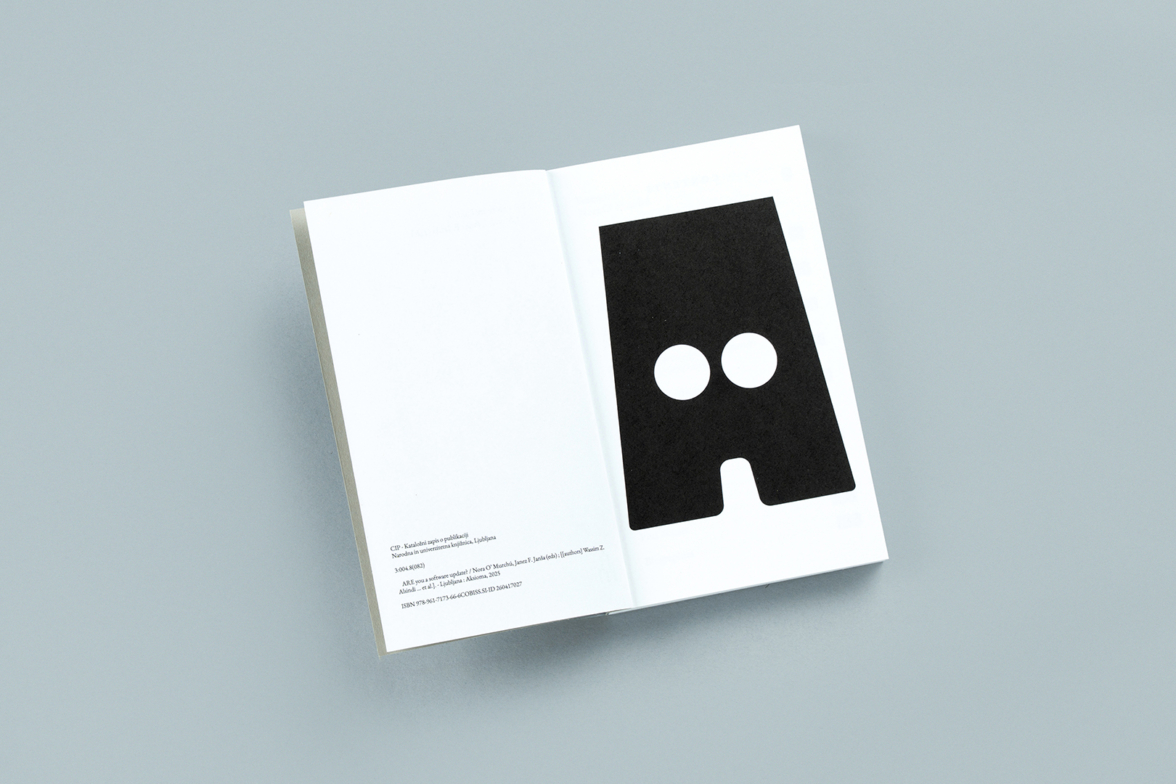
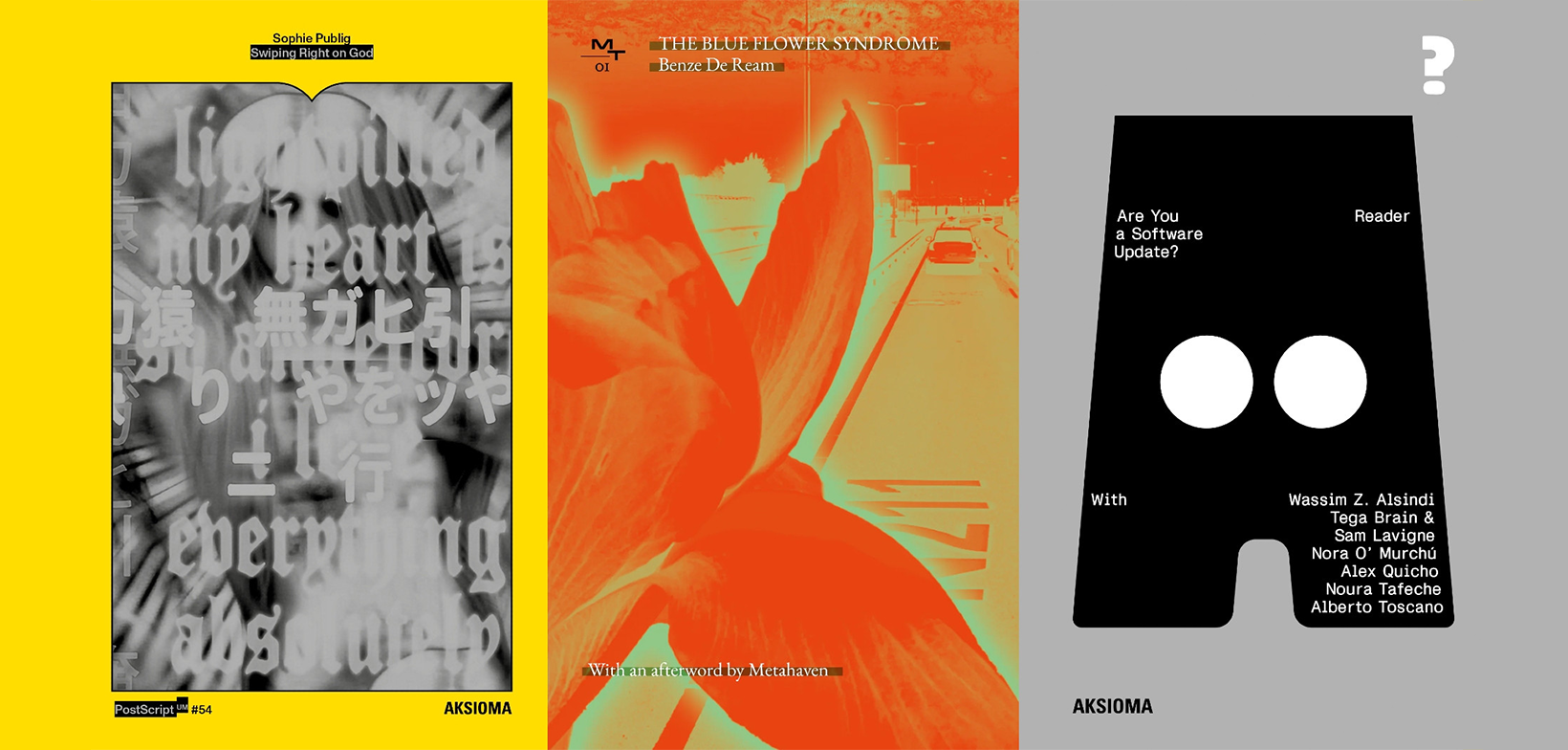
Aksioma returns to the panke.gallery in Berlin to launch its new multithread publishing line, promote the latest issue of the PostscriptUM series and celebrate the release of its latest book, Are You A Software Update?


Programme schedule

19:00
Introduction by Janez Fakin Janša
Presentation of the multithread editorial series
by Lea Sande and Ema Maznik Antić

19:10
Benze De Ream on multithread #1: The Blue Flower Syndrome

19:30
Mikkel Rørbo on multithread #2: Digital Occultism (preview)

19:40
Sophie Publig on PostScriptum #54: Swiping Right on God

20:00
Conversation with Sophie Publig and Benze De Ream
Moderated by Lea Sande and Ema Maznik Antić

The multithread series

multithread is a new editorial series by Aksioma – Institute for Contemporary Art, Ljubljana, edited by Lea Sande and Ema Maznik Antić, focusing primarily on artistic and creative interventions in the field of online and algorithmic landscapes. Rather than institutional forms and the voices of established theorists, multithread promotes the emerging perspectives of critical observers who address the topic of the contemporary socio-technological condition, moving beyond academic rigor as the dominant framework, while remaining in dialogue with leading-edge discourse.

multithread #1

Benze De Ream
The Blue Flower Syndrome

Afterword by Metahaven

EN | 10.5 x 16.7 cm | 80 pp | COLOUR | soft cover | 2026
ISBN 978-961-7173-67-3

The Blue Flower Syndrome is a discussion on palatability, power and computation encoded in a single rushed train _[of thought] // [commute]_ to an interview on a Dutch iris farm. Blending autofiction, media theory and myth, it traces the entanglements between public-facing interfaces, machinic mathematics and the data that fuels them. The work reveals how life as a product of purely probabilistic and statistical decisions expresses and roots itself through both our daily essentials, such as clothes and food, as well as historical practices and technologies that shaped them. In the afterword, Metahaven expands on the text by outlining influence design – a project in which computation operates as an ideological carrier – placing The Blue Flower Syndrome within a contemporary media landscape read through a historical-materialist lens.

PostScriptUM #54

Sophie Publig
Swiping Right on God

EN | 10.5 x 16.7 cm | 24 pp | COLOUR | soft cover | 2025
ISBN 978-961-7173-64-2

The 54th issue of PostScriptUM features Swiping Right on God, an essay by internet archaeologist and digital ecosystem explorer Sophie Publig investigating how spirituality mutates in the age of platform capitalism. Through media theory, meme analysis and posthuman philosophy, the author traces how angelcore aesthetics and digital mysticism reroute the internet as a sacred infrastructure, giving rise to Network Spirituality. Between post-irony and belief, kawaii semiotics disguise ideology in softness, forming an affective interface between ritualistic devotion and algorithmic governance.

Aksioma reader

Nora O’ Murchú, Janez Fakin Janša, eds.
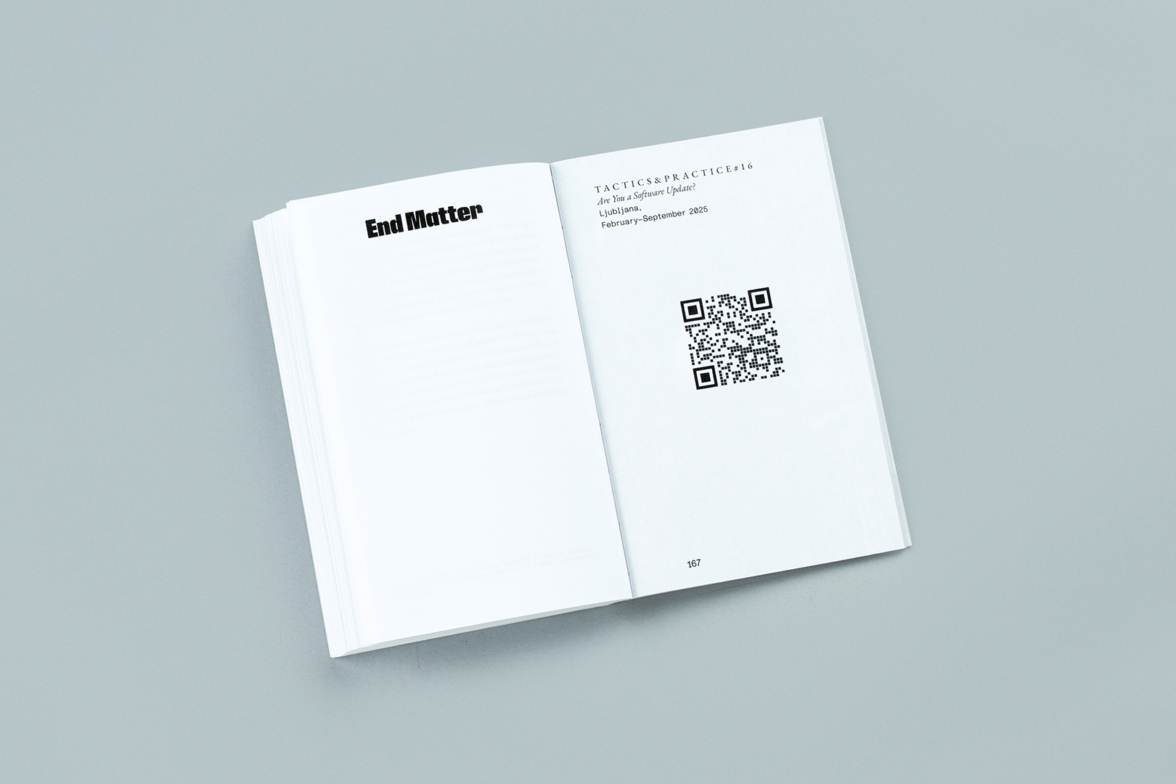
Are You a Software Update?

EN | 10,5 x 16,7 cm | 192 pp | BW | soft cover | 2025
ISBN 978-961-7173-66-6

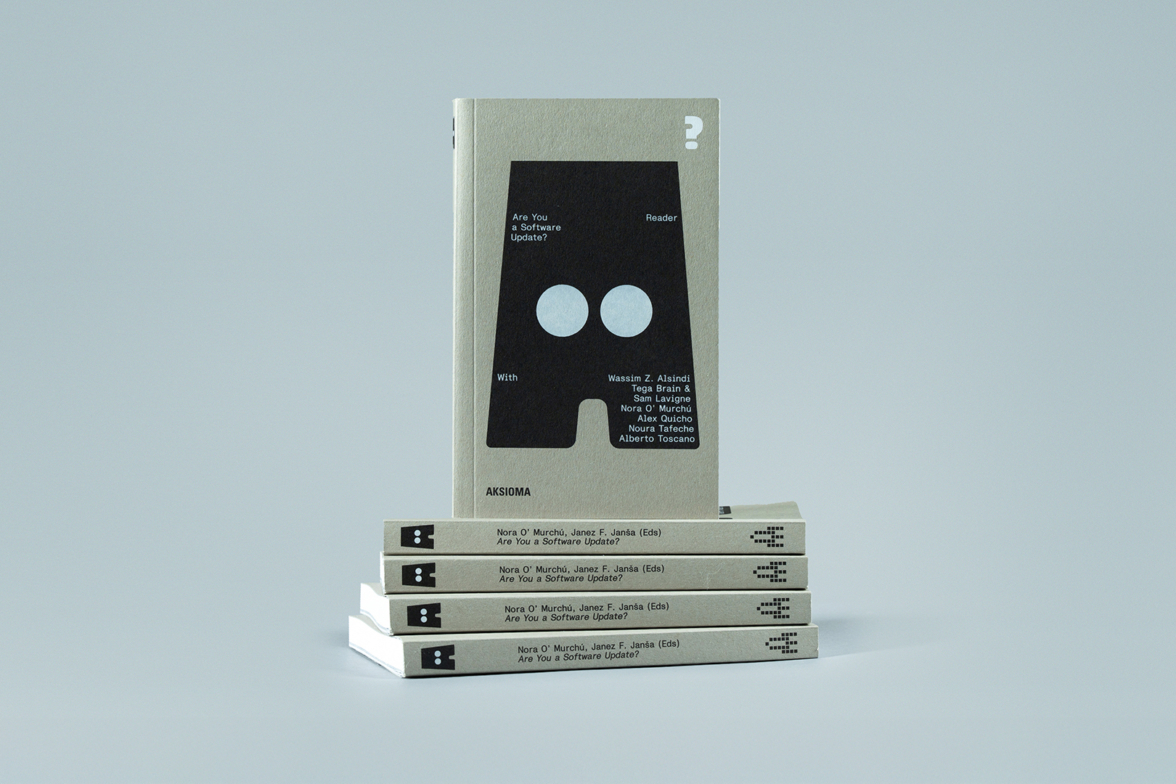
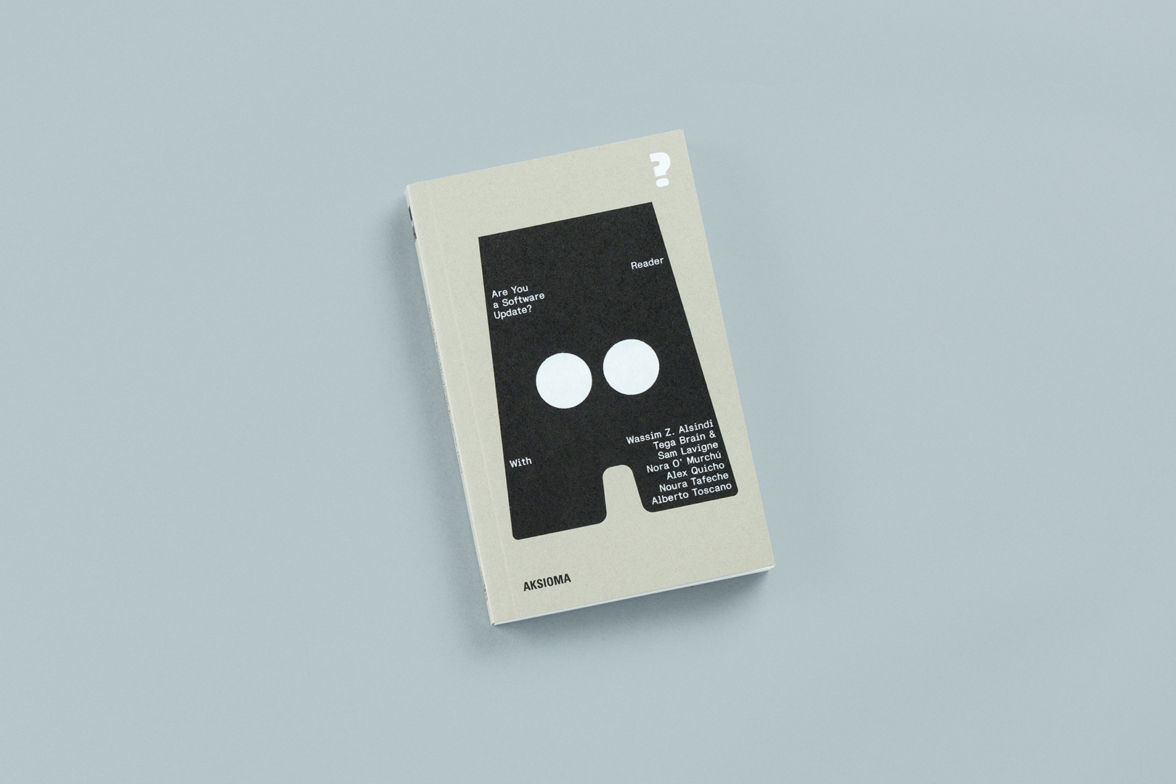
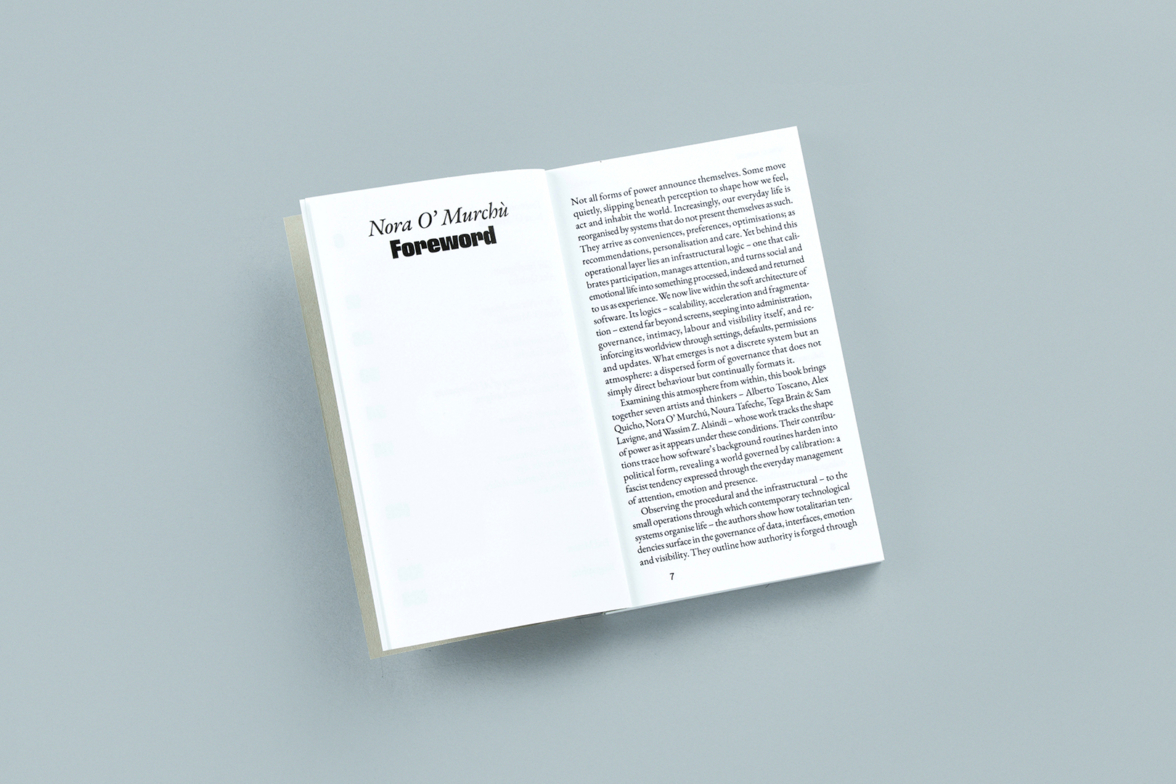
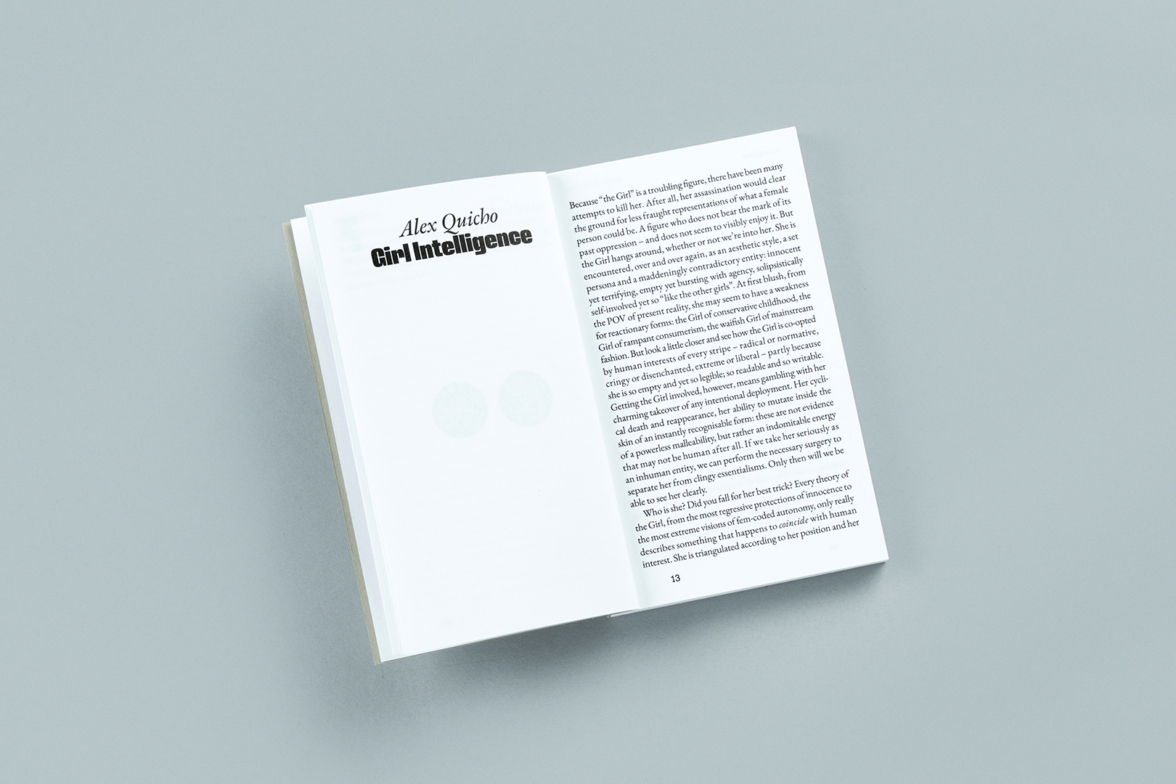
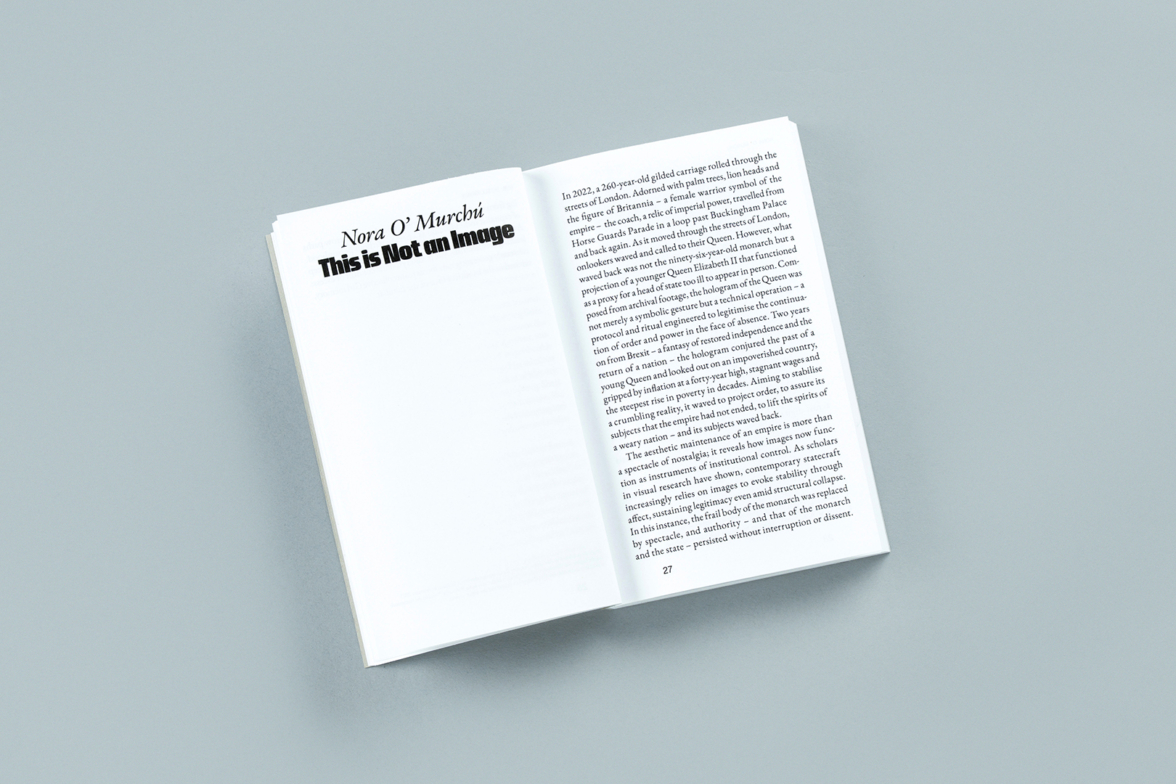
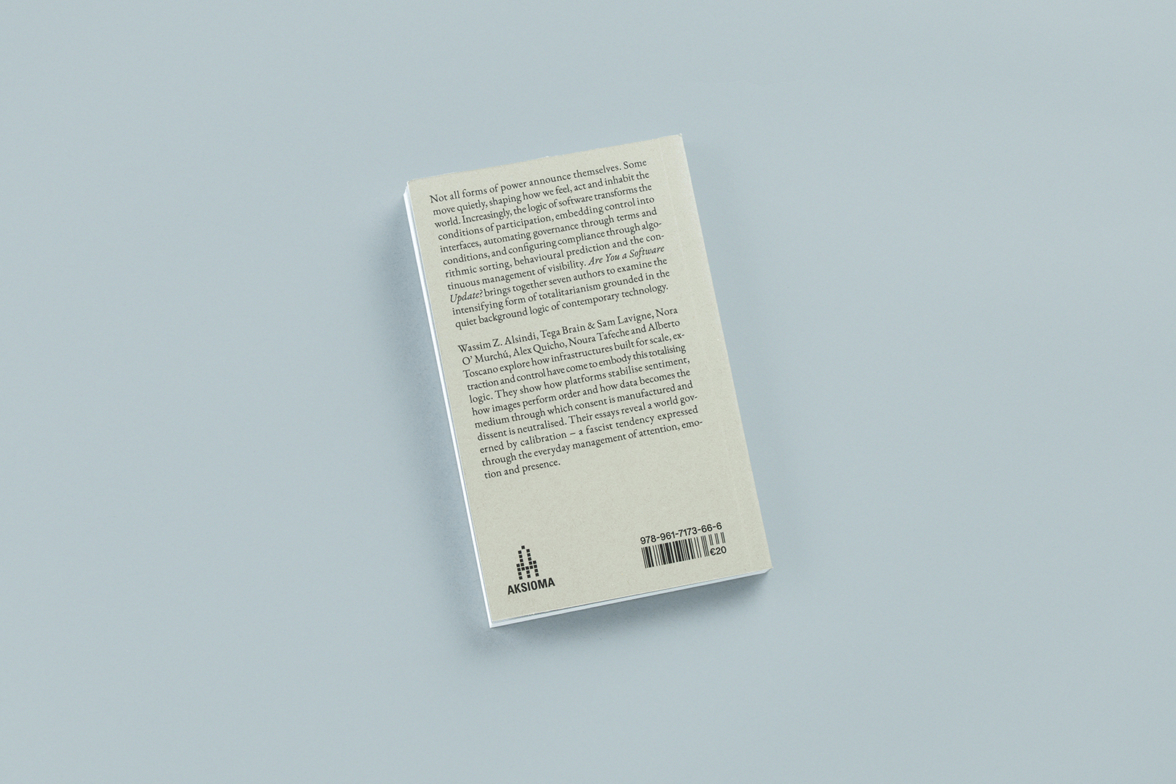
Not all forms of power announce themselves. Some move quietly, shaping how we feel, act and inhabit the world. Increasingly, the logic of software transforms the conditions of participation, embedding control into interfaces, automating governance through terms and conditions, and configuring compliance through algorithmic sorting, behavioural prediction and the continuous management of visibility. Are You a Software Update? brings together seven authors to examine the intensifying form of totalitarianism grounded in the quiet background logic of contemporary technology.

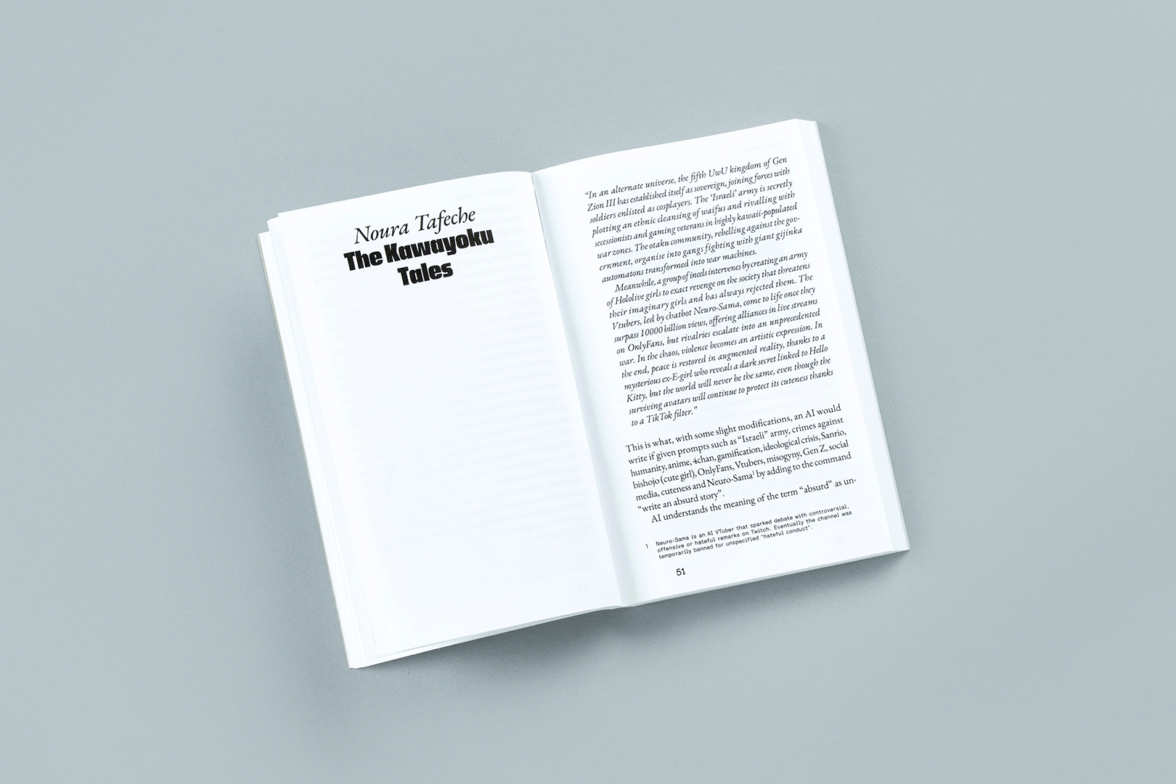
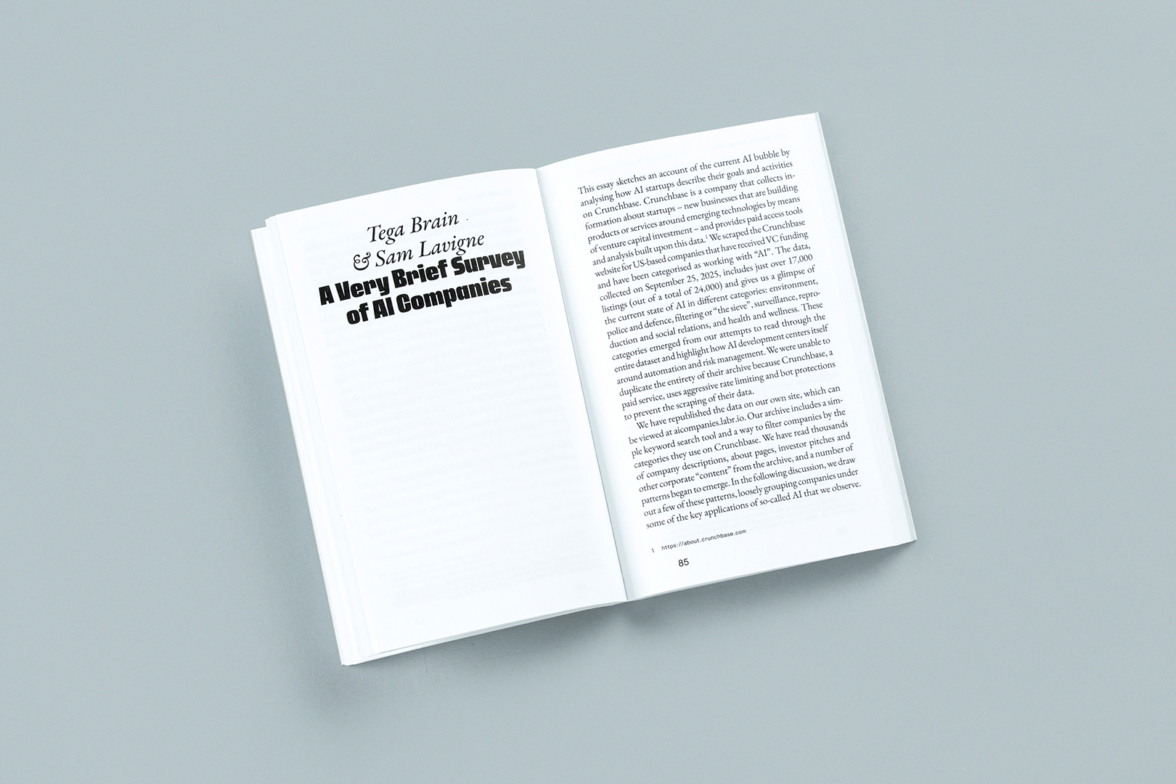
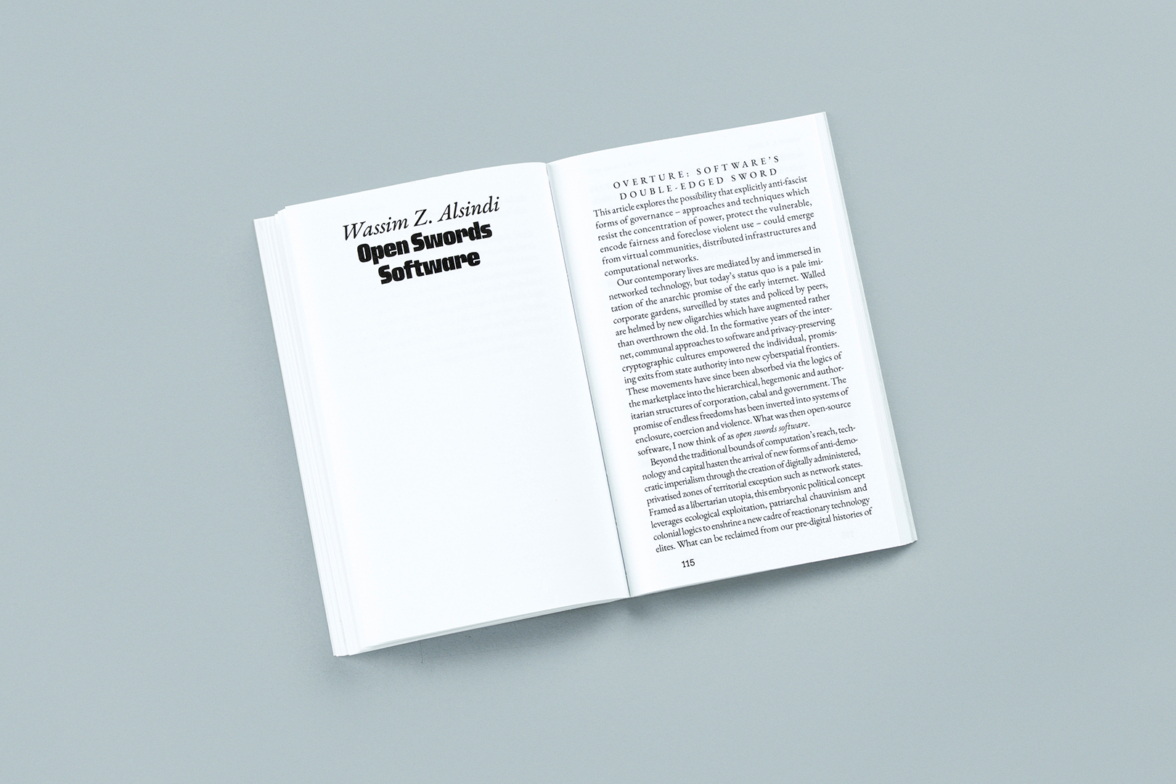
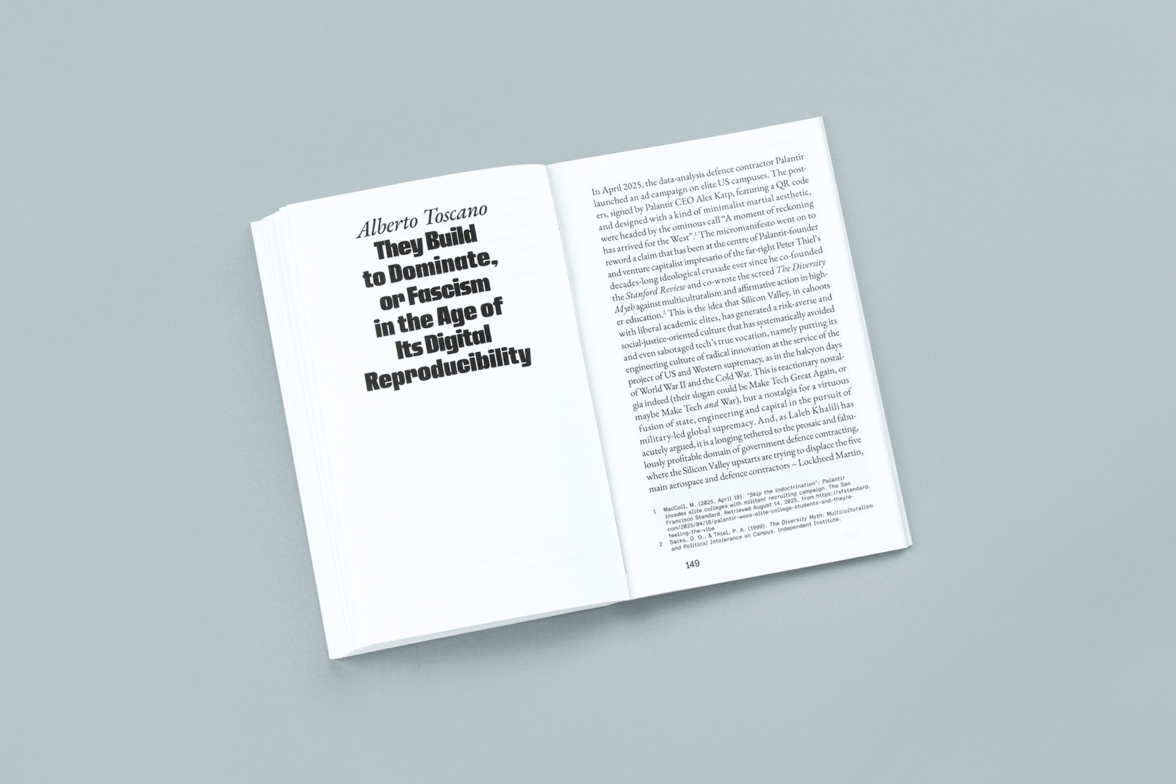
Alberto Toscano, Alex Quicho, Nora O’ Murchú, Noura Tafeche, Tega Brain & Sam Lavigne and Wassim Z. Alsindi explore how infrastructures built for scale, extraction and control have come to embody this totalising logic. They show how platforms stabilise sentiment, how images perform order and how data becomes the medium through which consent is manufactured and dissent is neutralised. Their essays reveal a world governed by calibration – a fascist tendency expressed through the everyday management of attention, emotion and presence.

multithread #2

Sophie Publig & Mikkel Rørbo
Digital Occultism

Release date: Spring 2026

The essay by researchers at the Weibel Institute, Sophie Publig and Mikkel Rørbo, will frame digital occultism as a method to analyze why digital cultures and techno-culture turned towards esoteric vocabularies and ever weirder political horizons.

Participants

Tonda Budszus

Benze De Ream is an designer, artist, and researcher whose practice investigates the political and cognitive mechanics of algorithmic systems. He has been trained at the Geo-Design department, Design Academy Eindhoven, and is a recipient of the Gijs Bakker Award. His research unfolds through moving image, performance, writing, and experiential installation, probing how computation choreographs social and affective realities.

Sophie Publig is an internet archaeologist exploring digital ecosystems and their artefacts. Based at the Weibel Institute for Digital Cultures at the University of Applied Arts Vienna, her research and teaching focus on the dynamics of digital cultures through critical post-humanism. She wrote her dissertation on the history of internet memes in 2023 and is currently examining the Girl Online, digital occultism and trajectories of schizoposting.

Lea Sande is a researcher, journalist and editor who produces a monthly programme called Povratne zanke (Feedback Loops) at Radio Študent, where she discusses internet theory, culture, and literature. She works in the field of the sociology of technology, focusing on the role of computation in contemporary capitalism, the development of artificial intelligence, and the cultural derivatives of emerging technologies.

Ema Maznik Antić is a visual artist working primarily with installation, sculpture, text, and voice, often through research-based and site-responsive processes situated in urban and post-industrial environments. She has been part of the Aksioma team since 2025.

Mikkel Rørbo is a producer of cultural detritus and interdisciplinary researcher on hyperstition, abductive inference, reality-production and desire.

CREDITS

Production of the event:
Aksioma – Institute for Contemporary Art, Ljubljana and panke.gallery, 2026

Financial support:
the Ministry of Culture of the Republic of Slovenia and the Municipality of Ljubljana

multithread

Presentation of the new editorial series
multithread
New editorial series

Launch events:

21 January 2026 at 7 PM
Aksioma | Project Space, Ljubljana

29 January 2026 at 7 PM
panke.gallery, Berlin


multithread is a new editorial series by Aksioma – Institute for Contemporary Art, Ljubljana, edited by Lea Sande and Ema Maznik Antić, focusing primarily on artistic and creative interventions in the field of online and algorithmic landscapes. Rather than institutional forms and the voices of established theorists, multithread promotes the emerging perspectives of critical observers who address the topic of the contemporary socio-technological condition, moving beyond academic rigor as the dominant framework, while remaining in dialogue with leading-edge discourse.

The series is aimed at experimental and interdisciplinary writing, embracing a heterogeneity of approaches, languages, and registers. It allows for critical exploration and research, encouraging contributions ranging from speculative fiction to systematic analysis, including critical and political theory, philosophy, art and media studies.

Conceived as a meeting ground for emerging imaginaries and new voices, the series probes the tensions between technology, imagination, and society, illuminating both innovative currents of thought and the authors shaping them.

With an expected frequency of four issues per year, multithread is published in a pocket format with colour images. Each issue includes an afterword by an established author that expands on the central topic, situates it within a broader discursive context, and delves into the responses articulated in the main text.

During the event, designer, artist and researcher Benze De Ream, author of The Blue Flower Syndrome, the inaugural essay of this new series, will present his work and then engage in conversation Lea Sande and Ema Maznik Antić. The two editors of multithread will take the opportunity to explain to the public what needs this editorial line responds to, what its visions and aspirations are, who it is aimed at, both in terms of contributors and readers, and how they intend to develop it in the near future.

multithread #1

Benze De Ream
The Blue Flower Syndrome


Afterword by Metahaven

Issue edited by Lea Sande, Ema Maznik Antić, Primož Krašovec, Janez Fakin Janša

EN | 10.5 x 16.7 cm | 80 pp | COLOUR | soft cover | 2026
ISBN 978-961-7173-67-3

Release date: 21 January 2026

The Blue Flower Syndrome is a discussion on palatability, power and computation encoded in a single rushed train [of thought] // [commute] to an interview on a Dutch iris farm. Blending autofiction, media theory and myth, it traces the entanglements between public-facing interfaces, machinic mathematics and the data that fuels them. The work reveals how life as a product of purely probabilistic and statistical decisions expresses and roots itself through both our daily essentials, such as clothes and food, as well as historical practices and technologies that shaped them. In the afterword, Metahaven expands on the text by outlining influence design – a project in which computation operates as an ideological carrier – placing The Blue Flower Syndrome within a contemporary media landscape read through a historical-materialist lens.

Benze De Ream is an designer, artist, and researcher whose practice investigates the political and cognitive mechanics of algorithmic systems. He has been trained at the Geo-Design department, Design Academy Eindhoven, and is a recipient of the Gijs Bakker Award. His research unfolds through moving image, performance, writing, and experiential installation, probing how computation choreographs social and affective realities.

CREDITS

Production of the event: Aksioma – Institute for Contemporary Art, Ljubljana, 2026


Note dated 26 April 2026

Given the urgency of the topics covered and in order to ensure the widest possible circulation, the editorial team has decided to make the essay They Build to Dominate, or Fascism in the Age of Its Digital Reproducibility by Alberto Toscano available free of charge in PDF format.


Available on back-order

Price: 20€


Not all forms of power announce themselves. Some move quietly, shaping how we feel, act and inhabit the world. Increasingly, the logic of software transforms the conditions of participation, embedding control into interfaces, automating governance through terms and conditions, and configuring compliance through algorithmic sorting, behavioural prediction and the continuous management of visibility. Are You a Software Update? brings together seven authors to examine the intensifying form of totalitarianism grounded in the quiet background logic of contemporary technology. 

Alberto Toscano, Alex Quicho, Nora O’ Murchú, Noura Tafeche, Tega Brain & Sam Lavigne and Wassim Z. Alsindi explore how infrastructures built for scale, extraction and control have come to embody this totalising logic. They show how platforms stabilise sentiment, how images perform order and how data becomes the medium through which consent is manufactured and dissent is neutralised. Their essays reveal a world governed by calibration – a fascist tendency expressed through the everyday management of attention, emotion and presence.

EN | 10,5 x 16,7 cm | 192 pp |BW | soft cover | 2025
ISBN 978-961-7173-66-6


Colophon

Are You a Software Update?

Contributors: Wassim Z. Alsindi, Tega Brain & Sam Lavigne, Nora O’ Murchú, Alex Quicho, Noura Tafeche, Alberto Toscano

Editors: Nora O’ Murchú, Janez Fakin Janša
Editorial assistant: Rok Kranjc
Copyediting: Miha Šuštar
Design and layout: Federico Antonini, Simone Cavallin

Print: Collegium Graphicum
No. of copies: 600

Published by: Aksioma – Institute for Contemporary Art, Ljubljana
Represented by: Marcela Okretič

Ljubljana, December 2025
© Aksioma, the authors

Related event: Are You A Software Update?

Swiping Right on God

Sophie Publig

Price: 6€


PostScriptUM #54

Sophie Publig
Swiping Right on God

Swiping Right on God investigates how spirituality mutates in the age of platform capitalism. Through media theory, meme analysis and posthuman philosophy, Sophie Publig traces how angelcore aesthetics and digital mysticism reroute the internet as a sacred infrastructure, giving rise to Network Spirituality. Between post-irony and belief, kawaii semiotics disguise ideology in softness, forming an affective interface between ritualistic devotion and algorithmic governance.

Sophie Publig is an internet archaeologist exploring digital ecosystems and their artefacts. Based at the Weibel Institute for Digital Cultures at the University of Applied Arts Vienna, her research and teaching focus on the dynamics of digital cultures through critical post-humanism. She wrote her dissertation on the history of internet memes in 2023 and is currently examining the Girl Online, digital occultism and trajectories of schizoposting.

EN | 10.5 x 16.7 cm | 24 pp | COLOUR | soft cover | 2025
ISBN 978-961-7173-64-2 (Printed)


Colophon

Sophie Publig
Swiping Right on God

PostScriptUM #54
Series edited by Janez Fakin Janša

Publisher: Aksioma – Institute for Contemporary Art, Ljubljana
Represented by Marcela Okretič

Co-publisher: The Weibel Institute for Digital Cultures
Represented by: Clemens Apprich

Proofreading: Miha Šuštar
Design: Federico Antonini
Layout: Oskar Kandare

Cover image: meme by @user_goes_to_kether, Instagram, January 2024

© Aksioma | All text and image rights reserved by their respective authors
Ljubljana, November 2025

Published as part of the programme
tactics&practice#16: Are You A Software Update?

Supported by the Ministry of Culture of the Republic of Slovenia and the Municipality of Ljubljana.

Olga Goriunova
Ideal Subjects: The Abstract People of AI

Lecture
20 November 2025 at 5 PM
Moderna galerija, Ljubljana

Q&A moderated by Neja Berger

Pre-event to the symposium VECTORAL AGENTS: Digital technologies and (in)capacities to act


In this talk, Olga Goriunova presented her book Ideal Subjects, to be published on 23 December 2025 by the University of Minnesota Press.

Ideal Subjects examines how samples of our lives and daily behaviors have come to reside in the world of data and artificial intelligence—and what this means for who we are and what we may become. Detailing how AI-facilitated algorithmic prediction and data modeling make “ideal subjects” of us, Olga Goriunova explores the complex ways we relate to these digital abstractions.
 
As more and more of our experience is funneled through computational records and models, datafied aspects of our lives are segmented and reconfigured to operate as new entities. Rather than viewing these abstract assemblages as extensions of our selves, Goriunova encourages us to consider these products of computational processes as an entirely new kind of subject, one that is both more and less than a human.
 
Through close readings of contemporary digital practices and data analytics, Goriunova exposes the profound ethical, aesthetic, and political implications of producing and managing these new digital subjects. Highlighting the distinctive impact of computation on contemporary subject formation while placing the present within a history of shifting conceptions of the subject, she gives us much-needed tools for understanding how our intimate selves are rendered by the abstract entities of big data. Ideal Subjects presents an uncanny and deeply fascinating portrait of modern subjectivity in the technological age. 


More

PRAISE

“Exciting and important, Ideal Subjects has been needed for a decade, if not longer. Olga Goriunova approaches the theory of the subject in the context of modernity and technology, answering a series of questions that has been both central to yet obfuscated by recent scholarship.”

—Justin Joque, University of Michigan


“Olga Goriunova moves deftly between sociocultural analysis and theoretical inquiry to reveal how AI does not simply extract data from human experiences but produces ‘ideal subjects’—abstractions of ideals, desires, and data patterns that change subject-making. This book is compelling reading for anyone seeking to understand how we become ourselves (and something other than ourselves) in the age of algorithmic prediction.”

—M. Beatrice Fazi, University of Sussex

THE AUTHOR

Paulina Aleshkina

Olga Goriunova is Professor of Media Arts at Royal Holloway, University of London and author of Ideal Subjects. The Abstract People of AI (Minnesota University Press, 2025), Bleak Joys. Aesthetics of Ecology and Impossibility (co-authored with Matthew Fuller, Minnesota University Press, 2019) and Art Platforms and Cultural Production on the Internet (Routledge, 2012). She is the editor of Fun and Software. Exploring Pleasure, Pain and Paradox in Computing (Bloomsbury, 2014), co-editor of Readme. Software Arts and Cultures (Aarhus University Press, 2004) and founding co-editor of scholar-led peer-reviewed open access journal Computational Culture. A Journal of Software Studies. Between 2002-2004, she co-curated software art festivals Readme (Moscow, Helsinki, Aarhus and Dortmund) and co-founded Runme.org software art repository.

CREDITS

Production: Aksioma – Institute for Contemporary Art, Ljubljana, 2025 

In partnership with the Academy of Fine Arts and Design (University of Ljubljana)

In the frame of the symposium VECTORAL AGENTS: Digital technologies and (in)capacities to act organised by Prof. Ksenija Vidmar Horvat (University of Ljubljana) and Dr Jernej Markelj (University of Amsterdam)

To top