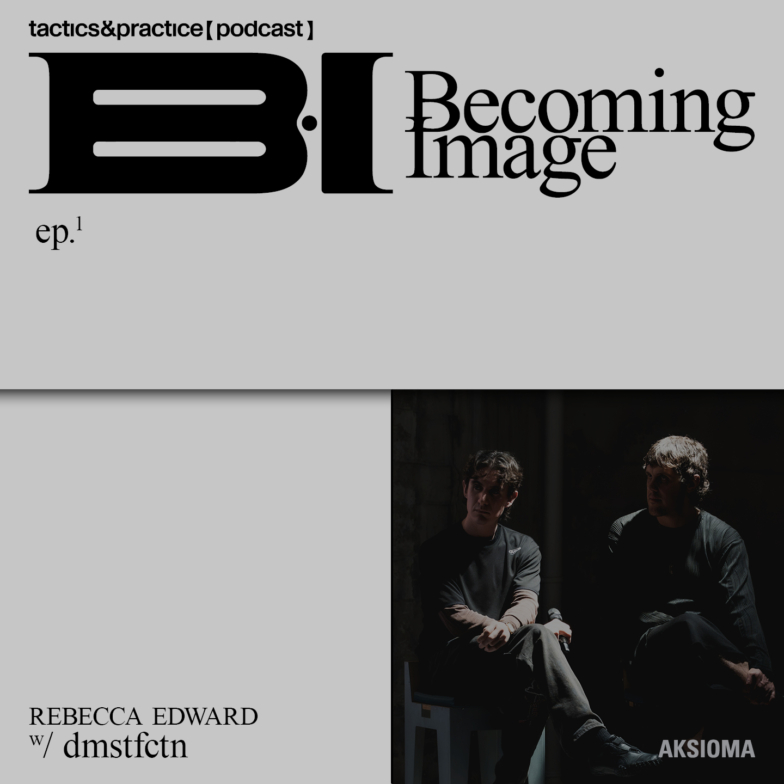
S6 [Becoming Image] E1: Who’s Still Here? [w/dmstfctn]
Who are we when our identities are shaped through interfaces, datasets, and platforms? And what does it mean to see, to be seen, or to become visible when every act of seeing is mediated by software?
dmstfctn (Francesco Tacchini and Oliver Smith) join the podcast to discuss their decade-long collaboration exploring simulation, fiction and the hidden systems that shape contemporary digital life. Focusing on their “God Mode” trilogy and the latest artwork Big Things Coming (2026) at Chemist, London from July this year, the conversation traces a world of AI reward hacking, synthetic training data and algorithmic misbehaviour through simulated supermarkets, theatrical game engines and self-playing videogames.
From image-caption datasets and the Waluigi effect to data labour, optimisation metrics and the limits of language, the episode examines how machine learning systems not only represent the world but actively reshape it. Along the way, we discuss embodiment and consciousness through the work of N. Katherine Hayles, systemic realism, the aesthetics of lossy digital environments, and why leaving language behind for something like dance might offer a way out of computational logic.
RELATED LINKS
https://dmstfctn.net
https://www.instagram.com/dmstfctn
GOD MODE: Episode 3: Big things coming
Waluigi’s Purgatory
Sad Luigi game Ennuigi 1.0 by Josh Millard. Thanks to Petra Szemán for the link up!
N.B in the episode I say the game is based on a sad Waluigi, but it’s actually based on a sad Luigi.
COCO dataset
Grim Fandango game
The paper Depressive Realism: Four Theoretical Perspectives was published in 1988 by Lauren Alloy and Lyn Abramson in the book Cognitive Processes in Depression published by Guilford Press on May 27, 1988.
Quake III Arena bot