radioCona and radio aporee: Response Sound Maps/Walks
Group Exhibition Aksioma | Project Space Komenskega 18, Ljubljana 6 – 15 November 2012
Featuring artists: Daniel Premec, Maja Pelević and Milan Marković, Ronald Panza and Mili Sefić, Bacači sjenki, Zli bubnjari, Simona Hamer and Simona Semenič and Zalka Grabnar Kogoj, Ervin Hatibi, Saša Markovič Mikrob, Irena Pivka and Brane Zorman
Exhibition openig, presentation and reception: TUE, 6 November 2012 at 8 pm
FM and stream broadcast radioCona:FIELD 7 – 15 November 2012, (daily 11:55 – 21:00), radioCona FM 88.8MHz
Artistwalks from TUE, 6 November 2012, Zagreb (HR), Beograd (SR), Mostar, Sarajevo (BIH), Durres (AL), Ljubljana (SI)
Lecture (Udo Noll, radio aporee) and artistwalk: WED, 7 November 2012 at 6 pm, Aksioma Project space, Ljubljana
Public intervention: SAT, 10 November 2012 at 11.55 am, Prešernov trg, Ljubljana. Daniel Premec: Vrijeme za uzbunu (It Is Time for Alert)
* Host event. Not part of the Aksioma Institute production programme.
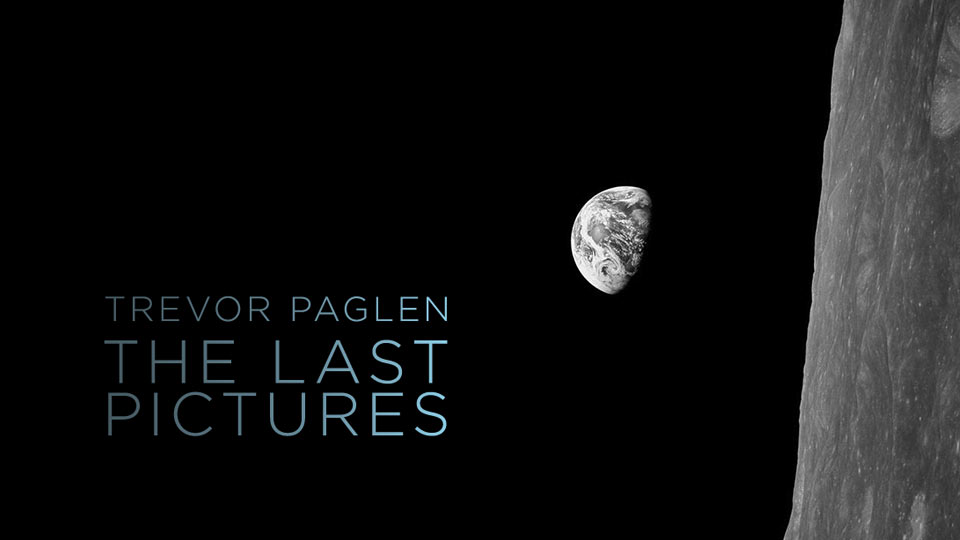
The Last Pictures
Trevor Paglen
Lecture
Cankarjeva 15, Ljubljana, Slovenia
Past Future Now
Vuk Ćosič
Solo exhibition
Artist’s lecture: WED, 25 October 2012, at 6 pm Exhibition opening: WED, 25 October 2012, at 7 pm
Free entrance
Komenskega 18, Ljubljana, Slovenia
Solo Show
Vuk Ćosić
Solo Exhibition
Exhibition opening and artist’s presentation: WED, 10 October 2012 at 7 pm
Vuk Ćosić meets Patrice Riemens, promoter of Open Knowledge and Free Software
Public discussion: FRI, 12 October 2012 at 4 pm
Free entrance
Komenskega 18, Ljubljana, Slovenia
NAME Readymade
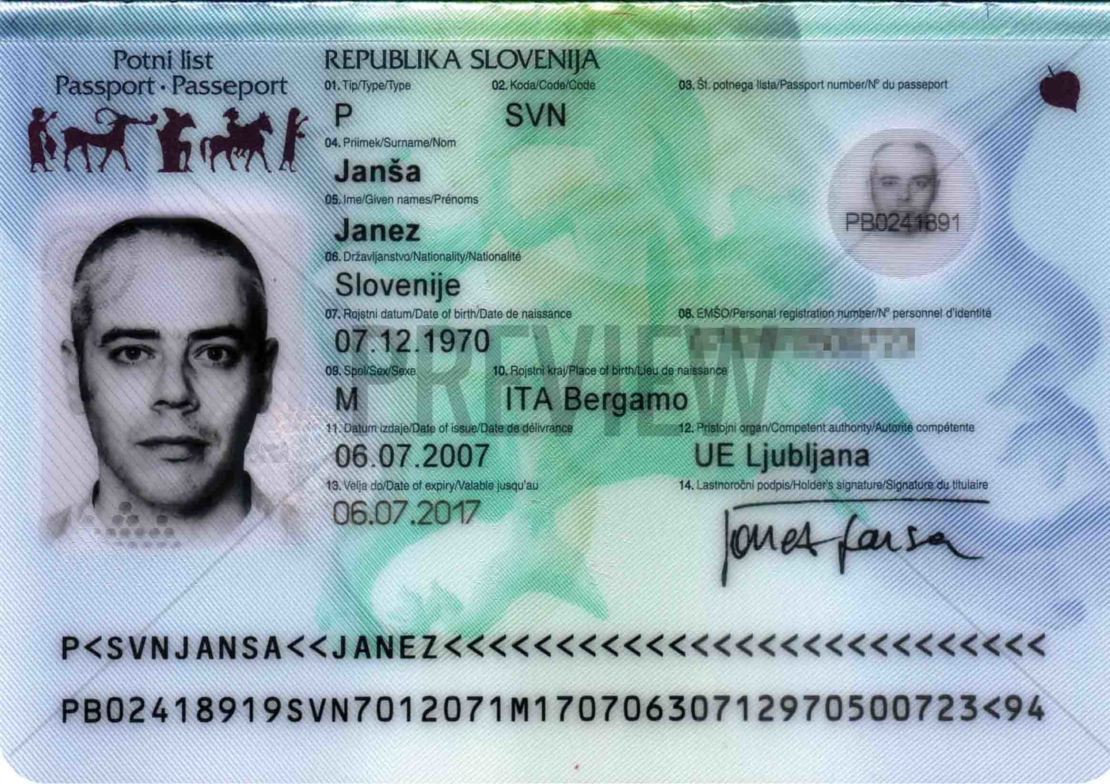
Janez Janša, Janez Janša, Janez Janša
Lecture/Performance
Kidričeva 43, Koper, Slovenia
NAME Readymade
Janez Janša, Janez Janša, Janez Janša
Lecture/performance
A project by steirischer herbst festival.
Graz, Austria
NAME Readymade
Janez Janša, Janez Janša, Janez Janša
Lecture/performance
In the frame of the festival EUROPE (to the power of) N.
Berlin, Germany
MACHT GESCHENKE: Das Kapital
Christin Lahr
Solo Exhibition
Exhibition opening and artist’s presentation: WED, 19 September 2012 at 7 pm
Free entrance
Komenskega 18, Ljubljana, Slovenia
CHEM:SYS:REAKTOR
Marko Batista
Sound sculpture
Opening and reception: WED, 29 August 2012 at 8 pm
Free entrance
Komenskega 18, Ljubljana, Slovenia
Blow My Bills Away!
Lada Cerar
Installation
Exhibition opening and reception: THU, 2 August 2012 at 8 pm Free entrance
Komenskega 18, Ljubljana, Slovenia
Communication Guerrilla Revisited
Bani Brusadin
Lecture/Presentation
Free entrance
Komenskega 18, Ljubljana, Slovenia
Reverend Billy and Savitri D at the Mladi levi festival
Screening Stara mestna elektrarna, Ljubljana WED, 8 August 2021 at 9 pm
Workshop 21–24 August 2012 Glej theatre, Ljubljana
Public intervention FRI, 24 August 2012 at 4pm Starting point: Novi trg square fountain, Ljubljana
Sermon FRI, 24 August 2012 at 7.30 pm Glej theatre, Ljubljana
“Why do I shout? Why do I preach? Because I think I hear something. As you listen to me, I hear a shout in you. Oh, let me preach. Let’s stand up! Let’s shout like we do when we are loving, like we do at a peace rally, like we shout in a church when the spirit tells us to give it up. Amen? We’re safe from shopping now. How quickly our shouting becomes a kind of singing that gives the product nothing to say!”
Reverend Billy was born in the late 90s on a sidewalk in New York’s Time Square out of an impelling need to speak up against consumerist frenzy and the dysfunctional, sad and inhumane society that was growing around it. A waiter’s white jacket, a cardboard collar and a bleached, Elvis-like hairdo were enough for actor and playwright Bill Talen to give life to the street-corner persona called Reverend Billy.
He then became a visionary, a solo pseudo-evangelist who passionately urged people to stay away from “consumer narcosis” and “affluenza”, warning against the “shopocalypse”, the vast collective drift towards personal anxiety, worker exploitation, environmental collapse and the destruction on a human-scale of the social fabric.
Soon, what might have looked like yet another end-of-the-century eccentricity started revealing itself for what it really was: a crazy adventure into the sacred space of shopping and a contagious call to action. Reverend Billy was then joined by other activists, and together, they mutated the preacher’s antics into a virus aimed at collapsing the fake allure of brands. Malls and franchise stores were turned into an invisible, undeclared stage for a “fictional” folk hero to engage a fight with a bigger consensual fiction, the credit-card reality of the incessant economic growth. It was the turn of the millennium and The Church of Stop Shopping was born.
By the time director Savitri D joined the Church, the mainstream and commercial media were already starting to pay attention to Rev. Billy, probably in consideration of the wave of creative activism that was fueling resistance to top-down globalization all over the world. At that point, the Reverend could have started a successful parody-based career, but that never happened.
Reality was getting more and more compelling: the September 11 attacks on the US, the growing delocalization of production and the implosion of the national economy in the early 2000s, the collapse of credit and financial markets, the unrestricted exploitation of the environment and the ever-growing evidence of a global climate change. “Lift your hand from the product,” as Rev. Billy used to chant in his sermons, was not an imploration anymore, but a fact.
While Reverend Billy was entering the mass media stage through, astonishingly, the unlikely doors of Fox News, CNN Money and even right-wing talk shows, the Church – now called “The Church of Life After Shopping” – was starting to reach new corners of a country going through a deep crisis of self-confidence. Up till then, Reverend Billy had preached to the converted, gathering a family of fellow activists, genius part-time musicians, amateur choir singers and creative subversion lovers. But now, grassroots janitors’ unions, Christian groups, radical environmentalist bikers and even unemployed housewives were knocking at the door of the Church…or rather…filling Rev. Billy’s email box.
From then on, a vertiginous new phase of the Reverend Billy Project started, beginning with 2007’s “What Would Jesus Buy”, an internationally applauded movie produced by Morgan Spurlock and directed by Rob Van Alkemade, who told the story of the Church as a long, crazy road tour into the heart of disillusioned consumerist America. In 2009, Reverend Billy officially ran for mayor of New York, and though he was never a serious threat to the multi-millionaire candidate Michael Bloomberg, the campaign was no fiction and it actually lay the ground for new collaborations with NY State-based groups of citizens concerned with the collective issues of environmental exploitaton and the banks’ backing of unethical commercial activities.
In 2011, Billy, Savitri D and the Church whole-heartedly embraced the growing “Occupy” movement and have still not stopped continuing to organize, perform, teach, get people involved and produce their own media (such as the overwhelming videocast “Reverend Billy’s Freakstorm”, whose installments are available on the Church’s website), while at the same time opening up a dialogue about what the Church is doing and discussing it in public.
As Alisa Solomon wrote, “Reverend Billy snatches pleasure from rampant consumerism – and indeed, recalls the loneliness and passivity one experiences when her life revolves around a series of advertisers-manipulated purchases – and reclaims it for the live, communal satisfactions of theater and action. This church’s pious practice is not one of abstinence and self-abnegation, but of agency.”
THE AUTHORS
Reverend Billy Talen and Savitri D. are co-leaders of the Church of Life After Shopping, designers of the performances and campaigns, co-authors of the book Shopocalypse Now! and co-producers of the TV shows and films used in their audio-visual presentations. The “church” is a performance community centered in New York City, with a history of touring in Europe, Africa and South America. Savitri D is director of the Life After Shopping performances, both on theater stages and out in contested spaces. She is co-producer of the 2007 film What Would Jesus Buy?
Reverend Billy has taken part since the beginning in the Occupy Wall Street/We are the 99% movementBilly has visited -or invented- several Occupy in the US territory: Occupy Broadway, Occupy Iowa, Occupy Des Moines, Occupy Detroit, or Occupy Christmas.
In 2009 Reverend Billy Talen was a candidate for mayor of New York City on the Green Party ticket.
An examination of the commercialization of Christmas in America while following Reverend Billy and the Church of Stop Shopping Gospel Choir on a cross-country mission to save Christmas from the Shopocalypse (the end of humankind from consumerism, over-consumption and the fires of eternal debt.) The film also delves into issues such as the role sweatshops play in America’s mass consumerism and Big-Box Culture. From the humble beginnings of preaching at his portable pulpit on New York City subways, to having a congregation of thousands – Bill Talen (aka Rev. Billy) has become the leader of not just a church, but a national movement.
In the framework of Akcija!, a cycle of screening events
Reverend Billy and Savitri D lead a workshop on new culture jamming and activist strategies. The workshop was a four day long exploration of creative resistance with Reverend Billy & Savitri D.
They discussed their work and previous campaigns and then developed an action around an issue chosen by the participants. A public performance of the action was be the final culmination of the workshop.
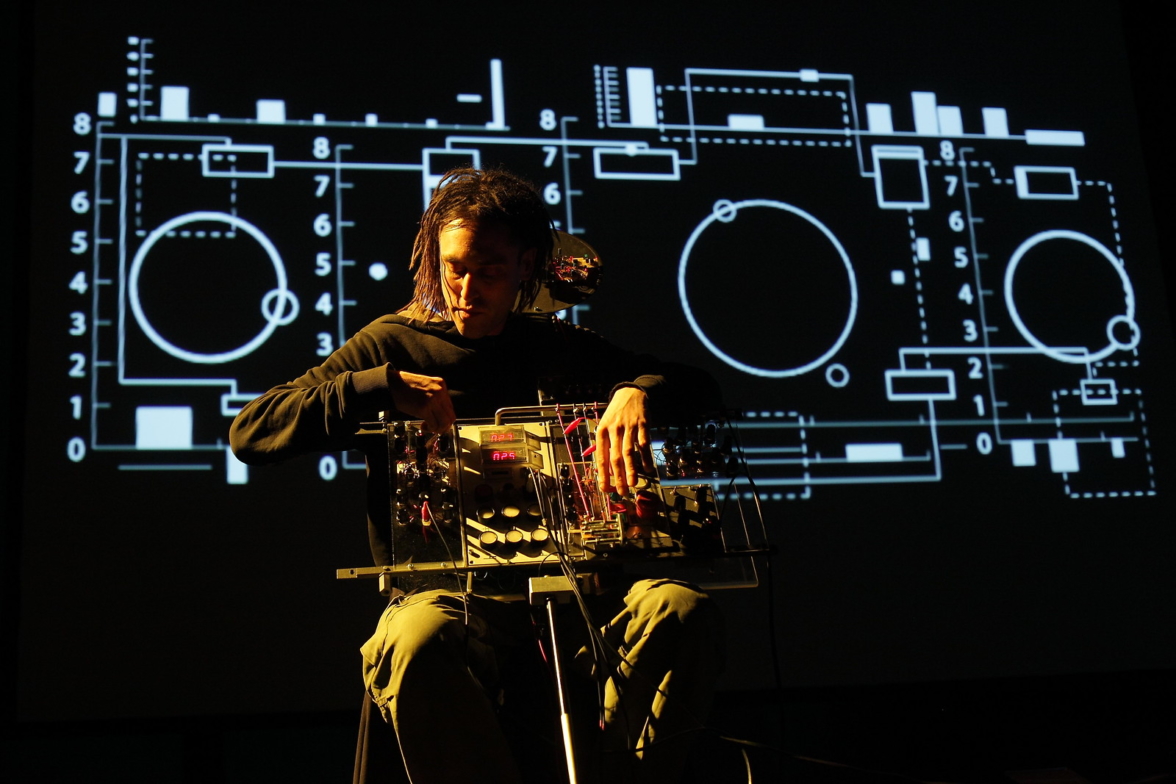
Provoking ambiguity and confusion in collective imagination, communication guerrilla promotes a radical use of fiction which strains the mechanism of ideology and social control. But what happens to subversion of mass culture when it hits a networked society? Do impostors, heroes and trolls have anything at all to do with social change? How is pranksterism evolving in the era of cynicism, information overload and digital disorder? Inspired by the 10-years experience of the Barcelona-based “The Influencers” festival, Communication Guerrilla Revisited is an open conversation through images and real stories (believe it or not) presented by Bani Brusadin, researcher, activist and founder of The Influencers.
CREDITS
Authors: Reverend Billy and Savitri D
Production: Aksioma – Institute for Contemporary Art and zavod Bunker, Ljubljana, 2012
Coproduction: Gledališče Glej
The programme of Aksioma Institute is supported by the Ministry of Education, Science, Culture and Sport of the Republic of Slovenia and the Municipality of Ljubljana
Sponsor: Datacenter d.o.o. Thanks: Bani Brusadin and The Influencers festival
Seized
Critical Art Ensemble & Institute for Applied Autonomy
Critical Art Ensemble & Institute for Applied Autonomy Seized
The theme of the Seized exhibition started as a shocking personal experience in the paranoid US political climate. In spring 2004, the FBI raided the home of art professor and CAE member Steve Kurtz. What followed was a four-year legal case that was finally dropped in 2008 due to all evidence of any crime being “insufficient on its face”.
The reason for the FBI raid is telling… Steve’s wife Hope died entirely unexpectedly because of an undiagnosed heart defect. Police who responded to Kurtz’s 911 call for help noticed a benign-looking chemistry laboratory in the house and informed the FBI, who considered “preparations for an upcoming show” to be a lame excuse. During the three-day raid, the authorities not only confiscated Kurtz’s computers, archives, artworks and a set of books he was using for research on his upcoming book project, but also his wife’s corpse. Steve himself was interrogated for 22 hours with the aim of charging him with “bioterrorism” and even murder.
In the installation Body of Evidence, CAE and IAA turn the perpetrator-victim relationship of this horrifying personal experience upside-down. In the same manner in which the FBI stole their artistic material, the artists confiscated pizza boxes, Gatorade bottles, hazmat suits and biological sample bags, as well as written notes and a single cigar butt that were left behind by the FBI at the scene of the crime – Steve Kurtz’s lawn.
The display of the notes and papers that the federal agents wrote during the raid resembles a subversive strategy of counter-appropriation, as the artists use the objects the FBI left behind as “evidence” of their own investigation, and with that act, the power structure is subverted. As the actions and rationale of the FBI and the Department of Justice are questioned, a rare window into the anatomy of a “bio-terror” investigation opens up…
As we can read in the catalogue of the Seized exhibition:
“The project as an art exhibition raises questions about artistic freedom of expression and governmental repression, reflects about the interdependency between politics and business, and presents artistic strategies that try to undercut this. America, the country of freedom, was the setting for the events which underlie this exhibition. It shows that it is not self-evident for artists, even in a democracy, to criticize the structures of power and to publicly take a firm stand.Besides the complex installation Body of Evidence, the exhibition Seized also documents material for works and performances by CAE that Steve and Hope were working on just before the raid, such as Free Range Grain (2003–2004) and Molecular Invasion (2002–2003), that were confiscated from their home by the FBI along with various other household objects.”
ARTIST TALK
THE AUTHORS
Critical Art Ensemble (CAE) is a collective of five tactical media practitioners of various specializations including computer graphics and web design, film/video, photography, text art, book art, and performance.
Formed in 1987, CAE’s focus has been on the exploration of the intersections between art, critical theory, technology, and political activism. The group has exhibited and performed at diverse venues internationally such as the Whitney Museum and The New Museum in NYC; The ICA, London; Schirn Kunsthalle, Frankfurt and Musée d’Art Moderne de la Ville de Paris.The collective has written 6 books, and its writings have been translated into 18 languages.
The Institute for Applied Autonomy (IAA) was founded in 1998 as an anonymous collective of engineers, designers, artists and activists united by the cause of individual and collective self-determination. Toward this end, the IAA has produced numerous projects under its flagship initiative, Contestational Robotics. The IAA has won numerous awards including the 2000 Prix Ars Electronica Award of Distinction and several Prix Ars Electronica Honorable Mentions; and a Rhizome New Media Fellowship.
MOVIE SCREENING
Strange Culture documents the surreal nightmare of internationally-acclaimed artist and professor Steve Kurtz which began when his wife Hope died in her sleep of heart failure. Police who responded to Kurtz’s 911 call deemed Kurtz’s art suspicious and called the FBI. Within hours the artist was detained as a suspected “bioterrorist” as dozens of federal agents in Hazmat suits sifted through his work and impounded his computers, manuscripts, books, his cat, and even his wife’s body.
The film premiered January 19, 2007 at the 2007 Sundance Film Festival was also shown in the 2007 Berlin Film Festival.
Lynn Hershmann Leeson is a filmmaker and new media artist who has been awarded the Siemens-Medienkunstpreis award from the ZKM, Karlsruhe, as well as the Golden Nica Prize at the 1999 Ars Electronica.
In the framework of Akcija!, a cycle of screening events
True Crime — Open Call for Submissions Chances are you’ve committed an illegal act at some point in your life. Here’s your opportunity to make an anonymous confession in the name of art. True Crime is a locally produced representation of everyday life criminality conceived by Critical Art Ensemble. Anyone can contribute to our exhibition Seized by becoming part of our True Crime installation.
Click HERE to read the full instructions CAE gave us for facilitating True Crime.
CREDITS
Authors: Critical Art Ensemble & Institute for Applied Autonomy
Production: Aksioma – Institute for Contemporary Art, Ljubljana, 2012
The programme of Aksioma Institute is supported by the Ministry of Education, Science, Culture and Sport of the Republic of Slovenia and the Municipality of Ljubljana
Sponsor: Datacenter d.o.o. Thanks: Regine Rapp, Christian de Lutz and Art Laboratory Berlin
Timing Diagrams
Marko Batista
New media performance
on the platform in front of the Museum of Contemporary Art Metelkova
Event produced in collaboration with MSUM in the frame of the Summer Night of the Museums
Maistrova 3, Ljubljana, Slovenia
Objects and the Event
Peter Rauch
Photography exhibition
Opening: MON, 11 June 2012 at 6 pm with show Melodies Reflections (Andreja Podrzavnik, Sašo Kalan, Peter Rauch)
Free entrance
Trg svobode 11a, Trbovlje
Slovenia
17 Objects
Peter Rauch
Photography solo exhibition
Exhibition opening: TUE, 21 June 2011 at 8 pm
Ulica kneza Koclja 9, Maribor, Slovenia
WHOxx / Confessions of a Videast
Neven Korda
Performance
Free entrance
Kidričeva ulica 43, Koper
Newstweek
Julian Oliver, Danja Vasiliev
Media-hacking intervention
Opening of the Aksioma media-hacking centre: WED, 11 April 2012 at 7 pm
Free entrance
Komenskega 18, Ljubljana
Display of unknown, quarantined equipment
Men in Grey
Solo exibition
Exhibition opening: TUE, 24 May 2011 at 8 pm
Free entrance
Komenskega 18, Ljubljana
Dynamic Encounter
Wafaa Bilal
Solo exhibition
Artist’s lecture and exhibition opening: WED, 23 May 2012 at 8 pm