
 < back
Deutsches Hygiene-Museum Dresden
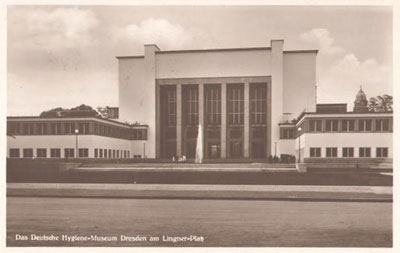 Karl August Lingner (1861-1916), the Odol mouthwash manufacturer, initiated the foundation of the Deutsches Hygiene-Museum (1912). In 1911, Lingner was the driving force behind the First International Hygiene Exhibition which drew over 5 million visitors to Dresden. This exhibition provided information not only about human anatomy but also about health care, nutrition and living. The exhibition was also so successful because the objects were presented with the most modern technology in an unprecedented visually graphic way. During the Weimar Republic years the museum contributed decisively to the development of a more democratic public health system through its comprehensible state-of-the-art scientific presentations. The museum building designed by Wilhelm Kreis (1873 – 1955) served as the venue for the Second International Hygiene Exhibition in 1930, and is still in current use by the museum today. “The Transparent Man” ranked as the greatest attraction in the 1930 exhibition, in which the image of the human in the modern age was expressed in a glorifying combination of science, transparency and rationality. After 1933, the general educational capacity of the museum and its highly developed modern mediation methods were put into the service of the Nazi race ideology. In the final days of the Second World War, large sections of the museum building and valuable collection holdings were destroyed. Source Deursches Hygiene-Museum Dresden 
|