Latent Space
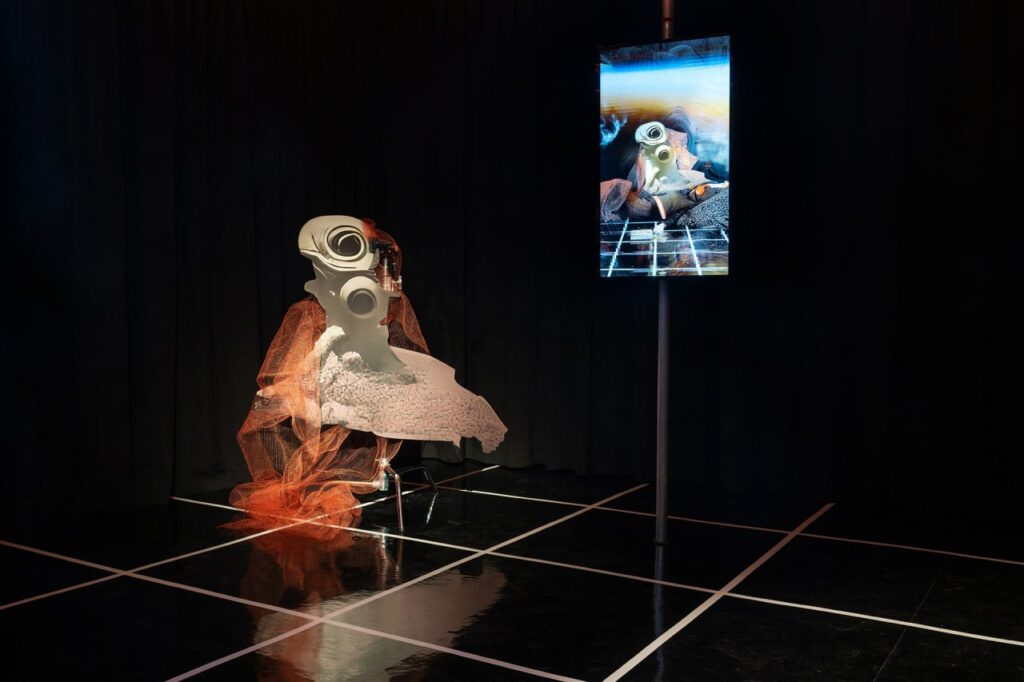
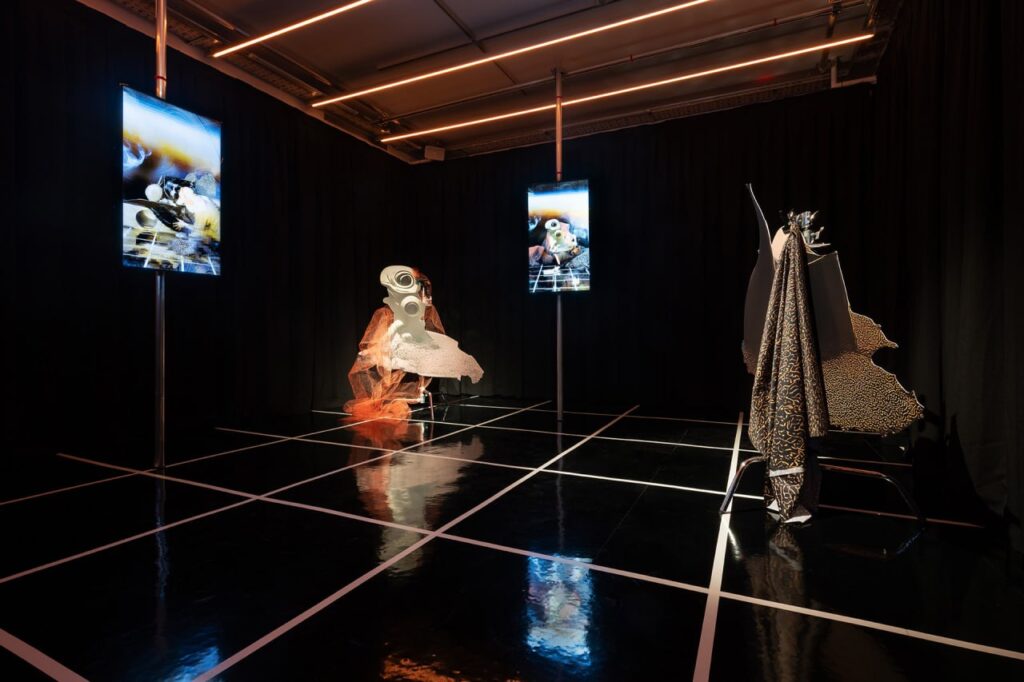
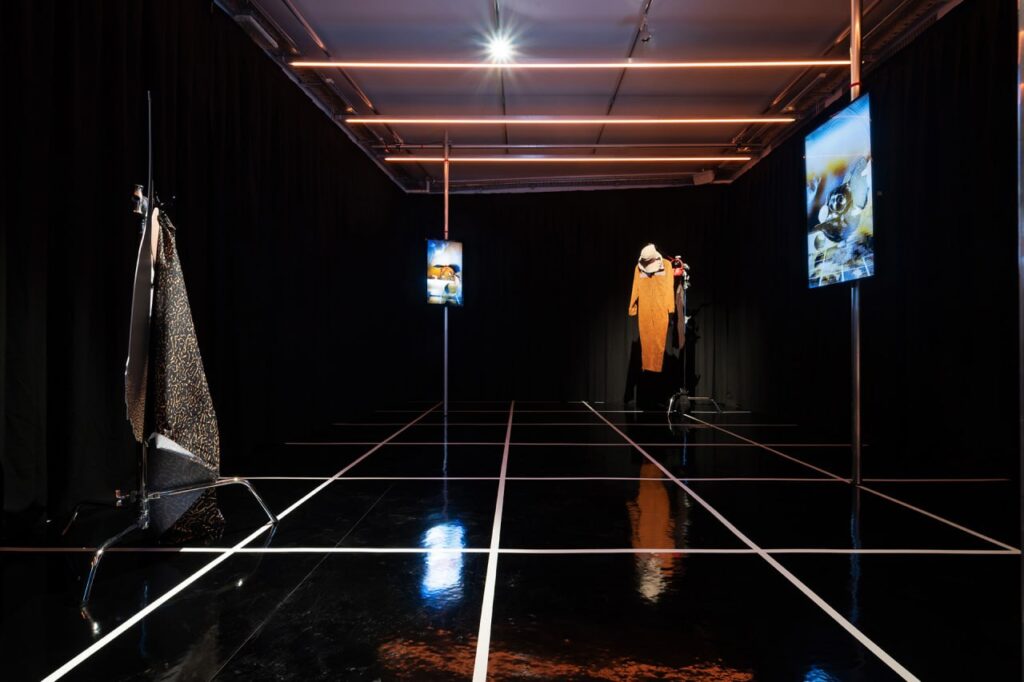
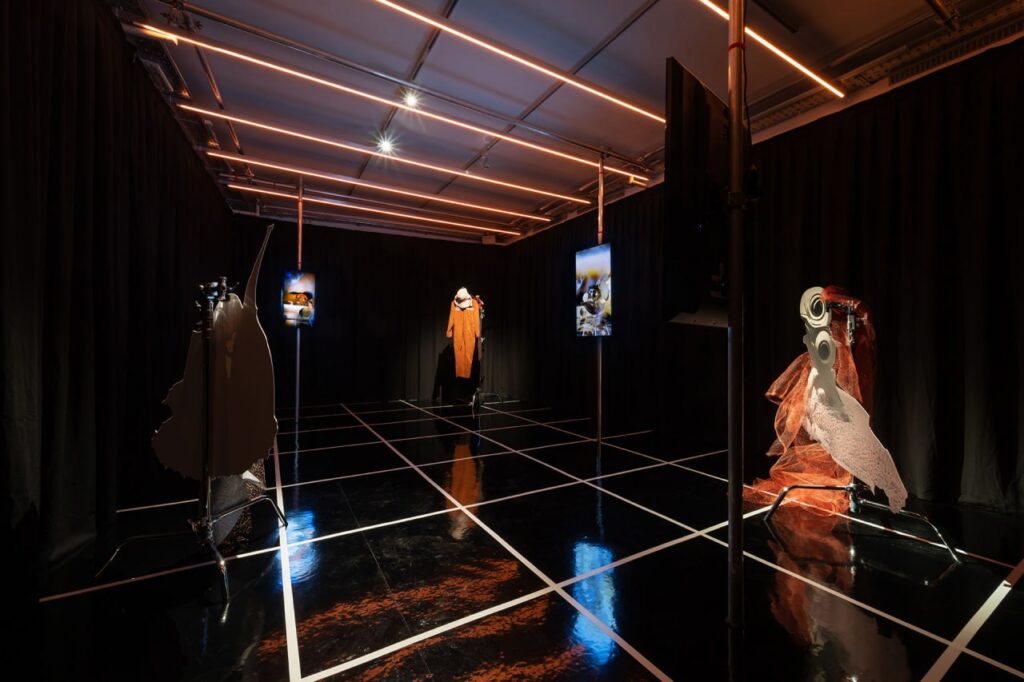
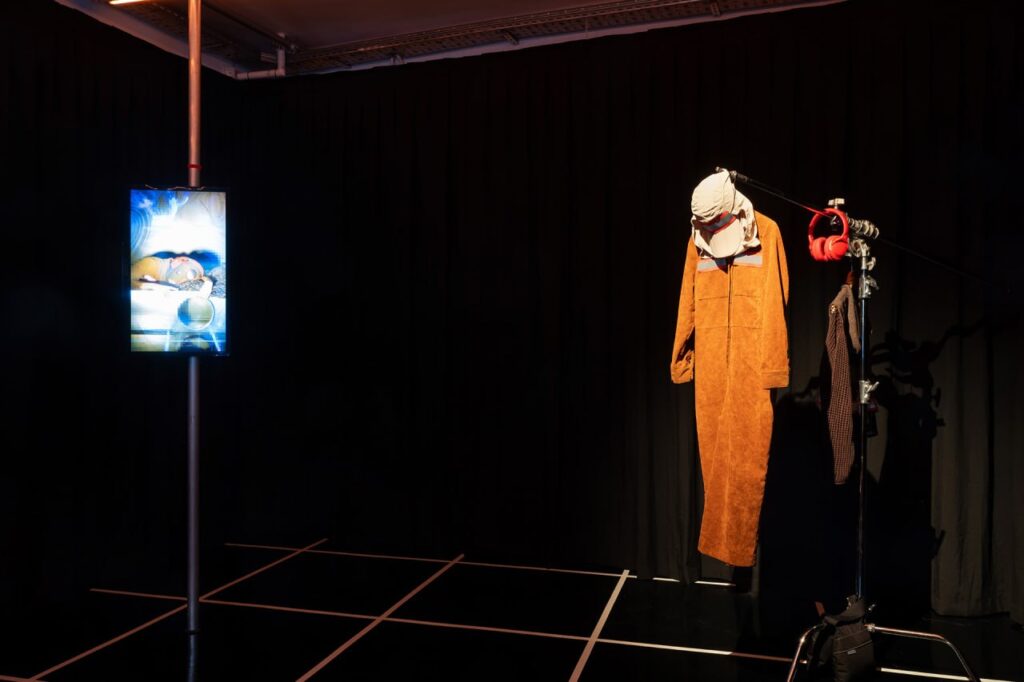
In November 2025, the first orbital data centre was launched, marking a bold shift: by relocating computation to space, we leave behind the ecological limits of Earth. The current terrestrial system is on the brink of collapse; natural resources are depleting and the grid will soon no longer support the power needed for the reckless race towards AGI. AI data centres in space therefore offer a potential new frontier for machine learning infrastructures, leaving the failed model behind.
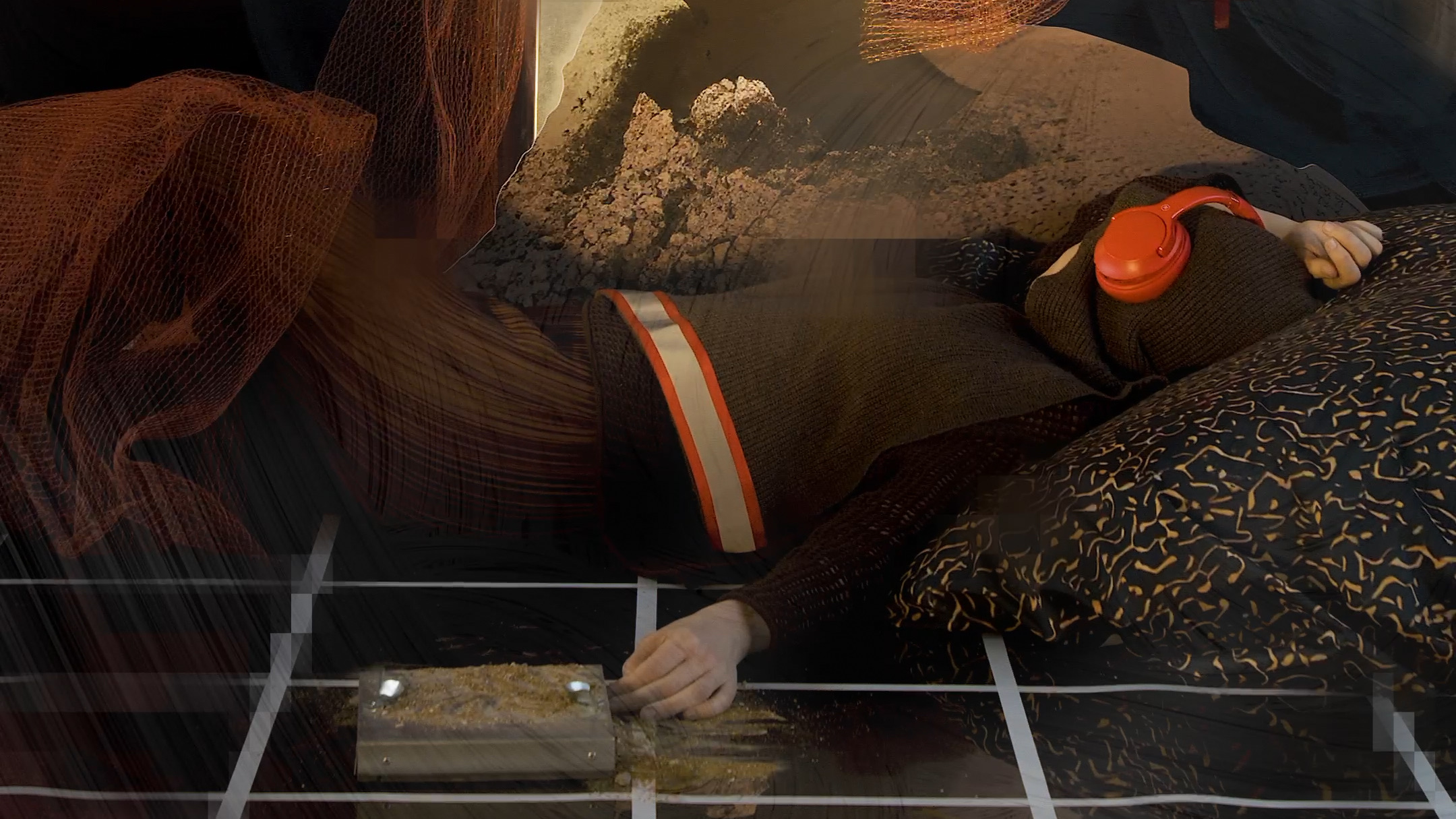
In this newly commissioned installation titled Latent Space, Felicity Hammond offers a speculative glimpse into a not-too-distant future where this new approach to space-based computation has become the dominant position in the AI industry. However, the system continues to battle with the effects of model collapse – a process by which generative models are trained on data generated by previous AI models, causing data loss, degradation, and abstraction from the experience and representation of the phenomenal world. In an attempt to recalibrate the system, performers have been employed to restage original data. Data-performers absorb this image material and attempt to re-imagine a set of average images, an amalgam of the originals. On-board surveillance captures these gestures in photographic form and feeds them back into the system. This recalibration process is tested via the online image archive of Aksioma, scraped from Flickr for the purposes of this pilot test.
Meanwhile, the orbital data centres themselves inhabit their determined optimal trajectory: a path along the day/night boundary where the spacecraft remains in near-continuous solar illumination. As they bathe in this eternal sunlight – a condition engineered for efficiency, not comfort – the data-performers begin to long for the planet below.